CONNECT WITH US
Sign out

Egis showcases satellite and drone integration at MWC 2026

, Taipei
0

Credit: DIGITIMES

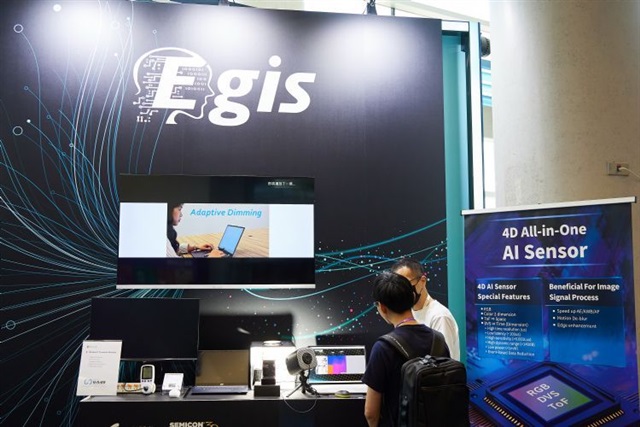
Egis Technology and its subsidiaries are jointly exhibiting at the 2026 Mobile World Congress (MWC 2026). Centered on integrated terrestrial and space connectivity, physical AI, and low-power intelligent computing, the group is highlighting its comprehensive capabilities in satellite IoT, edge AI visual perception, drone system integration, ultra-low latency wireless transmission, and ultra-low power AI chips.

Among the subsidiaries, Creative5 focuses on hybrid satellite IoT cross-orbit integration, combining 3GPP NTN multi-orbit satellite architecture with multiple communication protocols such as LoRaWAN, BLE Mesh, and DECT NR+. This enables seamless switching between terrestrial and satellite networks.

Creative5's four core application scenarios target SOS satellite emergency nodes, UAV Scout airborne hybrid satellite communication platforms, Atlas NTN global vehicle connectivity solutions, and Hestia X hybrid satellite terminal devices. These serve broad needs for disaster prevention, energy inspection, and global connectivity for remote areas.

Algoltek unveiled a new-generation multimodal visual perception system built on the Nvidia Jetson Thor platform, co-developed with Appro Photoelectron to integrate imaging architectures. It incorporates iCatch's HSB module for high-speed image bridging and data flow optimization, alongside XenReal's new 4D sensing components that fuse RGB, DVS, and ToF modalities. The system supports edge AI inference for real-time obstacle avoidance in fast-moving environments, precise depth perception, and stable recognition under extreme lighting conditions.

Ene Technology, traditionally focused on semiconductor IC design, debuted a complete drone solution at MWC for the first time. Its advanced drone platform integrates Egis satellite communication modules, a unified ground control station system integrating digital mapping and control, Algoltek's vision algorithms, and iCatch's high-speed image bridging technology. On-site was also the Ene Inspector lightweight smart drone specialized for challenging environments like indoor spaces, narrow passages, and underground utility tunnels.

Alcor Micro showcased Taiwan's first CPU chip, Mobius100, designed using Arm CSS V3 CPU IP, InPsytech's UCIe IP, and TSMC's 3nm process. It is the industry's first Arm-based CSS CPU chiplet compliant with both Arm Chiplet System Architecture and Open Compute Project standards, enabling interoperability across ecosystems by interfacing with AI compute chiplets.

Alcor Micro emphasized simulation emulator demonstrations of chiplet interconnect transmission and computing technologies. Future plans include collaborations with AI accelerator partners from Europe, the US, and South Korea to realize heterogeneous multi-chip high-speed computing systems and expand into Physical AI applications.

Synic presented FalneX ultra-low latency wireless transmission technology achieving minimum 1ms delay and 60fps wireless HD image transmission. Applications cover real-time drone obstacle avoidance, robot remote control, and intelligent inspections, making it an essential communication foundation for Physical AI systems.

Egis Vision demonstrated always-on ultra-low power contextual detection AI chips suitable for notebook user behavior recognition and smart energy management. When paired with LoRa modules, these extend to ultra-low power AIoT scenarios for long-term stable deployment.

Article translated by Lily Hess and edited by Charlene Chen