

CONNECT WITH US
Sign out

Analysis: Apple hits record quarter as iPhone 17 demand outstrips chip supply

, DIGITIMES Asia, Taipei
0

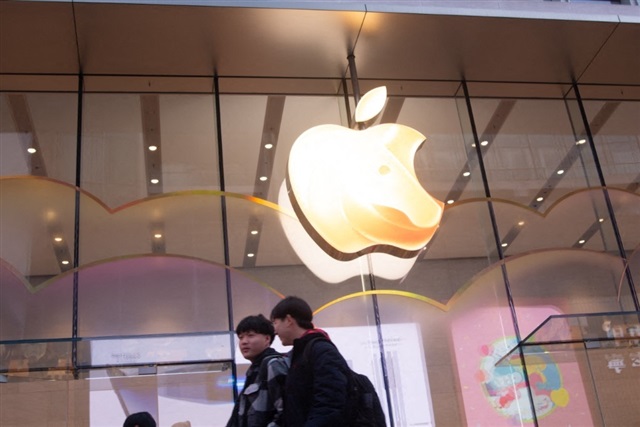
Credit: AFP

Apple Inc. delivered a record-breaking quarter, fueled by surging demand for the iPhone 17 even as rising chip costs and tightening memory supply began reshaping its margins and supply-chain strategy.

For the fiscal first quarter ended in December 2025, Apple reported revenue of US$143.8 billion, a 16% year-over-year increase, surpassing market expectations. Net income rose to US$42.1 billion, or US$2.84 per share, while gross margin expanded to 48.2%, exceeding both analyst forecasts and company guidance.

The performance highlights Apple's continued ability to monetize hardware upgrade cycles, even as rising component costs and a recalibrated AI strategy introduce new variables for investors.

Credit: DIGITIMES

Credit: DIGITIMES

iPhone demand triggers supply chase

The iPhone drove the quarter, generating a record US$85.3 billion in revenue, up 23% year-over-year — the highest quarterly figure since its 2007 launch. Tim Cook said demand was "staggering," leaving Apple with exceptionally lean channel inventory and forcing the company into what he described as "supply chase mode."

The surge is straining Apple's semiconductor supply chain, with constraints centered on advanced manufacturing nodes — notably 3-nanometer capacity used for its custom SoCs — rather than final assembly. The imbalance suggests iPhone 17 demand is already stretching current leading-edge chip capacity, placing pressure on foundries to accelerate future production ramps.

Margin pressures from memory costs

Rising memory prices are emerging as a key headwind, driven by AI-related demand and tightening global supply. Apple said memory inflation had only a "minimal impact" in the December 2025 quarter but will weigh more heavily on margins in the March 2026 quarter, reflected in its 48%–49% gross margin outlook.

The warning mirrors broader industry signals, with Samsung and SK Hynix flagging worsening DRAM shortages for smartphones and PCs as capacity is increasingly diverted toward AI-focused memory products.

Together, the trends point to a tighter cost environment in which Apple must balance securing supply against preserving industry-leading margins.

Services growth and AI strategy under scrutiny

Apple's services business continued its steady expansion, posting record revenue of US$30 billion, up 14% year-over-year. Growth was broad-based across advertising, cloud services, digital payments, and subscriptions, with Apple TV viewership rising 36% in December 2025.

Despite the strong results, Wall Street's reaction remained measured. Analysts broadly acknowledged the robust iPhone demand but flagged cost pressures and the timing of Apple's AI strategy as key factors in how the stock is valued. According to sell-side commentary:

● JPMorgan pointed to robust iPhone execution while flagging memory inflation and services growth as margin risks.

● Wedbush argued that an "AI premium" is not yet fully reflected in Apple's valuation, citing upside once Siri upgrades and Apple Intelligence scale.

● Morgan Stanley highlighted AI and new device categories as long-term catalysts, while near-term cost pressures persist.

The split view underscores strong near-term fundamentals offset by uncertainty around cost inflation and the pace of AI monetization.

Regional strengths and installed base momentum

Growth was especially strong across Asia, with Greater China revenue jumping 38% year over year on iPhone-led demand, alongside record performance across products and services in India.

Worldwide, Apple's active installed base surpassed 2.5 billion devices, strengthening the foundation for future services revenue.

Supply chain diversification and onshoring

Apple also highlighted continued supply-chain diversification, including:

● Corning is producing 100% of iPhone and Apple Watch cover glass in Kentucky

● Micron's advanced chip packaging and testing facility in the US

● Progress toward sourcing 20 billion US-made chips through facilities such as TSMC's Arizona fabs

The moves aim to boost resilience amid geopolitical risk and rising component costs.

Outlook and investor takeaways

For the March 2026 quarter, Apple projected revenue growth of 13%–16% year-over-year, above market expectations despite constrained iPhone supply. Apple also returned nearly US$32 billion to shareholders through dividends and share repurchases.

Tightening global memory supply and rising prices are set to remain a cost headwind in the months ahead, as manufacturers continue diverting capacity toward AI-focused chips. Industry reports indicate shortages across DRAM and NAND are likely to persist into 2026, keeping pressure on hardware makers' cost structures.

Though Apple's hardware momentum remains robust, the next several quarters will hinge on its ability to navigate supply constraints and execute its AI strategy while protecting the high margins that underpin its financial model.

Apple 1Q26 financial & operational summary

Metric

1Q26 performance

YoY change/details

Total revenue

US$143.8B

Up 16%; All-time record

Diluted EPS

US$2.84

Up 19%; All-time record

Net income

US$42.1B

All-time record

Gross margin

48.2%

Above guidance, driven by mix and leverage

iPhone revenue

US$85.3B

Up 23%; Record growth in every segment

Services revenue

US$30B

Up 14%; All-time record

Mac revenue

US$8.4B

Down 7%; Faced difficult prior-year comparison

iPad Revenue

US$8.6B

Up 6%; Driven by M5 iPad Pro and A16 iPad

Wearables/Home/Acc

US$11.5B

Down 2%; Impacted by AirPods Pro 3 constraints

Active installed base

>2.5 billion devices

New all-time record

Operating cash flow

US$53.9B

All-time record

Source: Apple, compiled by DIGITIMES, Jan. 2026

Article edited by Jerry Chen