CONNECT WITH US

In Jodi Shelton’s new podcast, Jensen Huang says Nvidia was forged by suffering

Joseph Chen, DIGITIMES Asia, Taipei 0

Credit: A Bit Personal

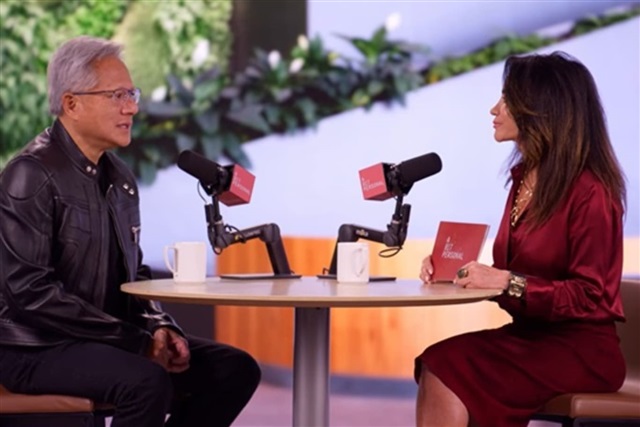
In the inaugural episode of a new leadership podcast, Jensen Huang offers a strikingly unvarnished account of how Nvidia became one of the world's most valuable technology firms.

Speaking with Jodi Shelton on A Bit Personal, Huang argues that the company's defining advantage was never technical brilliance, but a culture shaped by prolonged adversity.

The podcast, which launched this week, sets out to explore the personal histories behind the technology industry's most powerful figures rather than their product roadmaps.

Huang, who describes himself as a reluctant CEO uneasy with public attention, uses the conversation to reflect on the psychological toll of building Nvidia and the traits that allowed it to survive repeated near-breakdowns.

Asked what truly distinguishes the company, Huang steers away from architecture and process nodes. Instead, he recalls the strain of pushing major platforms such as Grace Blackwell into production, a period he says nearly broke the firm.

What mattered most, he suggests, was not intelligence or even hard work, but endurance. The ability to absorb pain, he says, and to keep going when the odds appeared stacked against the company, became Nvidia's real competitive edge.

Huang goes further, half-jokingly describing "pain and suffering" as the firm's secret sauce and even his preferred recruitment pitch. The repeated trials, he argues, "tortured greatness" out of the management team, turning competent executives into exceptional ones through sheer exposure to difficulty.

The interview also sheds light on Huang's unconventional management style. He currently maintains close to 60 direct reports, a structure he says allows him to reason through problems in real time with senior leaders rather than relying on layers of abstraction.

That approach, however, depends on extreme selectivity in hiring. Huang insists he is never in a rush to fill roles, arguing that an empty chair is preferable to the wrong person in the room. He recounts interviewing Nvidia's chief financial officer, Colette Kress, roughly 22 times before making an offer, framing the role as a long-term commitment rather than a transactional job.

Credit: Jodi Shelton

Credit: Jodi Shelton

Perhaps the most counterintuitive insight comes when Huang reflects on his own beginnings. Asked whether he would prefer to restart his career today or in his early years, he chooses the past, crediting ignorance as an advantage.

Not knowing how hard it would be, he suggests, made the company possible. Today's founders, he warns, are often too well informed, too aware of failure rates and obstacles to take the leap in the first place.

As for any grand plan for the future, Huang claims there is none. Nvidia, he says, has no endgame beyond staying in business and continuing to work with people he respects. Growth, exits, and legacies are secondary to that simpler aim.

A Bit Personal will release new episodes weekly, with upcoming conversations featuring other industry leaders, including Lisa Su of AMD. For an industry built on control and precision, the series offers something less common: a glimpse of vulnerability behind the silicon.

Article edited by Jack Wu