

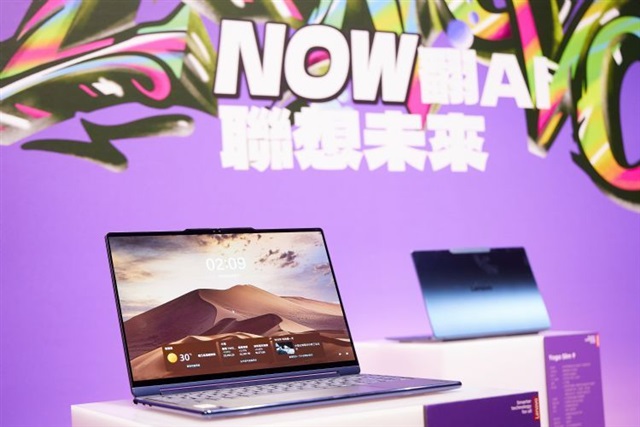
Lenovo introduced its most groundbreaking hybrid AI innovations yet at CES 2026, held January 7, 2026, at Sphere in Las Vegas, unveiling a new personal AI super assistant, AI PCs, smartphones, and multiple proof-of-concept devices. These include native-assistant wearables, next-generation enterprise AI infrastructure, and pioneering cross-industry collaborations with entertainment and sports sectors.
The company revealed that AI has evolved into a personalized, perceptive, and proactive intelligence embedded ubiquitously across experiences. Lenovo's new product lineup addresses both individual and organizational needs by leveraging digital twin architectures to coordinate actions across ecosystems, enhancing productivity, connectivity, and creativity.
Key highlights include Lenovo's partnership with Motorola to launch Qira, an integrated, personalized AI super assistant capable of sensing, reasoning, and acting with user authorization. It operates seamlessly across PCs, smartphones, tablets, and wearables, embodying Lenovo's core vision of "one AI, multiple devices."
Additional launches feature a new generation of AI PCs, Motorola flagship smartphones, perceptive AI pendant wearable concepts, and smart concept glasses delivering AI services anytime, anywhere. The recently spotlighted rollable-screen notebooks ThinkPad Rollable XD and Lenovo Legion Pro Rollable also made their debut.
On the server front, Lenovo rolled out AI inference servers with the new ThinkSystem and ThinkEdge lines designed to meet diverse workload demands across industries and scales. In conjunction with the upcoming FIFA World Cup 2026, Lenovo announced several special edition devices.
Lenovo chairman and CEO Yuanqing Yang stated that AI is helping spark creativity, enhance intuition, and inspire imagination. At its core, it draws from people's unique language, habits, experiences, and memories. He emphasized that this marks a pivotal human transition toward amplifying and fully realizing potential through AI augmentation.
For enterprises, Yang noted that this transformation runs deeper than process management or workflow optimization tools; AI now enables organizations to harness proprietary operational data combined with decision logic to evolve into entities capable of continuous self-learning and innovation.
Article translated by Charlene Chen and edited by Jerry Chen