

CONNECT WITH US
Sign out

CES 2026: Phison leverages DRAM shortage to push AI PC with Nvidia, AMD, Intel

, Taipei
0

Credit: DIGITIMES

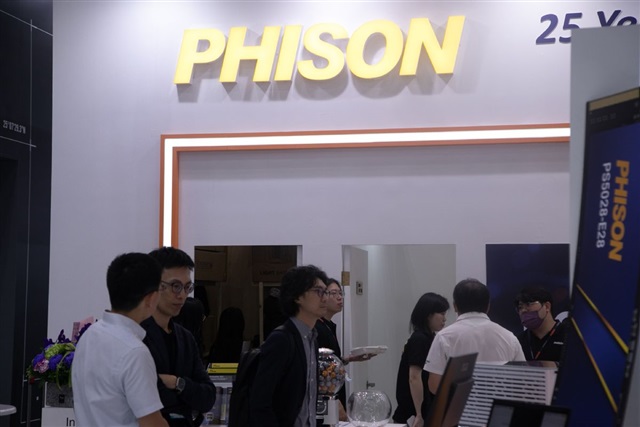
CES 2026 has kicked off amid severe DRAM supply constraints that are driving up PC end-user costs. Phison is promoting its exclusive aiDAPTIV solution, combined with integrated GPU (iGPU) technology to power new AI PCs. Due to cost and supply limitations in PC applications, end users may have to downgrade DRAM specifications. Phison's AI solid-state drive (SSD) solution compensates for performance loss, effectively upgrading systems into AI-capable PCs. At least five PC brands have reportedly partnered with Phison, which plans "strategic supply" support to meet their storage demands.

Nvidia CEO Jensen Huang officially unveiled the latest Nvidia Rubin platform during his CES 2026 keynote, announcing it is already in full production.

Market sources reveal that the Rubin NVL72 architecture's switch trays use Phison PCIe controller chips paired with NAND flash components, forming complete M.2 SSD modules. This suggests Phison supplies not only controllers but also modular SSD designs for Nvidia.

Industry experts believe this configuration will be used for system boot, firmware, management, and status logging control-plane functions. It reflects a shift where next-generation rack-level systems' switching modules evolve from passive components to intelligent units with boot and management capabilities.

Although rumors circulate about Phison entering Nvidia's supply chain collaboration, the company declined to comment or confirm market speculation.

In addition, Phison is strengthening cooperation with AMD and Intel platforms. Phison CEO Khein-Seng Pua emphasized that AI models require massive data for fine-tuning and inference, making high-speed SSDs an essential demand for AI PCs and central to Phison's AI PC strategy.

Phison's technology enables SSDs to act as extended memory beyond DRAM, allowing users to offset expensive DRAM shortages with relatively affordable SSD capacity. This approach lets standard-spec AI PCs or workstations meet large language model (LLM) operational needs while significantly lowering hardware barriers.

Without altering existing platform architectures, Phison's solution partitions part of the SSD capacity to supplement system DRAM requirements, reserving the rest for traditional storage. With ongoing DRAM tightness, PC makers might be forced to reduce DRAM specs in 2026, which could impact competitiveness.

Phison expects its AI SSD reinforcement to help PC OEMs maintain AI workload performance on downgraded-end products within controlled costs, creating incentives for PC manufacturers.

PC products adopting the integrated new solution are being rolled out by OEMs, targeting early 2026 launches. These AI PCs can directly run AI agents efficiently, serving enterprise IT teams, universities, and expanding into mainstream consumer markets. Notably, around 90% of notebooks without discrete GPUs represent potential application targets.

Despite conservative forecasts from multiple research firms regarding 2026 notebook sales, Phison reports ongoing collaborations with several PC vendors progressing steadily, with product showcases planned at CES.

With memory supply tightening and system spec downgrades trending, Phison intends to strategically allocate resources to select partners, including enterprise and industrial customers. Achieving just 5% market penetration could translate into nearly ten million additional shipments, fueling a 2026 AI PC upgrade cycle and replacement demand.

Article translated by Charlene Chen and edited by Jack Wu