
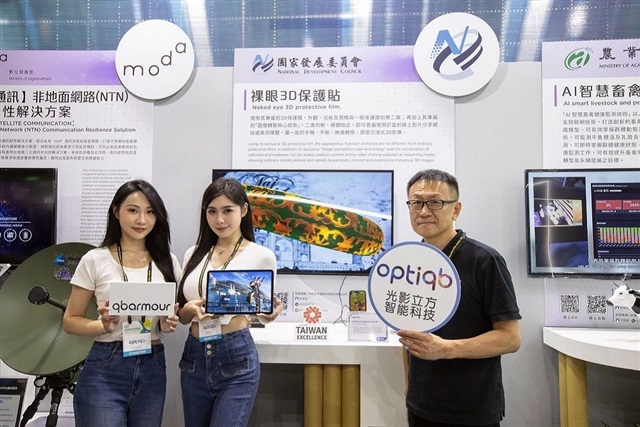
3D technology has long promised a new level of visual immersion, yet widespread adoption has remained limited due to high content production costs, expensive hardware, and inconsistent user experiences. Taiwan-based startup Optiqb is redefining the category from the ground up. By combining AI algorithms with a proprietary optical screen protector, the company enables any smartphone to convert everyday 2D content into glasses-free 3D in just seconds - bringing stereoscopic viewing closer to everyday life.
Optiqb CEO Jye Lin explained that the team's philosophy centers on "no change in device, no change in content, and no change in user behavior." By allowing users to access 3D in the most natural and familiar context, the company aims to remove long-standing barriers to adoption and pave the way for more widespread 3D usage.
At the core of Optiqb's technology is an AI-powered 3D engine capable of real-time eye-tracking to determine the viewer's position. Through depth-prediction models, the system calculates the stereoscopic depth of each frame and generates separate parallax images for the left and right eyes. The algorithm then rearranges pixel information, which is refracted through a specialized optical layer embedded in the screen protector, enabling a full 3D effect without the need for head-mounted devices.
A key breakthrough lies in the engine's ability to work with any 2D content - whether recorded video, streaming services, or platforms like YouTube - allowing instantaneous conversion and dramatically lowering the entry barrier for 3D consumption. Beyond content flexibility, Optiqb has focused heavily on visual comfort. Traditional 3D and VR experiences often induce dizziness because users must adapt to the device. Optiqb reverses this dynamic: its system adapts to the user. The AI dynamically adjusts parallax based on eye position and viewing distance, optimizing depth effects and mitigating the discomfort commonly associated with conventional 3D technologies.
Optiqb's business model follows a dual-track approach that integrates both hardware and software. Revenue is sustained through the sale of its optical screen protectors, while its AI 3D engine is licensed to telecom operators and content service providers - allowing streaming platforms to upgrade to glasses-free 3D without remastering existing content. According to Lin, Singtel has already adopted the technology and is preparing to launch a premium 2D-to-3D service. Chunghwa Telecom is also in partnership discussions to gradually introduce glasses-free 3D versions of local content. Optiqb is additionally collaborating with device manufacturers to embed its technology directly into smartphones, tablets, automotive systems, and commercial displays, building an end-to-end ecosystem that connects content, software, and devices.
National-Level Support Accelerates Optiqb's Global Deployment of Next-Generation Visual Technology
Optiqb now derives nearly 90% of its revenue from overseas markets, with customers spanning Singapore, Japan, Southeast Asia, Europe, North Africa, India, and North America. Its very first commercial client - Singtel - underscores the high replicability of its core technology and its strong appeal across global markets.
As the company rapidly expands worldwide, Taiwan Tech Arena (TTA) has played a pivotal role in accelerating Optiqb's internationalization. According to CEO Jye Lin, TTA has not only secured access to major global exhibitions but has also provided multi-layered support through its mentorship network, cross-border connections, client matchmaking, and hands-on commercialization guidance. These efforts helped Optiqb build a structured overseas expansion framework - from product pitch refinement and meeting preparation to time management during exhibitions - ultimately generating more international leads and partnership opportunities.
For CES 2026, Optiqb has already finalized its meeting schedules, target customer lists, and outreach strategies with assistance from TTA and its mentor network. The company will engage with a broad spectrum of potential partners, including global telecom operators, content studios, major retail distributors, and automotive and display manufacturers, with the goal of signing multiple MOUs during the event.
Looking ahead to 2026, Optiqb plans to standardize its "reference model" solution by the end of this year, enabling the company to replicate deployment globally through a unified offering. Its expansion strategy will focus on four major customer segments - telecom operators, content platforms, retail channels, and device manufacturers - building a scalable and efficient go-to-market model. With a clear strategy and mature technology stack, Optiqb aims to further accelerate the adoption of glasses-free 3D across international markets.
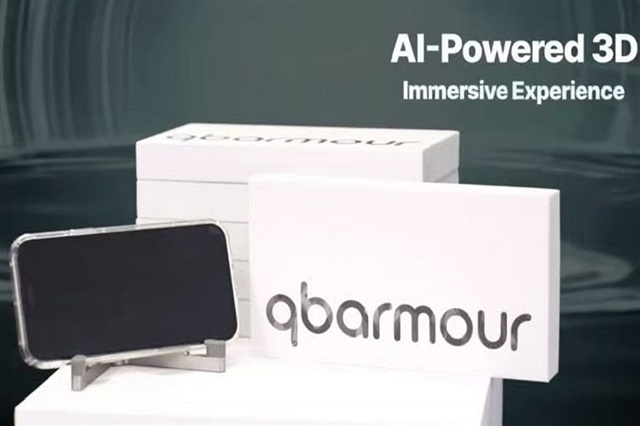
Optiqb AI 3D engine quickly identifies user's eye position. Credit: Optiqb