CONNECT WITH US
Sign out

TRI's 2025 operations hit record highs, with advanced packaging opportunities to further drive growth

, Taipei
0

Credit: DIGITIMES

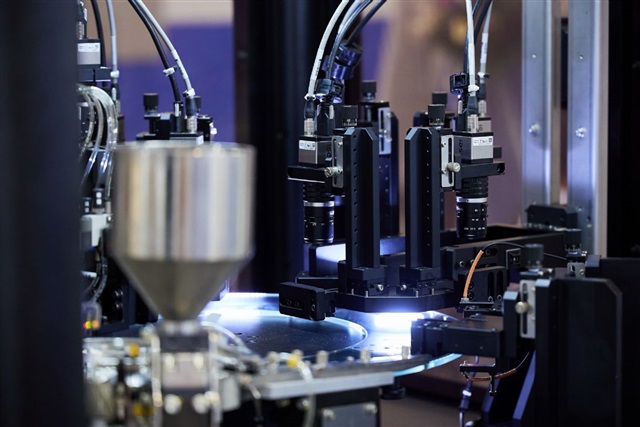
Optical and electrical inspection equipment supplier Test Research Inc. (TRI) held an online investor conference on December 16, 2025, stating that, benefiting from continued strong demand for networking servers, semiconductors, and automotive electronics, its 2025 revenue is confirmed to hit a record high. The company expects 2026 order momentum to remain strong, significantly reducing the impact of traditional seasonality, with full-year operations expected to continue setting new highs. Gross margin is projected to remain firmly in the 55–60% range.

Semiconductor expansion ahead

CFO Ken Chen stated that current semiconductor customers are mainly outsourced semiconductor assembly and test (OSAT) providers. He is optimistic that as major foundry players accelerate the release of advanced packaging orders, substantial capacity among mid- and back-end players will expand, strengthening demand for related inspection equipment and further increasing the proportion of semiconductor-related revenue.

Chen explained that TRI has long focused on high-technical-barrier blue-ocean markets, entering areas such as 3D automated optical inspection (AOI), automated X-ray inspection (AXI), high-precision electronic component measurement, and advanced semiconductor process inspection. In the first 11 months of 2025, revenue from blue-ocean markets accounted for 81%. However, due to adverse impacts from the appreciation of the New Taiwan dollar, gross margin for the first three quarters declined to 58%.

Networking servers drive revenue mix shift

Networking servers were the main growth driver in 2025, with the revenue share rising to 36% in the first 11 months, an increase of 13% compared with the same period in 2024. Although the shares of semiconductor and automotive electronics declined by 2% to 12% and 19%, respectively, the absolute revenue values of both applications still recorded double-digit year-over-year growth.

Dual product lines face global competition

TRI operates two major inspection equipment product lines: optical and electrical. Image inspection equipment contributes about 75% of revenue, including solder paste inspection (SPI), AOI, and AXI. In-circuit board testers account for 25% of total revenue, including manufacturing defect analyzers (MDA) and in-circuit testers (ICT).

Its one-stop inspection and measurement solutions for printed circuit board assembly (PCBA) and advanced semiconductor packaging and testing processes are unique domestically. Major competitors are concentrated overseas, including US-based Keysight and Teradyne, Germany's SPEA, as well as AOI-focused vendors such as South Korea's Koh Young, Japan's Omron, and Germany's Viscom.

PCBA remains the company's core business and primary shipment focus, accounting for 85% of related revenue. Advanced packaging and testing is a newer area that TRI has been actively entering in recent years, currently accounting for 15% of total revenue. These solutions can be applied to inspection or measurement for advanced wafer-level packaging (WLP), chiplets, system-in-package (SiP), chip-on-wafer (CoW), and through-silicon via (TSV) processes.

Capacity ready for sustained growth

All floors of its second-phase Linkou manufacturing center are gradually being planned to be put into production. Current capacity supply is ample, lead times are relatively flexible, and urgent orders can be shipped within as fast as one month. The company does not anticipate large-scale factory expansion investments over the next 10 years.

TRI announced consolidated revenue of NT$8.13 billion (US$257.9 million) for November 2025, showing both month-over-month and year-over-year growth, up 51% from October and 82% from the same period in 2024, marking a new high for the same period in company history.

Cumulative revenue for the first 11 months of 2025 reached NT$77.38 billion, a year-over-year increase of 32.84%, significantly exceeding the previous full-year record of NT$67.09 billion set in 2022.

Article translated by Emily Kuo and edited by Jerry Chen