CONNECT WITH US
Sign out

SMIC resurges in memory and controller orders amid deepening AI-era crunch

Staff reporter, Taipei
0

Credit: SMIC

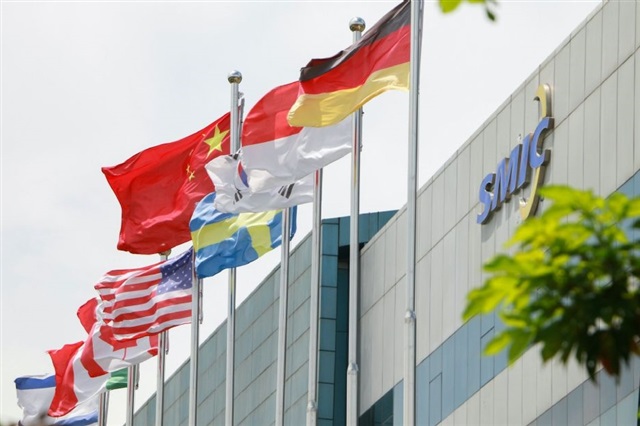
The global semiconductor sector is at a critical juncture as demand for AI servers and high-performance computing (HPC) accelerates. A structural memory shortage is emerging across the supply chain, pushing SMIC back into a prominent role as a foundry.

In its early years, founder Richard Chang used memory output as a "filler" to keep new fabs fully utilised. SMIC later shifted decisively toward logic-focused foundry work and phased out memory, photomasks, and optical filters. The AI surge, however, has brought memory and controller demand back into its fabs, echoing its past but under entirely different market dynamics.

SMIC said in its third-quarter earnings call that utilisation remains high at 95.8%, with orders outpacing available line space. Fourth-quarter momentum looks more limited as smartphone memory shortages intensify and prices surge, raising concerns that devices could be delayed even if other components are ready. Higher memory costs are also pushing customers to revisit broader chip budgets.

The firm is handling a wave of urgent orders for analog parts, NOR/NAND flash, and MCUs, prompting it to delay some non-essential smartphone projects and reduce its near-term smartphone mix. SMIC views the shortage as both supportive for current orders and disruptive for next-year visibility. Even a 5% shift in memory supply can impact pricing, and with NOR, NAND, and MCUs demanding long qualification cycles, new entrants need at least 16 months to reach volume output, limiting short-term share changes.

AI server demand reshapes NOR flash needs

Analysts say AI servers are now the main catalyst behind NOR flash tightening. As systems transition from HBM3E to HBM4, higher stack counts significantly increase NOR demand for power-management ICs and boot modules, in some cases by almost 50%.

Higher compute frequencies and denser data traffic across GPUs, DPUs, BMCs, and RAID controllers are making SPI NOR flash essential for reliable boot and control functions. High-density GPU configurations, such as eight A100 modules, often integrate several SPI NOR devices of different capacities to maintain stable startup during high-speed operations.

Rising DPU adoption tightens NOR supply

Cloud providers are increasing their reliance on DPUs for heterogeneous compute and network acceleration, creating dual NOR capacity needs:

256MB–2GB for high-speed buffering
8MB–32MB for lightweight boot code

This split demand pattern is adding further pressure to an already constrained NOR market.

Evolving AI hardware sets new NOR flash requirements

Evolving AI server designs are forcing NOR flash upgrades, with vendors expected to deliver smaller packages for dense server boards, higher thermal tolerance, stronger drive strength for long-reach signalling, and improved encryption for model security. These requirements highlight NOR's growing role as a performance-critical component.

Two decades after SMIC used memory as a stopgap to support fab loading, the AI server cycle has pulled memory production back into its operations. SMIC is no longer an early-stage player but a key mature-node supplier at a strategic turning point as AI demand reshapes the role of memory and controller components.

As SMIC expands into automotive IC work and adds new memory-related production runs, its next steps in this cycle will remain closely watched.

Article translated by Levi Li and edited by Jack Wu