
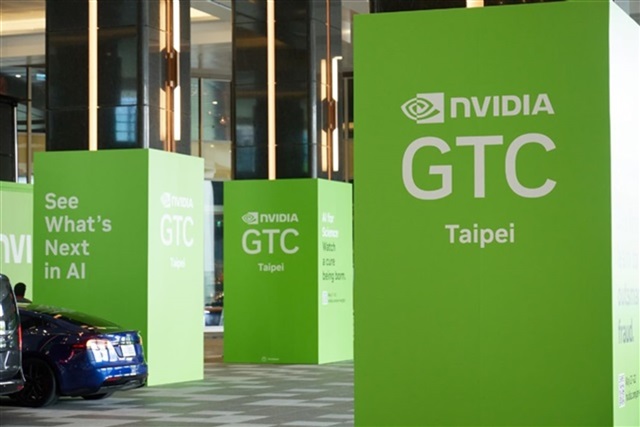
The quantum computing industry is at a critical inflection point, shifting from "scientific fantasy" to practical industrial application, driven by major breakthroughs in quantum error correction (QEC) technology. This shift was a focal theme of Nvidia CEO Jensen Huang's keynote at the recent GTC conference in Washington.
According to specialized quantum media outlets such as The Quantum Insider, Quantum News Nexus, and Quantum Computing Report, each quantum computer contains dozens to thousands of physical qubits, or quantum bits. These qubits are extremely susceptible to environmental noise, which limits computational accuracy and prevents large-scale, precise algorithm execution.
Two paths to quantum commercialization
Today, the industry is exploring two complementary paths to make quantum computing commercially viable. One path involves dedicated quantum machines. Systems such as D-Wave's quantum annealers have already found applications in finance, logistics, and manufacturing, with first-quarter 2025 revenue growing over 500% year-on-year, demonstrating strong revenue and profit potential.
The other path is hybrid quantum-classical computing, which has become the most practical model for tackling real-world problems. By combining quantum processing units (QPUs) with classical high-performance GPUs, hybrid systems can handle complex tasks more efficiently. Platforms like Nvidia's CUDA-Q and IBM's Qiskit are helping to build this ecosystem, paving the way for real-world applications.
Key players in the quantum race
Quantum research and cloud hardware services are dominated by two groups: pure quantum startups like D-Wave, Rigetti, IonQ, and Quantum Computing, and established tech giants including IBM, Google, Microsoft, Nvidia, AWS, and Intel.
Notably, AMD partnered with IBM in August 2025 to integrate its FPGA, CPU, and GPU chips into IBM's quantum ecosystem, advancing joint development in quantum technology.
Nvidia, in particular, plays dual roles as both an enabler and integrator. Instead of developing proprietary quantum computers, the company focuses on creating an open hybrid quantum-classical ecosystem. Its CUDA-Q software platform unifies the management of various quantum processors alongside Nvidia GPU clusters, lowering barriers for developers and companies eager to explore hybrid quantum computing.
Investing in the future of quantum
Nvidia is also securing its position through strategic investments via its NVentures fund, backing leading companies in three mainstream quantum technology approaches: ion trap (Quantinuum), neutral atom (QuEra), and photonic (PsiQuantum). Investments range from hundreds of millions to billions of U.S. dollars, ensuring Nvidia stays competitive in the rapidly evolving quantum landscape.
Beyond platforms, Nvidia is investing heavily in next-generation quantum technologies. Through its NVentures fund, it supports leaders across three main technology approaches: ion trap (Quantinuum), neutral atom (QuEra), and photonics (PsiQuantum). These investments, ranging from hundreds of millions to billions of dollars, are aimed at ensuring Nvidia maintains a strategic edge in the fast-evolving quantum landscape.
Meanwhile, IBM, a long-time leader in superconducting technology, continues iterative updates along its hardware roadmap. Its latest 120-qubit Nighthawk processor is available, with plans to deliver a 200-qubit Starling system by 2029 and ultimately reach a 2,000-qubit Blue Jay system by 2033.
Google, likewise, has been investing heavily in superconducting qubits, launching its 105-qubit Willow chip by the end of 2024 and achieving a landmark surface code error correction with code distance d=7, breaking a 30-year industry barrier and laying crucial groundwork for fault-tolerant quantum computing.
Recently, Google focused on overcoming quantum error correction bottlenecks, publishing new quantum computing breakthroughs in Nature. Their algorithms run 13,000 times faster than the world's fastest supercomputer, opening pathways for quantum applications in medicine, materials science, and beyond.
Article translated by Willis Ke and edited by Jack Wu