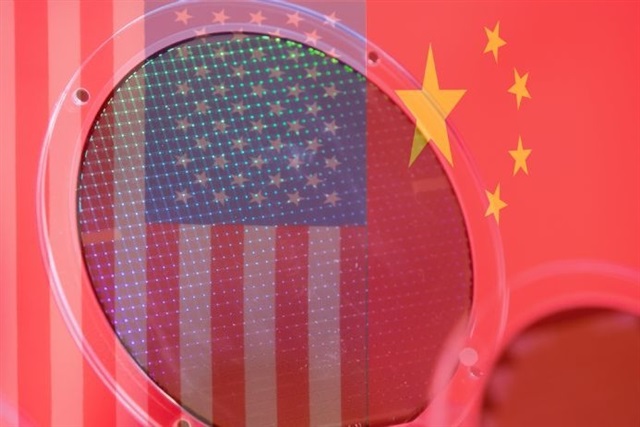
China, on October 9, announced a major expansion of its rare earth export controls, escalating tensions with the US and drawing sharp criticism from President Donald Trump. In response, Trump vowed to impose 100% tariffs on Chinese goods starting on November 1.
The new Chinese rules, issued by the Ministry of Commerce, require an export license for any products, technologies, or materials that contain Chinese-origin rare earth elements, even if they account for as little as 0.1% of the product's value. The rules also apply to goods manufactured abroad that utilize Chinese rare earths.
In a notable escalation, Beijing's latest measures expand control not only over rare earth materials but also their end-use applications, covering high-performance technologies such as: Logic chips at 14nm or below, memory chips with 256 layers or more, related manufacturing and testing equipment, and AI systems with potential military applications, all of which will now face case-by-case review before export.
China's growing use of export controls —particularly on elements vital to clean energy and high-tech manufacturing— has raised alarm among Western governments and multinational firms alike, given the country's dominant role in global rare earth supply.
US political reactions: tariff threats and strategic calculations
The announcement drew a swift response from US political leaders. President Trump, speaking at a campaign rally, accused China of weaponizing its control over critical materials and said he would impose 100% tariffs on all Chinese imports if elected.
US Vice President J.D. Vance, meanwhile, urged restraint, telling reporters that the US holds more cards than China in the long run and that Beijing would be wise not to overplay its hand.
Taiwan: minimal direct impact, but global supply chain risks rising
Taiwan's Ministry of Economic Affairs (MOEA) responded to the announcement with a statement downplaying immediate concerns. It noted that Taiwan's semiconductor and electronics sectors primarily source rare earth products and derivatives from the US, Europe, and Japan, meaning direct exposure to Chinese supply is currently limited.
However, officials acknowledged the potential indirect risks, particularly for EVs, drones, and robotics, where global manufacturing networks remain tightly interlinked.
The expanded controls could disrupt global supply chains, the ministry warned, adding that it would continue monitoring rare earth prices and international sourcing conditions. It pledged to maintain close contact with local manufacturers to prepare for any downstream effects.
China tightens grip on strategic resources
The new rules follow China's previous round of restrictions announced in April 2025, which targeted seven heavy rare earth elements —including samarium, gadolinium, terbium, dysprosium, lutetium, scandium, and yttrium— as well as associated permanent magnet materials.
The October expansion adds five more elements to the control list: europium, holmium, erbium, thulium, and ytterbium, as well as their alloys and related products. China has also broadened end-use scrutiny for all these materials, with key applications now subject to individual government approval.
According to Taiwan's government, the initial April restrictions had already led to price increases and delays in the procurement of key magnet materials, crucial for the production of high-efficiency motors used in EVs and advanced drones. The latest expansion, it warned, could exacerbate those challenges.
Taiwan's strategy: diversify, innovate, and recycle
To reduce its vulnerability, Taiwan's Ministry of Economic Affairs is stepping up efforts to: diversify imports of critical minerals, invest in domestic rare earth R&D and recycling, and strengthen international cooperation through tech and trade agreements.
The government says it will leverage existing scientific and industrial programs to support local firms in improving rare earth utilization, particularly in sectors like advanced manufacturing, renewable energy, and defense.
Securing a stable supply of critical materials is essential to maintaining industrial resilience, the ministry said, especially in an increasingly volatile geopolitical environment.
Article translated by Elaine Chen and edited by Jack Wu