Amid intensifying US-China tech rivalry, China is accelerating its push for semiconductor self-reliance. Huawei's chip unit HiSilicon has stepped into the smartphone touch and display IC arena with its in-house Zhuque OLED driver chip, signaling a shift toward vertically integrated, system-level solutions under the Huawei umbrella.
Branded as part of the Zhuque IC series, HiSilicon's new product line threatens to disrupt the current IC design landscape, especially as Huawei reclaims the top position in China's smartphone market. The renewed momentum could pressure entrenched suppliers that currently dominate the touch and display IC segments.
Zhuque AI-Touch targets high-end smartphones with RISC-V AI integration
HiSilicon's Zhuque AI-Touch is the industry's first touch controller featuring embedded AI processing. Built on a dual-core RISC-V architecture, it interprets complex real-world usage scenarios, like wet-hand inputs, raindrops, or accidental pocket touches, using real-time AI recognition.
The chip is currently undergoing testing in several Huawei mid- to high-end models and is expected to roll out in flagship smartphones. If Huawei fully adopts HiSilicon's ICs — and as Chinese OEMs double down on local sourcing — this could accelerate the shift toward domestic touch ICs, challenging the market share of long-established foreign and Taiwan-based players.
AI-powered features are becoming a key differentiator in the mid- and high-end smartphone segment. Vendors that fall behind in AI adoption risk being pushed to the margins in this next wave of competition.
Zhuque OLED raises the bar in driver ICs with system-level innovation
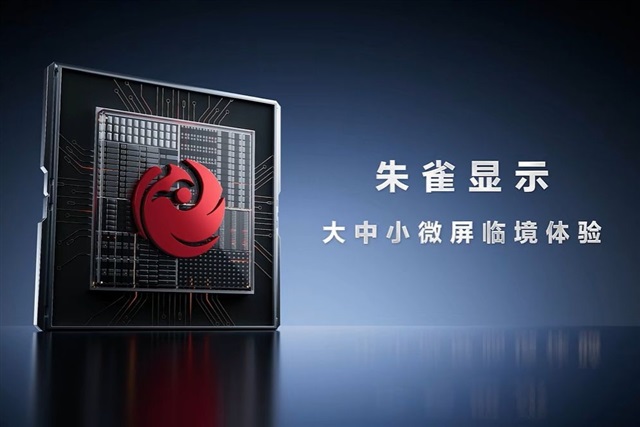
HiSilicon is also expanding into the OLED driver IC market. At AWE 2025, the company unveiled its Zhuque OLED immersive display solution, designed for smartphones, laptops, tablets, and automotive displays.
Zhuque OLED's standout feature is its "dual-layer OLED + LTPO local dimming" architecture, integrated with an AI-powered pixel-level optical engine and a RISC-V-based hybrid digital-analog platform. The system enables real-time dynamic control of brightness, color, and refresh rates.
Novatek Microelectronics and Raydium Semiconductor currently dominate the global OLED driver IC market, with Novatek supplying major brands like Samsung Electronics, Oppo, and Xiaomi. However, Zhuque OLED's architectural innovation, algorithmic integration, and AI capabilities could make it a serious contender, particularly if backed by leading domestic panel makers such as BOE Technology and TCL CSOT.
Zhuque line forms backbone of HiSilicon's broader '5+2' IC strategy
The Zhuque AI-Touch and OLED launches are part of HiSilicon's broader "5+2" chip strategy, a seven-pronged platform covering display, media, vision, networking, wireless, IoT, and AI. The initiative reflects HiSilicon's ambition to create a vertically integrated, self-sufficient IC ecosystem across Huawei's device portfolio.
The "5" in the strategy refers to five core chip lines:
● Balong for wireless communications
● Lingxiao for networking
● Honghu for display and multimedia
● Yueying for image processing
● Zhuque for touch and display ICs
The "2" represents foundational platforms:
● NearLink for IoT and MCU applications
● AI computing, including edge intelligence and terminal-side processing
With Huawei and HiSilicon tightly aligned across the supply chain, AI and algorithm integration are becoming central to chip design. This marks a strategic shift from traditional product differentiation toward a full-scale AI-centric IC race.
Taiwanese IC design firms, renowned for their technical expertise and customer-centric agility, now face mounting pressure. As China accelerates its localization drive, HiSilicon's Zhuque lineup is positioning to rewrite the rules in the TDDI market and chip away at Taiwan's long-held dominance.
Article translated by Levi Li and edited by Jerry Chen