Amid South Korea's severe talent shortage in high-end engineering and technology during the AI era, the College of Engineering at Seoul National University (SNU) has proposed a dual-track plan to cultivate new talent and advance the country's AI industry, aiming to address the pressing talent gap and ensure South Korea's competitiveness for the future.
EXCEL plan to foster innovative new talent
At a recent forum on strategies for leading nations in the AI era, Kim Young-oh, dean of SNU's College of Engineering, noted that the College enrolls roughly 850 freshmen each year, of which only 750 graduate, with the rest transferring to more popular fields such as medicine or dentistry. Moreover, South Korea has a major gap in the application of AI and other emerging key technologies, with a less than 20% AI adoption rate among small and medium businesses and in regions outside the capital.
To address this issue, SNU has launched the Education for X-Caliber Engineering Leaders (EXCEL) plan in 2025, providing three years of financial support to 40 members of each year's freshman class who demonstrate high potential in innovation. In addition to the KRW30 million (approx. US$22,000) support package, which covers living expenses, tuition, and research and startup funding, the plan also incorporates a professor-pairing system to guide students into AI, innovative research, or entrepreneurship at the undergraduate level.
Moreover, with an eye on global diversity, the plan will also recruit 20 top foreign students from Vietnam and other emerging countries as second-year transfer students into SNU, and provide them with the same support package and resources.
Industrial AI Center to promote AI adoption
SNU has also established an Industrial AI Center, focusing on real-world applications for businesses seeking to adopt AI. The center will offer consultation and technical services for companies that submit their real-world problems, connecting them with SNU faculty and graduate students if the problems are research-related, or matching them with AI startups or solutions providers for application-related issues.
In addition, the Industrial AI Center is developing an internal generative AI system, which will become publicly available in September 2025, to enable rapid access to SNU experts and research, and help foster smarter collaboration between industry and academia.
Reforming academic programs and national policies
According to Kim, future talent will need to be proficient in both AI technology (programming, modeling, and applications) and other specializations (such as semiconductors, material science, mechanical engineering, or architecture), and thus SNU is reforming its master's programs in engineering through a new "self-designed major" system. Students will be able to combine AI with their core discipline, and graduate with a degree in "AI semiconductors" or "AI materials engineering."
Beyond internal reforms, Kim also called for the government to implement a set of nationwide strategies: identify the top 1% of the roughly 100,000 new engineering freshmen each year; establish a national innovation and talent fostering system to begin training at the high school level; and establish a national AI innovation institute to attract leading domestic and international scholars with lucrative pay.
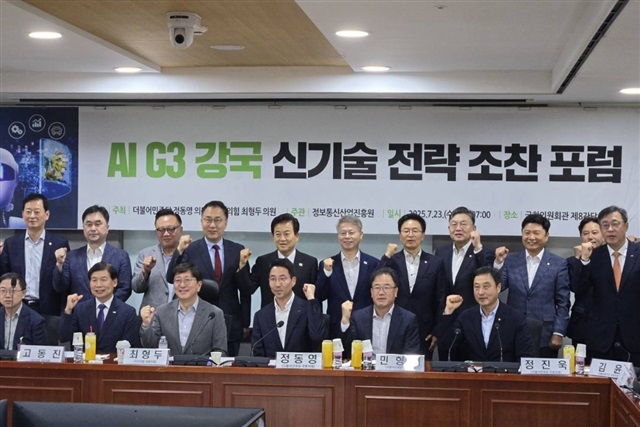
At the forum, executives from SK Hynix, LG Group, Doosan Robotics, and other leading companies also voiced concerns about the shortage of engineering talent and the gap between research and industry demands, while also expressing hope that these projects will help foster a more robust AI talent pool for the industrial sector.
Article translated by Kevin Wang and edited by Jack Wu