

CONNECT WITH US
Sign out

Era of compound semiconductors: Q&A with Win Semi chairman Dennis Chen

Julian Ho, Taipei
0

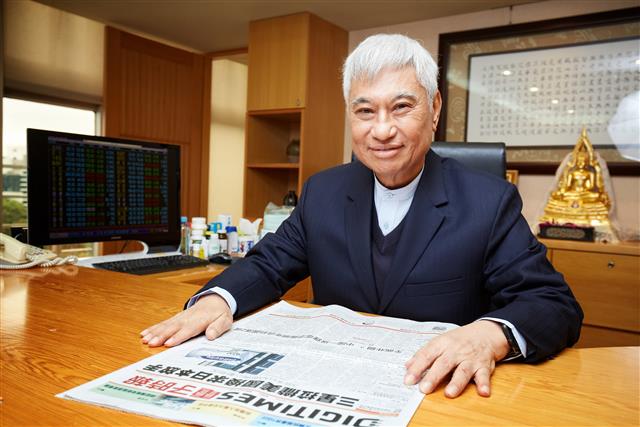
Win Semi chairman Dennis Chen. Credit: DIGITIMES

While compound semiconductor materials have been around for some time, they are generating significant interest from the industry lately for its potential to replace silicon as the preferred wafer base for electronic devices. In a recent interview with DIGITIMES, Win Semiconductors chairman Dennis Chen shared his thoughts on the imminent era of compound semiconductors as well as four hot topics for tech companies this year, including the metaverse, low-Earth-orbit (LEO) satellites, component shortages, and talent crunch.

Q: Both upstream and downstream ends of the Taiwanese electronics supply chain have been discussing the metaverse. What is your interpretation of it and its relationship with compound semiconductors?

A: While the concept of the metaverse is quite "unbelievable," I think it could perhaps be materialized through a combination of high-performance computing (HPC), high-speed transmission, and light sensing technologies. It will take at least five years to integrate the metaverse concept into people's everyday lives and for there to be major business opportunities.

When we talk about combining HPC chips with different imaging and sensing technologies for the 5G or even 6G era, it already sounds like an improbable dream. While I admit that the metaverse is an "interesting" concept, it will require some basic infrastructures like 5G communications to create a lifelike sense of immersion. The applications of compound semiconductors will be necessary to fully realize the metaverse as well.

Q: What are some business opportunities for the 5G market in 2022? What is your take on the incorporation of LEO satellites?

A: We are only second year into the 5G era, and we have only achieved 20% of our 5G infrastructure target. I expect Taiwan, China, the US, and Europe to begin adopting more active 5G infrastructure strategies starting from 2022.

Once 5G can support the Internet of Things (IoT) and vehicle-to-everything (V2X) network, there will be enormous business opportunities for its applications. Although some people have suggested that LEO satellites are used to supplement 6G communications, they are still considered as an integrated part of the 5G infrastructure.

Q: Win Semi has been described as the "TSMC of the III-V semiconductor industry." How do you define the company's position in the supply chain?

A: Win Semi was the first pure-play gallium arsenide (GaAs) IC foundry in the world. Although the company's production capacity for compound semiconductors was low in the beginning, it was able to expand its foundry production capacity and development of related technologies to become an important player in the III-V semiconductor supply chain following the 3G era.

Q: Win Semi has announced that it will invest NT$85 billion (US$3.05 billion) in expanding production in Luzhu District, Kaohsiung. What is the rationale behind the decision?

A: This is a long-term investment project that will take 10-15 years to complete. We are planning to build four new plants on 9.7 hectares of land in the Kaohsiung Science Park, with an expected monthly production capacity of 90,000 units.

We believe production expansion is necessary since applications for compound semiconductors will no doubt increase in the future and so will the market demand.

Q: What do you think about the formation of third-generation semiconductor production camps led by Sino-American Silicon Products (SAS), Hermes-Epitek, and even companies in the Si-based semiconductor supply chain?

A: Win Semi has been building a GaN-on-SiC production ecosystem for the last decade. Undeniably, companies in the US, Europe, and Japan are holding the majority of the global SiC substrate market share, so it is unlikely that Win Semi will stop collaborating with other players in the supply chain. Our current strategy is to maintain a good relationship with our suppliers, including those in Taiwan.

Q: How should the industry view China's semiconductor localization strategy?

A: From an industrial perspective, it is understandable that China would want to localize its semiconductor supply chain. However, it will take some trials and errors for Chinese tech firms to catch up with their US and European competitors, especially in the development of compound semiconductors.

In comparison, the Taiwanese supply chain is more mature in the development of silicon and GaAs semiconductors, so it will have an easier time shifting towards the era of third-generation semiconductors.

Q: What is your take on the talent crunch in Taiwan's semiconductor industry, particularly for silicon and compound semiconductors?

A: I think the main reason for the ongoing talent shortage is a lack of planning in the education system 10 years ago. Perhaps long-term market demand was not a major focus for the design of education policies back then.

Frictional unemployment is a serious issue in Taiwan. While the country has enough manpower resources, people's expertise does not match the market demand, resulting in employers and employees being unsuitable for each other. This then leads to higher unemployment rate and lower birth rate.

Q: What actions should the government and researchers take to ease the talent shortage?

A: I believe that recruiting global talent is a solution. Even Japan has begun hiring professionals from other countries to prevent its industry from declining, despite being a relatively closed society.

With related regulations, bringing in global talent will boost Taiwan's economic growth. I am speaking not only from an industrial perspective but also a national strategic standpoint.

Q: What is the biggest difference between the talent crunch experienced by compound semiconductor companies and that by other industries?

A: A few decades ago, telecommunications components were managed by the government as they were considered "national security materials." Since there were limited career opportunities in the field, most students who travelled abroad had chosen to study subjects like computing instead. This explains why Taiwan has an insufficient number of academics specializing in compound semiconductors or optical communications.

Currently, while there are still basic regulations for the manufacturing of RF and PA components for defense satellite communications, restrictions for commercial satellite communications have become relatively lenient.

Semiconductor companies in both the US and China have also begun actively exploring satellite communications technologies for 6G network architectures that are expected to expand wireless coverage to the land, sea, and sky.

Q: Many Taiwanese semiconductor talent are reportedly stepping down from executive positions in major Chinese tech firms. What is your interpretation?

A: There have been numerous cases of Taiwanese company executives being recruited by China in the past. While we will not be able to prevent Chinese companies from attracting semiconductor talent from Taiwan completely, I think an emphasis should be placed on educating Taiwanese about the intentions behind China's talent poaching.

Personally, I think Taiwan should put in more efforts in protecting trade secrets. Heavier punishments for people who leaked trade secrets to companies in other countries must be established, otherwise Taiwan's industrial competitiveness will be seriously affected.

Q: Since the COVID-19 pandemic, there has been a demand/supply imbalance for Si-based semiconductors. How will the chip shortage impact the industry?

A: There are many factors contributing to the shortage of Si-based semiconductors. Besides global factories being shut down due to the pandemic, automakers were not used to building up inventories in the past. There was also a problem with the delivery of components.

The supply of compound semiconductors is relatively stable compared to that of Si-based semiconductors. The demand for compound semiconductors is expected to grow in 2022 with countries around the world speeding up their development of 5G infrastructures, which will result in a higher market penetration.

Q: What are some business opportunities for compound semiconductor applications for future cars?

A: Compound semiconductors can be applied to automotive LiDAR technology, which is expected to become more mainstream between 2024-2025. Besides applications for autonomous driving, it can also be used in basic safety systems.

Article translated by Kevin Cheng
