


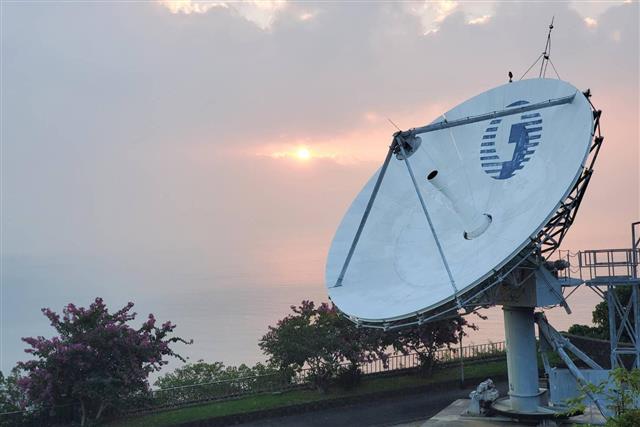
There is still quite some distance to commercialization of satellite communications, but Taiwan makers in the supply chain of Starlink, an Internet satellite project by SpaceX, are bracing for related infrastructure business opportunities that are looming as the US aerospace company is expected to start ground facilities deployment after enforcing a second wave of satellite launch starting in August, according to industry sources.
SpaceX has so far successfully deployed at least 1,800 satellites and is proceeding with a second-wave launch plan, the sources said. Its CEO Elon Musk has noted that Starlink is expected to log 500,000 users of satellite Internet services by mid-2022.
The sources continued that Starlink's satellites are set to achieve a 100% global coverage in the third quarter at the earliest, which in turn may prompt SpaceX to kick off mass construction of ground transceivers in the fourth quarter the soonest. This will provide the exact business opportunities targeted by Taiwan's suppliers of CCL, PCB, RF transceiver modules and other related materials, the sources said.
Taiwan's PCB maker Compeq Manufacturing and CCL supplier Elite Material are now in the supply chain of Starlink, and other rigid PCB makers including Dynamic Electronics and Chin-Poon Industrial have also forged partnerships with other satellite communications clients, the sources said.
As satellite communications products usually involve national security, Taiwanese suppliers are more reassuring to customers in this regard and are always asked to roll out related products directly from their plants in Taiwan, the sources noted.
PCB products for satellite communications require high specs and entail great difficulty in production. Those for use in satellites have to meet the strictest aerospace certification standards, and those needed for ground transceivers must be able to withstand diverse extreme weather conditions including temperature, humidity and air pressure in different parts of the world, the sources said.
Apart from traditional multi-layer rigid PCB, HDI boards are increasingly adopted by SpaceX in its ground transceivers, as such boards, featuring high-density compression, can shorten signal transmission distance and reduce possible signal loss, the sources added.
Meanwhile, Taiwan's backend house Tong Hsing Electronic Industries has entered the supply chain of Starlink, offering high-frequency RF transceiver modules for satellite gateway applications. After completing shipments for satellites launched by SpaceX in the first wave, the company is set to renew shipments for the second-round applications in the short term before serving the demand for ground transceivers, the sources said.
Tong Hsing is building a new plant in northern Taiwan dedicated to packaging high-frequency RF modules for satellite and other high-end 5G, EV, server, and healthcare applications, with the plant slated to start commercial production in the first quarter of 2022.
In the materials segment, Shenmao Technology has also joined the Starlink project, as its high-performance lead-free solder pastes has been validated by SpaceX for use in satellite communications circuits due to their special alloy design, high performance stability reliability, and being able to boost the durability of assembled electronics devices, the sources said. The company is expected to significantly ramp up its shipments to the aerospace client in 2022.
Article translated by Willis Ke
