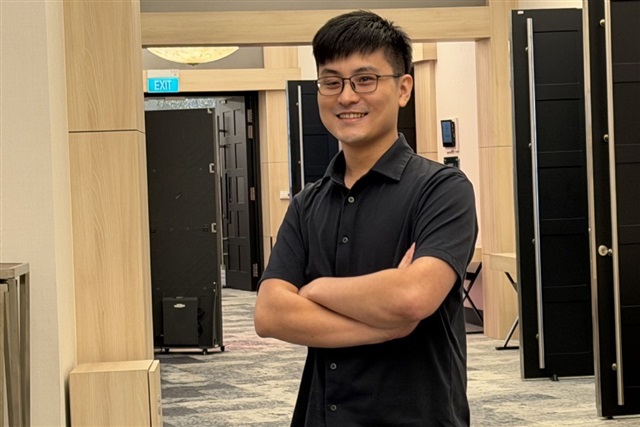
Singapore is building a semiconductor R&D hub by attracting both multinational investment and overseas research talent. Dr Yu-chieh Chien, a Taiwanese scientist at the Agency for Science, Technology and Research's Institute of Microelectronics (A*STAR IME), is one example.
South Korea's Ministry of Science and ICT said its Sovereign AI Foundation Model Project will run to completion as originally planned. The statement reversed, within hours, a vice minister's suggestion that the national-team AI competition would wind down as the government launches a new KRW4.7 trillion frontier AI program.
China's Ministry of Industry and Information Technology and the National Development and Reform Commission have released the 15th Five-Year Plan for the development of the electronic information manufacturing industry, aiming to push revenue at large-scale enterprises above CNY30 trillion (US$4.5 trillion) by 2030 and foster world-class companies in semiconductors, advanced computing, consumer electronics, basic electronics, and energy electronics.
Samsung Electro-Mechanics is investing KRW6.78 trillion (approx. US$5 billion) to expand FCBGA capacity in South Korea and Vietnam. The projects are backed by customer funding and medium- to long-term volume commitments, as demand for high-performance package substrates pushes Korean production lines toward high utilization.
Huawei's Kirin 9050 Pro has been fully broken down by Chinese and overseas researchers, giving the market a closer look at the company's "LogicFolding" approach. Analysis from Geekerwan and die-shot images posted by Kurnal Insights show that the flagship SoC in the Huawei Mate 90 Pro Max uses two vertically stacked dies rather than a traditional single-plane chip design.
Samsung Electronics is expanding its thermal-management efforts for high-bandwidth memory (HBM) beyond the memory stack as increasingly large chip packages raise heat-management challenges.
AM Intelligence (AMI) is widening its AI infrastructure push in India and Malaysia, adding to a regional buildout that could matter well beyond Asia. The latest orders expand access to frontier computing for cloud providers and developers, while signaling a shift in global AI capacity toward new hubs outside North America.
Taiwan's motorcycle market emerged from the seasonal lull in September 2026, with total registrations rising to 70,189, up 16.78% month-over-month. Electric scooter sales also rebounded, with 3,482 units sold in the month, up 32.9%.
Hotai Motor said Taiwan's auto market should remain stable in the fourth quarter, after September sales came in better than expected and the company kept its full-year 2026 forecast at 430,000 vehicles. The distributor also said sales of Toyota, Lexus, and Hino models will still target 165,000 units in 2026.
The National Science and Technology Council (NSTC) has announced the details of its next five-year quantum research program as Taiwan prepares to wrap up its current NT$8 billion (US$252.14 million) National Quantum Team project by the end of 2026.
Samsung Electronics says its India operations, which it set up in 1995, have evolved from a manufacturing base into a global innovation hub. The South Korean company is pitching the country as a source of technology for its worldwide business, rather than only as a market and production base.
Da Yi Cheng Technology (DYC) has rapidly expanded in recent years, benefiting from the global semiconductor capacity expansion wave, which has driven demand for second-phase electrical and mechanical installation work. The company is now applying its experience in the US, Japan, Germany, and Singapore.
NTT Data expects India to contribute a larger share of its global artificial intelligence (AI) business than it does of its overall IT services business, as the Japanese company pushes ahead with a three-year investment program in the country focused on data centers.
Despite intense technology competition between the US and China, cooperation between the two sides on the open-standard RISC-V architecture continues to deepen, with US intellectual property provider MIPS expanding its work with Chinese industry.
Taiwan memory suppliers Nanya Technology and Winbond Electronics have set new monthly revenue records for 11 and 10 consecutive months, respectively, as their September 2026 consolidated revenues continued to grow.
South Korean outsourced semiconductor assembly and test (OSAT) provider LB Semicon is expanding power semiconductor backend capacity at its Gumi plant as it steps up efforts to reduce its reliance on display driver integrated circuits (DDIs) and a highly concentrated customer base, backed by new business from Qualcomm and Renesas and KRW30 billion (approx. US$22.3 million) in planned equipment investment.