
South Korea's Hanwha Aerospace posted a second-quarter 2026 operating profit of more than KRW1 trillion (approx. US$704.9 million), highlighting its ability to expand military exports and aerospace operations simultaneously. With earnings momentum strengthening, the company is now positioning unmanned warfare and AI-enabled combat systems as its next major growth drivers.
Software and AI reshape battlefield priorities
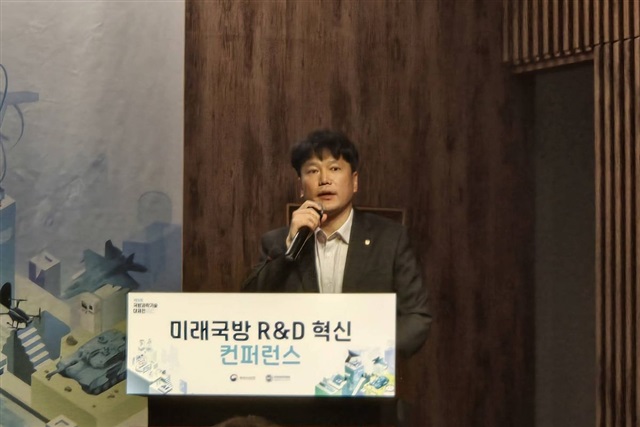
Mae-hun Park, head of Hanwha Aerospace's Manned–Unmanned Integrated Systems R&D Center, said weapons development is shifting decisively toward software- and AI-driven platforms. Traditional reliance on expensive, centralized equipment is gradually being replaced by lower-cost, distributed systems that can be deployed at scale.
Recent military conflicts have accelerated that transition, with unmanned aircraft and unmanned ground vehicles increasingly operating together and, in some cases, engaging each other directly. Park described this as a fundamental turning point in modern warfare.
Customer demands are also becoming more sophisticated. Rather than buying a single unmanned vehicle, military customers increasingly expect one platform to coordinate with hundreds of drones while integrating robotic systems and command-and-control networks. As a result, the speed of system integration has become a critical measure of competitiveness in unmanned weapons.
Export platforms evolve into crewed–uncrewed systems
Hanwha has begun transforming its flagship export products—including the K9 self-propelled howitzer, Redback infantry fighting vehicle and Tigon wheeled armored vehicle—into crewed–uncrewed collaborative platforms. The company is also developing four dedicated unmanned platforms, some in cooperation with South Korea's Agency for Defense Development.
An explosive ordnance detection robot has already entered military service, while a multipurpose unmanned vehicle is scheduled to begin militarization in 2026.
Park said Hanwha has expanded its original target of three unmanned platforms to six. The company aims to achieve Level 3 autonomous driving by 2030 and Level 4 full autonomy by 2035. It is also introducing vision-language-action (VLA) models and world models, with early tests indicating AI could improve system performance by 10%–20%.
Data and testing remain major obstacles
Despite the technological push, significant hurdles remain. Park said high-value training data are still in short supply, and South Korea lacks dedicated testing ranges for advanced unmanned combat systems. Some validation work must therefore rely on overseas experience, while European defense firms have gained battlefield-proven data through operations in Ukraine.
At the same time, rising requirements for communications integration, counter-drone defense and cost reduction are increasing system-design complexity. Hanwha is responding by refining products through operational deployment and by recruiting private-sector specialists to accelerate development cycles.
Strong earnings support higher AI investment
Hanwha Aerospace reported consolidated revenue of KRW9.29 trillion and operating profit of about KRW1.37 trillion in the second quarter of 2026, up 47% and 59% year on year, respectively.
The ground defense division benefited from increased mass production of the Cheonmu multiple-launch rocket system and Cheongeom air-defense system, as well as exports to Poland, Egypt and Middle Eastern customers.
Aerospace revenue rose 17% to KRW760 billion, driven by defense-related business, and the division returned to profit from a year-earlier loss. Subsidiary Hanwha Ocean reported revenue and operating profit growth of 65% and 98%, respectively, supported by a larger share of high-value vessels such as LNG carriers. Hanwha Systems also posted strong growth on rising exports of multifunction radar systems.
With profitability improving, Hanwha plans to increase investment in AI autonomous software, data collection and digital-twin technologies. The company is also expanding collaboration with universities and private-sector experts as it moves toward software-defined weapon systems and large-scale unmanned combat operations, signaling a longer-term strategic shift from hardware-centric defense manufacturing to AI-enabled combat capabilities.
Article translated by Willis Ke and edited by Jack Wu