
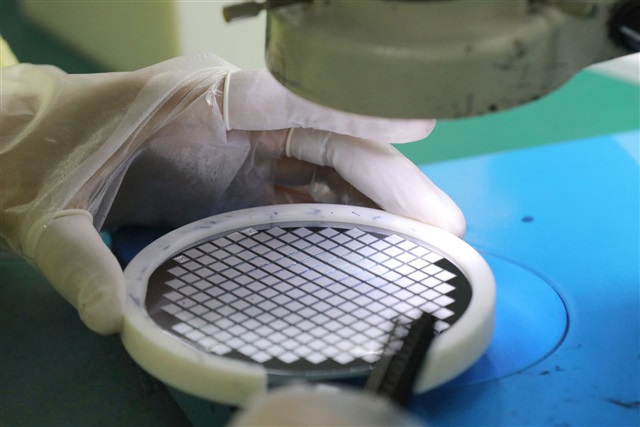
India's semiconductor strategy is entering a more demanding phase, shifting from attracting fabs and assembly plants toward building the capabilities needed to sustain them. From wafer yields and labor rules to materials, equipment, rare earth magnets and emerging technologies, the country is expanding its ambitions as it seeks a deeper role in the global chip supply chain.
India's chipmaking push faces its real test after initial wafers: yield
India's semiconductor ambitions will hinge on whether Tata Electronics can achieve competitive yields at its planned Dholera fab. Analysts say commercial viability could begin around 75%-80% yield, but full competitiveness may require 85%-90%, alongside high utilization and productivity. PSMC's technology transfer could shorten the learning curve, yet Tata must build local expertise and supplier capabilities. Reaching stable yields could take 24-30 months as production scales and processes mature.
Kaynes Semicon eyes photonics, quantum security and neuromorphic chips in India tech push
Kaynes Semicon is exploring silicon photonics, co-packaged optics, post-quantum security and neuromorphic computing as potential growth areas under India Semiconductor Mission 2.0. CEO Raghu Panicker sees emerging technologies as an opportunity for India to bypass gaps in conventional chipmaking. The company is developing testing capabilities, advanced packaging expertise and specialist talent, while targeting AI-driven demand for higher bandwidth, security and energy efficiency.
Gujarat's 12-hour shift approval for Micron shows how India is rewriting labour rules to court chipmakers
The Gujarat government's approval of 12-hour work shifts at Micron Technology's Sanand assembly and test plant is more than just a single-factory ruling. It is the clearest sign yet that Indian states are willing to reshape decades-old labor rules to fit the round-the-clock demands of semiconductor manufacturing, as they compete for a slice of a global chip supply chain shifting away from China.
South Korea-India venture Indichem targets semiconductor materials supply chain without China
A new joint venture between South Korean and Indian chemical firms is betting that semiconductor materials can be made without touching China at any stage, positioning itself as an alternative supply route just as the US-China conflict pushes chipmakers to rethink where their raw materials come from.
India moves beyond electronics assembly as new approvals deepen component and equipment ambitions
India is moving into the next phase of its electronics manufacturing strategy, using its progress in downstream assembly as a base to build domestic capabilities in components, materials, and manufacturing equipment.
Amber's Oppo deal signals India's shift from smartphone assembly to deeper electronics manufacturing
Amber Enterprises India's planned entry into smartphone manufacturing could mark a further step in India's effort to move beyond final assembly and build domestic capabilities in electronic components and materials.
India draws 20 bids for rare earth magnet manufacturing scheme
India's Ministry of Heavy Industries (MHI) has received 20 bids from domestic and global companies under its scheme to promote manufacturing of sintered rare earth permanent magnets (REPM), a step toward building a local supply chain for a material India currently imports almost entirely from China.
Modi to inaugurate Semicon India 2026 as government courts global chipmakers
Indian Prime Minister Narendra Modi will inaugurate the fifth edition of Semicon India on September 17 at Yashobhoomi (India International Convention and Expo Centre) in New Delhi, with the three-day event running through September 19 under the theme "Silicon to Systems: Building the Ecosystem.
Article edited by Jerry Chen