
CONNECT WITH US
Sign out

Alibaba pitches Qwen3.8 Max as 'second only to Fable 5' — without the benchmarks to prove it

, DIGITIMES, Taipei
0

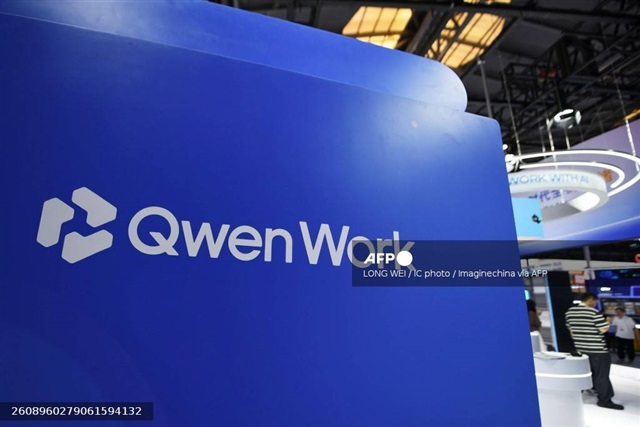
Credit: AFP

Alibaba's decision to rank its newest flagship directly against a single American system — describing Qwen3.8 Max as "second only to" Anthropic's Claude Fable 5 — underscores how narrowly China's leading AI labs now measure themselves against the US frontier, even as they release almost nothing to back it up.

The Hangzhou-based company's Qwen team unveiled a preview of the model on X on July 19, calling it one of the most powerful models available today and comparable to leading frontier systems.

The preview carries 2.4 trillion parameters and, per Qwen, is the company's first multimodal model above the 1-trillion-parameter mark, spanning images, video, and documents, according to The Decoder and Implicator.ai. Developers can access it through Alibaba's coding platforms, including Qoder and QoderWork, at a preview price of 10% of the standard rate; Qwen developer Shuai Bai confirmed the model's scale and multimodal design. Alibaba said it would make the model open-weight "soon" but gave no date.

A ranking without the numbers

What Qwen did not provide was evidence. The company published no benchmark scores to support the "second only to Fable 5" claim and released no model card, activation parameter count, or license terms, according to Implicator.ai and The Decoder. That is a departure from Qwen3.7-Max in May, which shipped with published results including 80.4% on SWE-bench Verified and 92.4 on GPQA Diamond. The absence matters because rival claims are now arriving with data attached.

Kimi K3 sets the pace

The Sunday launch came only days after Moonshot AI unveiled Kimi K3, an open model of 2.8 trillion parameters that the startup says outperforms some frontier systems on selected coding tests while still trailing Fable 5 overall, per Bloomberg and Implicator.ai. Kimi K3's debut roiled global technology stocks and reshaped perceptions of China's AI capabilities. Moonshot, which has reported roughly US$300 million in annual recurring revenue, is reportedly planning an IPO within six months.

An open-source push, with Beijing behind it

The launches are taking place during the 2026 World Artificial Intelligence Conference (WAIC) in Shanghai, where Chinese leader Xi Jinping used the event to champion open models. "We should seize this rare, historic opportunity to encourage open-source, openness, collaboration, and sharing," Xi said on July 17, a pointed contrast with the more tightly controlled releases from US labs. A wave of open-weight Chinese systems, from Moonshot's Kimi to Z.ai's GLM line, has fed a narrative that China is rapidly closing the gap with the US on frontier AI.

Article edited by Jack Wu