

CONNECT WITH US
Sign out

Moonshot reportedly eyes IPO after Kimi K3 success forces cap on new users

, DIGITIMES, Taipei
0

Credit: AFP

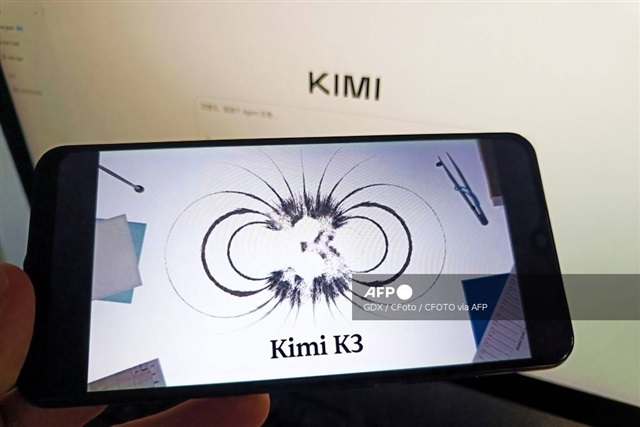
Moonshot AI's latest model launch is rapidly reshaping perceptions of China's artificial intelligence (AI) industry, with overwhelming demand forcing the company to suspend new consumer subscriptions only days after introducing its flagship Kimi K3 model. The move has also intensified debate over whether Western AI companies can maintain their technological lead as Chinese developers narrow the performance gap while scaling commercial adoption.

Explosive demand strains compute capacity

Moonshot said on July 20 it would temporarily halt new consumer subscriptions after requests for Kimi K3 surged beyond the capacity of its existing computing infrastructure. The company said it would prioritize compute resources for existing paying subscribers while accelerating the expansion of its GPU clusters before reopening registrations.

According to Moonshot, demand over the 48 hours following K3's release far exceeded internal expectations, pushing its infrastructure to the brink of operational limits. The company added that future subscription plans will separate general Kimi services from Kimi Code to allocate computing resources more efficiently across different products.

The announcement is particularly notable because companies typically limit sign-ups due to weak demand or technical failures rather than overwhelming commercial success. Instead, Moonshot's decision suggests that K3 has attracted enterprise developers and consumers faster than available compute capacity can support.

Performance reshapes competitive assumptions

The surge follows the July 16 launch of Kimi K3, a 2.8 trillion-parameter open-weight model featuring a one-million-token context window and designed for coding and complex knowledge work.

Bloomberg reported that K3 has surprised many AI researchers by ranking close to the latest flagship models from OpenAI and Anthropic on several independent benchmarks, with Artificial Analysis placing it ahead of Anthropic's Opus 4.8 in some frontier evaluations. Ion Stoica, professor at the University of California, Berkeley, and co-founder of Databricks, told Bloomberg that Chinese open-source models may now trail the global frontier by only "two to three months," compared with estimates of 6 to 9 months previously.

Moonshot itself acknowledged that K3 still trails OpenAI's GPT-5.6 and Anthropic's Claude Fable 5 in overall user experience, even as it competes closely in coding and technical workloads, according to its launch materials.

Commercial momentum supports IPO ambitions

The product launch is also strengthening Moonshot's financial position. Bloomberg reported that the Beijing-based startup is preparing a fundraising round valuing the company at more than US$30 billion while simultaneously seeking shareholder approval for a Hong Kong initial public offering that could occur within six months. The company reportedly reached US$300 million in annual recurring revenue in June, up from US$200 million in April, reflecting accelerating commercial adoption.

Rather than competing solely on low pricing, Moonshot has positioned K3 at pricing levels comparable to Anthropic's mid-tier offerings, betting that customers will pay more for higher performance. Bloomberg reported that daily sales increased at least sixfold following the launch.

K3's emergence represents more than another Chinese model release. Together with DeepSeek's breakthrough earlier this year, this suggests China's leading AI developers are advancing faster than many Western executives had anticipated.

Several implications are emerging.

Firstly, competitive pressure on US frontier labs is likely to intensify. OpenAI, Anthropic, and Google have justified enormous infrastructure investments by maintaining clear performance leadership. If Chinese open-weight models continue to close the gap while remaining highly customizable, customers may increasingly evaluate AI providers based on overall value rather than absolute benchmark leadership.

Secondly, pricing pressure could increase across enterprise AI markets. Bloomberg reported that developers are already using model-routing services that automatically select the most cost-effective model for different tasks. As Chinese models improve, Western providers may need to compete more aggressively on pricing, enterprise integration, and user experience rather than relying primarily on technological superiority.

Thirdly, the regulatory strategy may become more complicated. Bloomberg noted that OpenAI and Anthropic delayed recent model releases while undergoing additional US government review. Any slowdown in deploying new frontier models could provide additional opportunities for overseas competitors to narrow the gap, potentially creating tension between AI safety oversight and Washington's objective of maintaining technological leadership.

Compute becomes the next battleground

Moonshot's temporary suspension of new subscriptions also highlights another reality of the AI race: model quality alone is no longer sufficient. Commercial success increasingly depends on access to massive computing infrastructure capable of serving millions of users simultaneously.

Ironically, K3's popularity demonstrates both Moonshot's technological progress and the physical constraints facing every leading AI developer. While Western companies have invested tens of billions of dollars in GPU infrastructure, Moonshot's rapid capacity shortage illustrates that even highly capable models cannot fully capitalize on demand without adequate compute resources.

Article edited by Jack Wu