

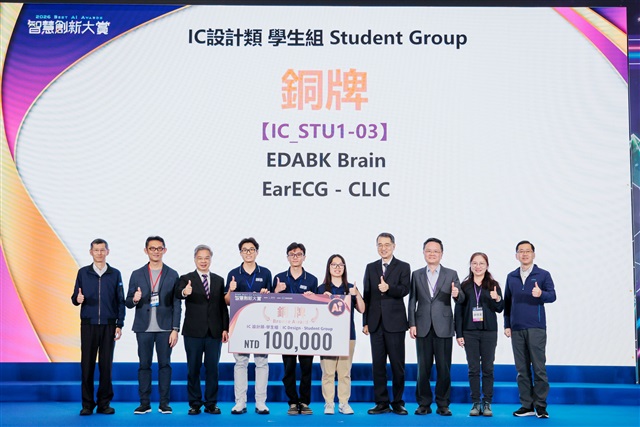
Cardiovascular disease – diseases of the heart or the blood vessels that move blood to and from the heart – were responsible for an estimated 32 per cent of deaths worldwide, or just under 20 million deaths, in 2022, according to the World Health Organisation. Their takeaway? "It is important to detect cardiovascular disease as early as possible so that management with counselling and medicines can begin."
Electrocardiograms (ECGs), a series of peaks that represent each heartbeat, depict the heart's electrical activity over time. An abnormal ECG (compared to one's baseline) can be indicative of arrhythmias, the medical term for irregular heartbeats that, in most cases, are not serious but can sometimes lead to strokes, heart attacks, and death.
Patients can wear Holter monitors to continuously measure their ECG, but that entails placing a large number of electrodes (between three and eight, and up to twelve for greatest accuracy) on the skin, and wearing a piece of recording equipment around the neck or waist. Not only can this be inconvenient, but up to half of all patients reported some sort of skin irritation due to the electrodes.
Smartwatches can also be used to measure an ECG, but only when both hands touch the device – in other words, they cannot be used for passive, continuous heart monitoring.
That's where integrated circuits can help. Students at the Hanoi University of Science and Technology (HUST) are working on an integrated circuit that can continuously monitor the heart's electrical activity through the ear. Such devices are already commonplace, with many people wearing hearing aids or smart hearables for at least some of the day. There are three physical connection points – both ears and one earlobe – the minimum required to measure an ECG.
The ECG collected between the ears is useful only insofar as it can then reconstruct what lead-1 ECG, which is the electrical activity as would be measured by electrodes placed on the right and left arms. The lead-1 ECG is also a standard ECG measurement that is used for diagnosis and monitoring arrhythmias. There are generally similarities between the ear ECG and the lead-1 ECG – in particular, the peaks (representing the heartbeats) appear at the same location – but they are clearer in the lead-1 ECG than in the ear ECG.
So while the algorithm on the chip must be able to recover the shape of the original lead-1 ECG with as little noise as possible, it should not smooth over any possible signs of abnormality – in other words, it needs to be sensitive enough to detect arrhythmias when they are present.
The system is relatively unobtrusive and runs on low power, but using the ear also presents disadvantages. The signal-to-noise ratio is low. In fact, simply shaking one's head or talking will introduce noise into the measurements. Furthermore, special data privacy concerns when collecting biological signals – each user has a unique ‘heartprint’ and some users might be particularly wary of sending such data to another machine – make it imperative that any analysis is done on the chip itself.
The user himself can measure his own lead-1 ECG using his two fingers (as proxies for the right and left arms), and measure his ear ECG with the devices touching his ear. All of this is done with electrodes attached to a sensor (with a built-in analog-digital convertor, or ADG) developed by Texas Instruments.
Two datasets were created to train the AI calibration algorithm for the conversion between the ear and lead-1 ECGs. Firstly, the team collected its own dataset, measuring the ECGs for 45 patients for 10 minutes each. A synthetic public dataset was also created by modifying an existing large, open dataset of ECGs, the PTB-XL. This dataset doesn't include ear ECGs, so the team added noise to existing lead-1 measurements (in an attempt to emulate the ear ECG) and tried to recover the original, non-noisy lead-1 ECG.
The team, which calls itself EDABK Brain, was able to bring the algorithm's latency, or delay time between receiving the ear ECG and producing the lead-1 ECG, down to below 50 milliseconds. Such short times obviate the need to store data from the ear-ECG, for instance. At the same time, they maximised the utilisation of the processing element, meaning that they worked hard to make sure the chip was effective.
After prototyping a field-programmable gate array (FPGA) with their IC design, the team trained it on the self-collected dataset. On the two most important metrics, the signal-to-noise ratio and the correlation with the true lead-1 ECG, EDABK Brain slightly outperformed state-of-the-art algorithms. It was edged out by another algorithm – but the HUST model used fewer than a quarter as many parameters as that algorithm did.
For another comparison, EDABK Brain's circuit used less power and was more energy efficient than BioGAP, a leading biosensing platform that can measure ECGs as well as other electrical signals in the body. However, BioGAP's circuit has a lower latency time and a high throughput (measured in operations per second).
The team behind this chip design, the EDABK Brain Team (the EDA stands for electronic design automation, and the BK stands for Bách khoa, which is in the Vietnamese name of their university, consists of Phuong Linh Nguyen, a student who graduated from their university last year and is now studying for a master's degree at Télécom Paris (one of the most prestigious French grandes écoles and part of the Polytechnic Institute of Paris), and who spoke to DIGITIMES; and her two former classmates, Thanh Dat Do and Duc Tu Nguyen, both of whom are in their final year in the School of Electronics and Electrical Engineering at HUST; and their supervisor, Duc Minh Nguyen.
Having the chance to participate in the Best AI Awards motivates Nguyen and her teammates. Being just students at the start of their scientific career, they were curious to know what industry professionals thought of their idea – does it have potential? Winning the bronze medal is confirmation that it indeed does have potential.
Nguyen said that it was also a relatively rare opportunity for them to communicate their ideas in a non-academic setting. Their university was able to send three teams to the finals, which also entailed a trip to Taiwan and interactions with state-of-the-art AI and IC researchers.
They will now focus on writing a paper – after all, they come from academia – and preparing patent applications. On the technical side, they want to reduce the number of bits in their resolution – in other words, see whether they can convert the analog signal to a digital one with a fewer number of bits and less accuracy – to reduce complexity and thereby power consumption. The team will also experiment with other electrodes.
The Best AI Awards celebrate global excellence in artificial intelligence and IC design, welcoming submissions from innovative companies and brilliant student teams. Following the success of the 2026 edition—advised by the MOEA, organized by DoIT, and executed by TCA—the prestigious competition is officially transitioning into an annual tradition.
Offering substantial grand prizes and unmatched industry exposure, the countdown to Best AI Awards 2027 has already begun. Details on the next submission cycle, prize tiers, and eligibility rules will be released soon. Connect with us on LinkedIn for the latest official updates and application alerts.
