The Comprehensive Economic and Trade Agreement (CETA) between India and the UK came into force on July 15, 2026. While the immediate headlines belong to cheaper Scotch and luxury cars, the deal's more consequential legacy may be structural: it is the first Indian trade treaty to write labour, environment, gender, and anti-corruption obligations directly into the treaty text—a shift trade watchers describe as the "source code" for the country's future agreements.
The pact removes or reduces tariffs on 99% of Indian exports to the UK and on 90% of UK imports into India, according to the BBC. India's Commerce Secretary Rajesh Agarwal said the two countries aim to lift bilateral commerce to US$100 billion by 2030, from roughly US$55-60 billion today. "The target is that in the next 3-4 years, we will be able to reach US$100 billion," he told reporters in New Delhi. Goods trade stood at US$25.12 billion in 2025-26 and services trade at US$35.44 billion in 2024.
Consumer-facing wins for both sides
For British exporters, the marquee change is in spirits: customs duty on Scotch whisky drops from 150% to 75% immediately, then to 40% over 10 years. That is "a real shift, not a small tweak," said Avneet Singh of Modern Drinks Pvt Ltd, a Delhi-based import house. Import duty on UK-built cars falls from 110% to 30% from day one, easing to 10% over five years, a move flagged as a boost for luxury marques and for Tata Motors-owned Jaguar Land Rover.
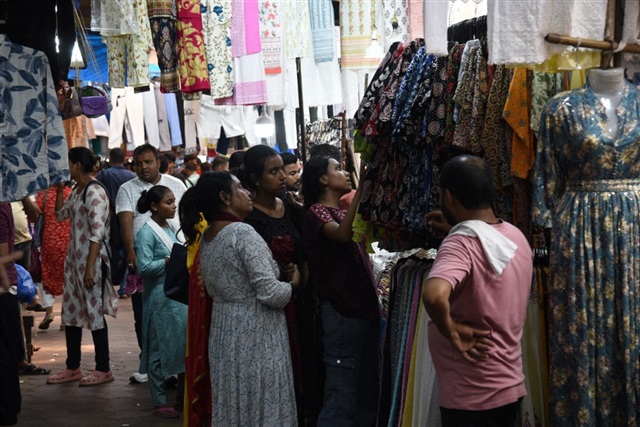
On the Indian side, labour-intensive sectors — textiles, leather and footwear, gems and jewelry, and plastics — enter the British market at zero duty. Dipali Goenka, CEO of Welspun Living, which supplies towels and bedsheets to John Lewis and Tesco, told the BBC she expects exports to the UK to "now grow in double digits." India previously paid 12% tariffs while rivals such as Bangladesh and Pakistan shipped duty-free; "Pakistan's share of UK exports is at around 55%, whereas India's is just 6-7%. That's the gap we can finally cover," she said.
Services, silver, and the sensitive lists
The accompanying Double Contribution Convention spares Indian professionals seconded to Britain from paying UK social security for up to five years, and is expected to benefit 90-95% of Indian staff at Indian firms operating in the UK, according to Business Standard — a direct saving for IT majors such as TCS, whose UK workforce exceeds 22,000 across more than 60 locations, NDTV Profit reported. The agreement also grants 20,000 annual service visas for Indian professionals.
India kept sensitive segments walled off. Additional Secretary Darpan Jain said small and mid-segment internal-combustion vehicles and affordable EVs remain protected, and no concessions were extended to EVs, hybrids, or hydrogen vehicles for the first five years. On precious metals, India granted a duty concession on UK silver — it imported nearly US$5.2 billion of silver from Britain in fiscal year 2026, about 45% of its global silver-bar imports — with the 10.75% duty phased out over 10 years under stringent rules of origin, per think tank GTRI. Gold bars received no concession.
Why the "source code" framing matters
CETA runs to 30 chapters, with labour at Chapter 20, environment at 21, trade and gender equality at 23, and anti-corruption at 26. As Moneycontrol noted, moving these commitments "from annex to article" means they can no longer be quietly shelved, even though the four chapters sit outside the pact's dispute-settlement mechanism and cannot trigger penalties. India has ratified six of the ILO's eight core conventions, with the two on freedom of association and collective bargaining still pending. One open question is the UK's planned carbon border levy for 2027, which the environment chapter leaves unresolved.
Article edited by Jerry Chen