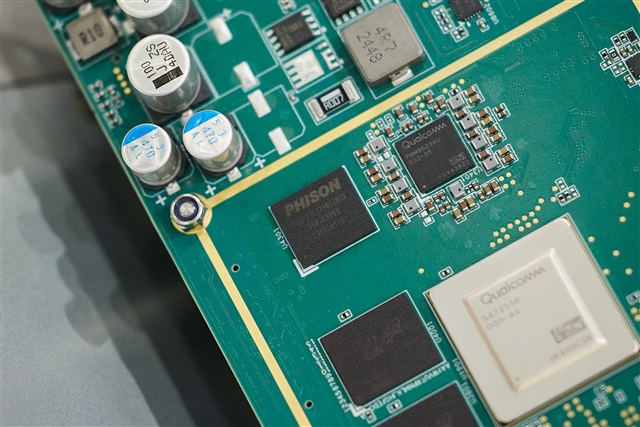
NAND flash prices have surged amid tightening supply, with some manufacturers raising quotations by as much as 50% overnight, according to Phison Electronics CEO Khein-seng Pua.

The Taiwanese controller supplier said enterprise SSD products are expected to account for about 30% of revenue in the first quarter of 2026 as demand from AI infrastructure expands.
Pua said the imbalance between supply and demand in the NAND market has exceeded expectations, with recent price increases reflecting severe supply constraints.
As of the end of February 2026, Phison's inventory had exceeded NT$50 billion (approx. US$1.57 billion). Amid tight supply conditions, the company has entered the supply chains of leading cloud service providers (CSPs) and hyperscale AI operators, helping lift enterprise SSD products to about 30% of revenue in the first quarter.

Phison Electronics CEO Khein-seng Pua. Credit: DIGITIMES
Addressing concerns about the availability of low-cost inventory, Pua said Phison has signed long-term agreements (LTAs) with six major NAND manufacturers and two DRAM suppliers worldwide. To maintain supply stability, the company is negotiating prepayments with some suppliers to secure priority access to NAND during shortages and ensure a stable material supply for enterprise SSD products.
Pua said the focus of these LTAs is not price but securing sufficient supply to maintain competitiveness.
Phison has also signed LTAs with major CSP and OEM customers to align commitments across the supply chain. For smaller customers, the company plans to rely on inventory support to maintain supply capability, with most inventory expected to be allocated to long-term partners.
Enterprise storage demand accelerates with AI servers
Phison's inventory rose from NT$35.6 billion at the end of 2025 to more than NT$50 billion by the end of February 2026. Despite the buildup, Pua said the company continues to face supply constraints.
"Our current concern is that both money and inventory are insufficient," he said.
While low-cost inventory could support gross margins and net profits in the coming quarters, Pua said Phison's product value does not rely on arbitrage pricing differences from low-cost inventory. Instead, the company is seeing AI solutions increasingly adopted across industry ecosystems.
Phison has been shifting its business focus from consumer products toward design services in recent years. Enterprise storage revenue, which accounted for about 10% of revenue in the fourth quarter of 2025, is expected to rise to about 30% in the first quarter of 2026 as mass production begins for design projects with AI server makers, hyperscale CSPs, and major OEMs.
Pua said demand from cloud and enterprise SSD customers for NAND remains strong. High-density QLC products have been validated since the first quarter and are shipping at exabyte-scale volumes, enabling Phison to enter major supply chains and secure additional business opportunities.
Products including PCIe 5.0 retimers and redrivers have been introduced to CSP customers, while PCIe 6.0 redrivers have also been launched and begun shipments.
AI storage solutions and controller roadmap
Through its aiDAPTIV+ technology extension, Phison said OEMs can offset reduced DRAM capacity in PCs amid tight DRAM supply by using AI SSD solutions, allowing systems to function as AI PCs. The approach has already gained acceptance among PC supply chain customers, according to the company.
In the smartphone market, NAND shortages are expected to reduce shipments by 200 million units in 2026, which will also affect shipments of NAND controllers.
Phison said its eMMC and UFS controllers hold a 35% share of the global smartphone market excluding Apple and Samsung Electronics, while QLC-based UFS products are undergoing validation with leading OEM manufacturers.
With small-capacity eMMC and UFS supply expected to face a shortage exceeding 50% in 2026, Phison plans to prioritize higher value-added sectors, including baseboard management controllers (BMC), aerospace, and automotive applications.
On enterprise controller development, PCIe Gen 6 samples are scheduled for delivery in August 2026. Development of PCIe Gen 7 is also underway to support future AI system requirements.
To support its growing inventory levels and research and development needs, Pua said Phison will adopt flexible financing and cash management strategies. The company's board has approved a syndicated loan plan of US$400 million to US$500 million to support inventory procurement and working capital requirements.
Pua added that during the PC era, CPU vendors typically provided product roadmaps three to five years in advance, allowing the supply chain to plan ahead. In the AI era, however, GPU platforms are updated almost annually, placing greater demands on supply chain flexibility and research and development capabilities.
Article translated by Sherri Wang and edited by Jack Wu