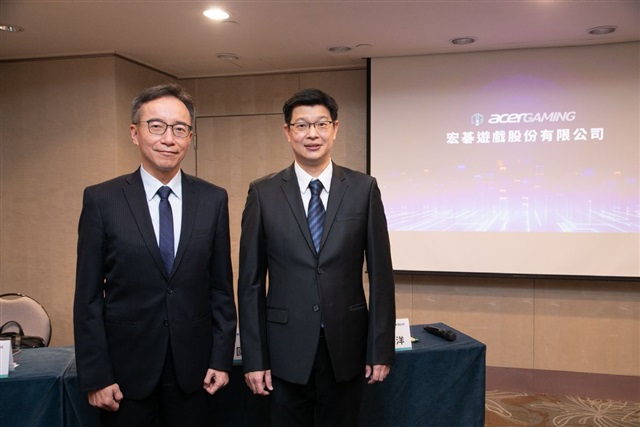
While AI is reshaping many industries, the gaming sector remains staunchly human-driven. According to Johnny Jan, CEO of Acer Gaming's subsidiary Winking Studios, 99% of major game IP companies prohibit their art outsourcing partners from using AI-generated content to avoid consumer backlash.
Acer Gaming stands out as the only domestic company that integrates both game agency marketing and art development, covering upstream and downstream sectors to deliver comprehensive gaming experiences. The company is expected to debut on the Taiwan Innovation Exchange by the end of March at the earliest.
Why gamers reject AI-created art
Its subsidiary, Winking Studios—currently the world's fourth-largest game art contractor—serves over 600 global game IP clients, including 22 of the top 25 firms worldwide. Jan explained that, unlike other industries disrupted by AI, gaming customers fear consumer rejection if AI-generated art is used. He illustrated the point with a comparison: If a consumer buys a luxury handbag worth NT$150,000 (approx. US$4,718) in a department store, only to discover it was created by AI in minutes, how will they feel?
Jan also highlighted legal risks, noting that current AI training data sources are often unclear or unauthorized, potentially exposing IP holders to lawsuits. Clients see little benefit in cutting 10% of development costs with AI when the associated risks outweigh the savings.
Game art also relies on scarce 3D vector modeling data, unlike the abundant images or videos available online for AI drawing, making AI adoption challenging. While Winking Studios has built its own internal GenAI database, most clients remain reluctant to use it.
Human talent remains essential
With AI acceptance limited, professional human talent remains essential. Winking Studios plans to expand its team from over 800 employees in 2025 to 1,400 in 2026, primarily through acquisitions initially in Asia, then extending to Europe and the US, targeting more than 10 acquisition candidates.
The transparency of game art outsourcing allows clients to provide indicative orders, facilitating capacity planning. Intentional orders for the next two years have reached US$48 million, with US$36 million expected to materialize by the end of 2027.
Acer Gaming projects consolidated revenue of NT$5.52 billion in 2025, with Winking Studios contributing 27%, or approximately NT$1.49 billion. The gaming group achieved a five-year compound annual growth rate (CAGR) of 61.02% and remains confident in continued growth through 2026.
High costs and competition boost demand for outsourcing
Acer Gaming president James Hsu noted that the sector faces new challenges as market expansion attracts more competitors and increases IP production. Customers are under pressure to reduce development time and costs while effectively marketing to capture consumer attention.
He cited the popular mobile game title Genshin Impact, rumored to have a US$500 million development budget, and compared it with Hollywood blockbuster budgets like Top Gun: Maverick at US$170 million and The Avengers at US$350 million, underscoring the high financial and time demands that necessitate specialized outsourcing partners.
After development, game publishers face intense competition and rely on expert marketing agencies, a role Acer Gaming fulfills. Chairman Jerry Kao emphasized the company's integrated marketing approach across industries, rather than simple sales representation, as exemplified by PS5 promotions in partnership with automotive brands.
Article translated by Willis Ke and edited by Jack Wu