CONNECT WITH US

Taiwan, UK space supply chains forge closer ties

Chong Jing, Taipei; Rodney Chan, DIGITIMES Asia 0

Credit: DIGITIMES

The Taiwan-UK space supply chain collaboration has taken a significant step forward. Following the September 2025 signing of a five-year memorandum of understanding (MOU) between the Taiwan Space Agency (TASA) and the UK's Satellite Applications Catapult (SAC), Taiwan's Industrial Technology Research Institute (ITRI) is set to officially sign an MOU with the UK's largest aerospace industry association, ADS Group, on March 5.

Supported by the Ministry of Economic Affairs (MOEA) Industrial Development Administration (IDA), ITRI is partnering with the Taiwan LEO Satellite Industry Association (TLEOSIA) to host the Taiwan–UK Space Supply Chain Partnership Forum in London on March 5. The forum will gather representatives from Taiwan and the UK's space and communications sectors to explore key supply chain cooperation opportunities in satellite manufacturing, payload technology, ground equipment, and system integration. The event will also feature the formal MOU signing ceremony between both sides.

The MOU will be signed by Lewis Chen, director of ITRI's Commercialization and Industry Service Center and president of TLEOSIA, and Kevin Craven, CEO of ADS Group. Officials from IDA will witness the ceremony, symbolizing the establishment of a formal cooperation platform and marking the start of a long-term Taiwan-UK space supply chain partnership.

ADS Group holds strategic importance for Taiwan's supply chain. As one of the UK's most representative aerospace and space industry associations, it counts over 1,000 member companies and wields strong industrial integration and international influence. This collaboration offers Taiwanese suppliers a critical gateway to enter the European market.

In 2025, ADS Group also visited Taiwan with the UK Department for Business and Trade (DBT) to participate in the UK–Taiwan Space Roundtable, further strengthening bilateral ties.

Five key cooperation areas

The MOU outlines five major cooperation focuses. First, space supply chain collaboration aims to enhance satellite industry resilience through international partnerships while boosting local manufacturing and testing capabilities.

Second, technology development will concentrate on key research in satellite systems, payloads, ground equipment, as well as establishing verification, testing capacities, and cross-domain application integration.

Third, startup support will help new ventures access markets, build networks, and accelerate innovative business model implementation.

Fourth, knowledge sharing and talent cultivation will be promoted via workshops, training, and expert exchanges.

Fifth, government and policy cooperation will link resources and subsidy mechanisms to assist enterprises in complying with international regulations and securing funding.

Taiwanese firms to showcase innovations at forum

Beyond the MOU signing, Taiwanese companies, including Compal Electronics, Tmytek, Egis Technology, Tron Future Tech, YTTEK, and Phasetrum, will present specialized sessions showcasing innovations such as terminal devices, phased array antennas, energy solutions, and integrated communication technologies. Corporate presentations and one-on-one matchmaking aim to foster concrete business opportunities and technical collaborations.

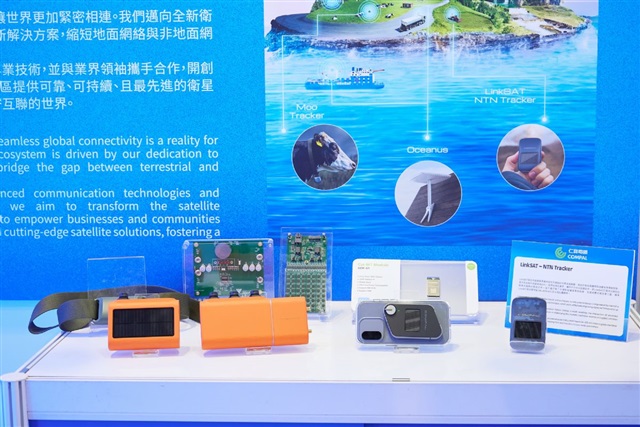
Among them, Compal Electronics, one of Taiwan's top five electronics manufacturers, has been active in the satellite sector. Besides collaborating with global satellite operator Viasat, Compal secured a NT$1.178 billion (US$37.4 million) contract in September 2025 for a TASA project to establish an industrialized platform for communication satellite manufacturing.

J.S. Liang, vice president of R&D at Compal's smart device business group, noted that although Compal is a newcomer to the space industry, its experience spanning 2G to 5G communications naturally extends into 6G and advanced terrestrial and space-based communication technologies. He said that the high investment demands of the space communications sector require international cooperation, highlighting the UK's leading research capabilities complemented by Taiwan's strength in rapidly converting results into mass-produced products.

This forum and ensuing collaborations not only deepen Taiwanese firms' connections with the UK and broader European space ecosystems but also open pathways to integrate their products and technologies into international satellite operations, laying the groundwork for future global satellite market expansion.

Article edited by Joseph Tsai