Taiwan's electricity demand is entering a new phase of sustained growth, driven by AI, semiconductors, and high-tech manufacturing. While the government accelerates grid resilience efforts, global shortages of critical power equipment—especially gas turbines and transformers—are inflating costs, delaying projects, and reshaping how the island plans its power future.
Rising power demand concentrated in the west
Taiwan's overall electricity demand is projected to grow at an average annual rate of around 1.7% from 2025 to 2034. Demand remains heavily concentrated in the western corridor, where semiconductor fabs and high-tech industrial clusters consume massive amounts of power. As AI applications scale rapidly, the government has made grid resilience and capacity expansion a strategic priority.
However, these efforts are unfolding against a tightening global supply chain for power equipment, complicating both timelines and budgets for new projects.
Taiwan emerges as a global gas power hotspot
In 2024, Taiwan ranked among the world's top three markets for gas-fired power unit orders and projects in progress, trailing only China and the US. This underscores Taiwan's outsized demand for gas power generation infrastructure relative to its size, reflecting both rising electricity needs and the role of gas as a transitional fuel.
Taiwan Power Company (Taipower) Chairman Wen-sheng Tseng noted that global demand for gas turbines far exceeds available supply, pushing prices sharply higher and forcing Taipower to rethink procurement strategies.
Severe gas turbine supply imbalance drives costs and delays
Industry data shows that the combined annual production capacity of the three major gas turbine manufacturers—General Electric, Siemens AG, and Mitsubishi Power—stands at roughly 30 GW. Global order demand, however, has surged to around 80 GW, creating a deep supply-demand mismatch.
As a result, gas turbine prices have risen to nearly three times their 2023 levels, while delivery lead times may stretch to as long as seven years. Faced with these constraints, Taipower is prioritizing more efficient utilization of existing power resources rather than competing aggressively for scarce new equipment.
Tseng also highlighted signs of structural change in the market. SpaceX CEO Elon Musk recently revealed that his AI company, xAI, ordered five gas turbines from South Korea's Doosan Group, suggesting the emergence of a "fourth force" beyond the traditional big three suppliers. Over time, expanded industry capacity could help rebalance supply and stabilize costs.
Acute transformer shortages
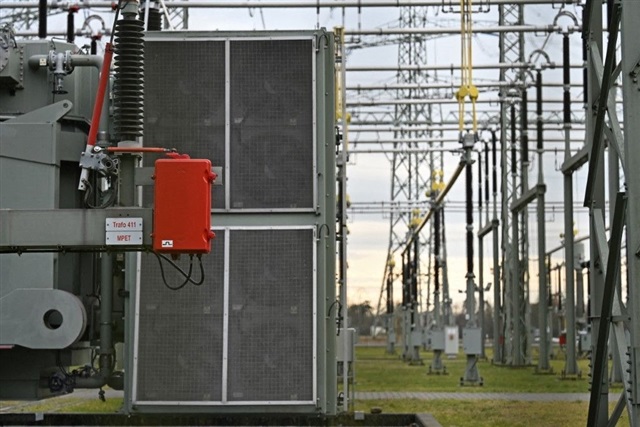
Yet gas turbines are only part of the challenge. The transformer market faces similarly acute shortages. Since the pandemic, transformer prices have climbed about 80%, while delivery times have lengthened from roughly 40 weeks to 120 weeks, making transformers another major bottleneck in grid construction.
Longer timelines spur new grid and data center models
Amid intensifying global competition for power equipment, building power plants and transmission networks has become increasingly difficult. After environmental approval, a natural gas power plant typically requires at least four years to complete. Grid projects take even longer, often exceeding 10 years, with some delayed for up to two decades, such as Taipower's Seventh Transmission and Transformation Project.
Against this backdrop, the international community has begun promoting the "Power Couple" concept, in which new data centers integrate renewable energy and energy storage systems (ESS) to achieve 100% green power supply while easing pressure on existing grids.
Tseng noted that more precise alignment between electricity demand and supply can significantly shorten construction timelines while enhancing overall system stability. He cited Google's data center at the Changhua Coastal Industrial Park (CCIP) as an example: the facility draws on a diversified mix of nearby power sources—including solar, wind, and natural gas—enabling integrated and flexible dispatch. The scale of the data center's electricity demand illustrates how siting large loads close to multiple generation sources can substantially improve power utilization efficiency and reduce strain on the grid.
Article translated by Willis Ke and edited by Jack Wu