
CONNECT WITH US
Sign out

Samsung DS rebounds to record KRW20 trillion under new leadership

, Taipei
0

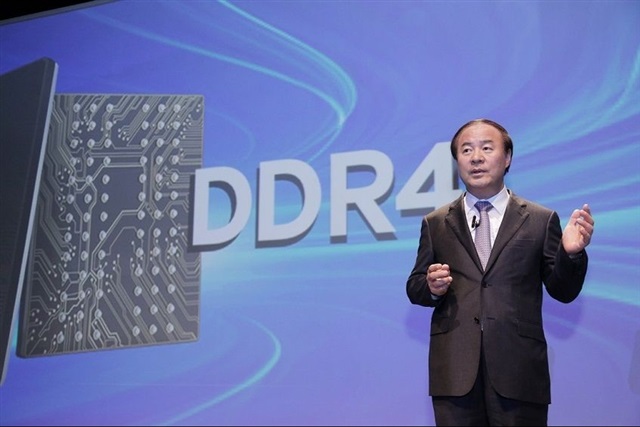
Credit: Samsung Electronics

Samsung Electronics Vice Chairman Jun Young-hyun, since his appointment in May 2024, has spearheaded significant changes at the company's Device Solutions (DS) division, reversing the company's decline in high-bandwidth memory (HBM) technology. Samsung's semiconductor business, once trailing behind Korean rival SK Hynix, has regained competitiveness amid rising AI demand, according to reports from JoongAng Daily and The Korea Times.

Facing a crisis in HBM development, Samsung had drastically reduced its R&D team after losing technological ground to SK Hynix, which capitalized on the AI boom triggered by OpenAI's ChatGPT. With transmission speeds far surpassing those of conventional DRAM, HBM became critical for AI-driven applications, leaving Samsung without the latest specifications in a market where SK Hynix leads with fourth- and fifth-generation HBM products. Jun's appointment was part of a broader effort to reverse this strategic setback.

Jun attracted attention for his pragmatic approach, addressing internal communication failures and bureaucratic inertia that had hindered Samsung's semiconductor business. An experienced engineer with a history at Samsung Semiconductor's peak in the early 2010s, Jun set out to revitalize HBM research and manufacturing. His efforts included redesigning the 10nm sixth-generation 1c DRAM and accelerating production of 12-layer HBM3E chips, initiatives that helped the company gradually pass key client quality tests and regain market interest.

Jun's reforms restore Samsung's competitiveness in high-bandwidth memory

Samsung's historic weakness in HBM traces back to decisions made around 2019, when the firm's overall DRAM market share dropped below 1%, prompting a near-elimination of its HBM development team. Meanwhile, SK Hynix increased investments and launched innovative products, securing exclusive contracts with major AI chip manufacturers, benefiting from Nvidia's integration of HBM technology. SK Hynix's market dominance deepened as it continued to deliver next-generation HBM3E products throughout 2024.

Under Jun's leadership, Samsung aggressively revived its HBM line, aligning product developments with the stringent demands of important customers such as Nvidia, IBM, Qualcomm Inc., and Nintendo. This comeback coincided with wider advancements in Samsung's semiconductor divisions, including a US$16.5 billion AI chip fabrication contract with Tesla Inc. and new engagements with Apple Inc. for iPhone CMOS image sensors, challenging Sony's longstanding role in the sector. Qualcomm is also reportedly preparing to place orders for 2nm chips with Samsung, signaling confidence in the company's operational turnaround.

Samsung Semiconductor's resurgence marked by record profits and strategic technology focus

Preliminary financial data for the fourth quarter of 2025 reflect Samsung's semiconductor resurgence, with operating profits surpassing KRW20 trillion (approximately US$632 billion), marking the highest quarterly earnings in the division's history. This result indicates the onset of a renewed memory super cycle driven by the growing demand for AI and high-performance computing components.

Looking forward, Samsung plans to invest heavily in hybrid bonding (HB) technology, a critical innovation expected to shape the next-generation HBM4 market. Industry analysts highlight that success in HB technology will require advances in hardware, as well as the integration of software and comprehensive solutions to outmaneuver global competitors. Jun's strategy to consolidate Samsung's fragmented product lines into a cohesive "one-stop solution" reflects this holistic approach toward redefining semiconductor leadership in the AI era.

Article translated by Jingyue Hsiao and edited by Joseph Tsai