
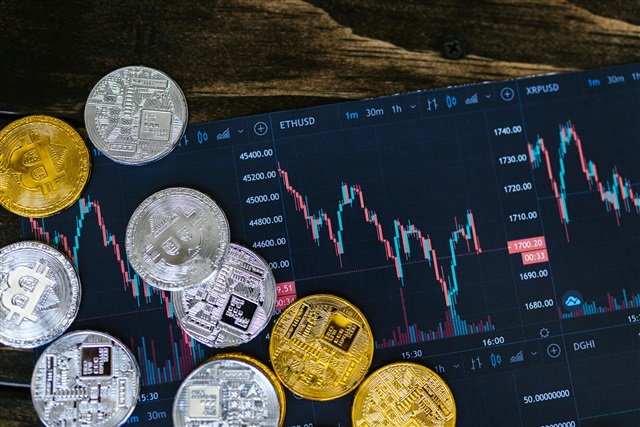
Bitcoin's core infrastructure is continually being re-engineered with each Bitcoin blockchain upgrade. Consequently, these upgrades alter how Bitcoin is traded and how it moves throughout the market. Recent changes to the Bitcoin protocols have brought about shifts in the costs, speeds, and security of transactions, prompting market actors to reassess and reposition.
The blockchain of Bitcoin is always in a state of refinement, and its underlying technology continues to strive for scalability, efficiency, and sustainability. But these upgrades entail much more than an optimization of code, as they can result in real-market reactions, influence trading volumes, and shift investor sentiment.
This year, with improvements in the protocol, technical aspects have become a core factor that drives market dynamics. This article will examine recent blockchain developments, how updates on the network influence trading activity, why markets may react in a particular way, and what wider adoption trends indicate about Bitcoin's future.
Recent developments in blockchain technology
The Bitcoin network has undergone a number of key upgrades aimed at improving transaction throughput, reducing fees, and offering greater flexibility for future scaling. Perhaps the most salient consequence of these enhancements pertains to how they affect trading-most notably when market participants check the bitcoin price today.
By utilizing publicly available APIs and exchange data, traders can track real?time price, volume, and volatility to better gauge how protocol changes feed into market conditions. In a similar vein, upgrades such as Taproot or further layer?2 enhancements will continue to drive faster validation and more efficient block propagation.
These changes significantly enhance the network's value proposition and can have a measurable effect on the way users interact with Bitcoin.
How network upgrades influence Bitcoin trading
Upgrades create short-term volatility from how developers propose upgrades and how it influence different market actors. For example, do block efficiency upgrades lower confirmation times and fee costs, and thus, encourage traders to reassess their positions?
According to the Cambridge Centre for Alternative Finance, the Bitcoin network's efficiency continues to be a problem for market participants assessing the cost structure of transactions. Through modeling, the Centre explains the relationships, thus the reason trading volumes increase after an upgrade, as traders reposition from the expected upside.
Upgrades also factor into liquidity; a set of upgrades to a protocol usually incites a spell of high trading activity across the markets; however, as the network's performance becomes more predictable, liquidity provision from the participants improves. Institutions expand their tranche sizes, retail users of the network adjust their trading sizes, and these change the order imbalance, order book depth, and spread.
Market responses to protocol changes
The market response of Bitcoin to protocol changes may be nuanced, fusing technical optimism with risk awareness. Whenever there is an announcement or deployment of a major upgrade, it generates speculative trading whereby some actors buy in anticipation of long-term gains, while others hedge for possible delays or unintended issues.
This has traditionally led to increased volumes and higher volatility as participants test whether the upgrade provides the touted benefits.
After an initial disruption, markets settle down, but not always uniformly across all exchanges. Differences in technology adoption and node infrastructure often create divergence in how different exchanges price Bitcoin-especially when some platforms support new features sooner rather than later. With time, however, upgrades add to the resilience of the network and reinforce confidence in the development path taken by the blockchain.
Trends in cryptocurrency adoption and investment
Adoption of Bitcoin and, more broadly, cryptocurrency is continuing to grow. According to global data from CoinLedger from mid?2025, approximately 562 million people globally now hold some form of crypto, which is roughly 6.8?per cent of the global population. This growth reflects not only increased retail interest but also broader institutional participation.
Investment strategies increasingly reflect the technical trajectory of the network: As upgrades to the blockchain offer greater scalability and efficiency, investors signal demand for digital assets built on sustainable and performant protocols. On the exchange side, platforms are continuing to deploy tools-real?time analytics, risk?management dashboards and more responsive execution systems-to help traders gauge how technical changes might impact their portfolios.
Institutional interest also responds to environmental and sustainability themes. Energy usage, consensus efficiency, and mining footprint have become increasingly linked to blockchain upgrades and investment sentiment. Ongoing research into electricity consumption and mining emissions continues to impact the way some investors value Bitcoin in the context of long?term ESG objectives.
Future implications for Bitcoin trading and innovation
The pace of protocol development at Bitcoin suggests that upgrades will continue to play a leading role in its market story. The more efficiently the network can scale, the more transaction costs can shrink, and open up space for more entrants, both retail and institutional.
Technical change will continue to drive market actors' responses, but over time, improvements in capacity and sustainability could stabilise the asset's financial profile. This upgrade is not limited to short-term trading effects only. Modifications made in technology transform one's viewpoint regarding Bitcoin as a digital unit: more expandable, effective, and better aligned with anticipated infrastructural priorities in the future.
Knowledgeable changes in a protocol and their impact on trade and adoption trends, as the participants in the market comprehend them better, clarify Bitcoin's position in the rapidly changing world of crypto.