

CONNECT WITH US
Sign out

Pegatron’s post-China pivot accelerates with a new U.S. server line in 2026

, Taipei
0

Credit: DIGITIMES

Pegatron Corp. is accelerating its shift away from China, increasing the share of manufacturing capacity located outside the country to 30-40% in 2025 from 20-30% in 2024, the company's management revealed during its earnings call on November 12. This move reflects Pegatron's broader strategy to diversify its manufacturing footprint and reduce reliance on its core contract with Apple Inc., which still accounts for approximately 60% of its revenue.

The Taiwanese electronics manufacturer is also actively expanding into new business segments and onboarding new customers, aiming to achieve significant changes in its product mix by 2026. Pegatron has emphasized the goal of transforming toward "digital changes," seeking to mitigate risks associated with overdependence on Apple's iPhone production contracts by expanding into server production and the electric vehicle (EV) market.

Pegatron aims to achieve a notable milestone in its server business with the commencement of volume production at its Texas plant in the first quarter of 2026. This facility is a key element of Pegatron's global expansion strategy, designed for flexible capacity allocation that can accommodate multiple sectors. Although it will initially focus on AI server manufacturing, the plant is also positioned to serve other local US industries requiring manufacturing proximity due to tariffs and government subsidies, including EVs and networking equipment.

Pegatron builds US manufacturing capacity to address diverse client needs

Co-CEO Cheng Kuang-Chih highlighted the company's flexible approach as a contract manufacturer, emphasizing the necessity to adapt production capacity to meet client demands efficiently. While the Texas facility's priority is AI server production, it remains versatile to accommodate potential projects in electric vehicles and networking products. This flexibility is critical in the context of evolving US trade policies and subsidies encouraging domestic manufacturing.

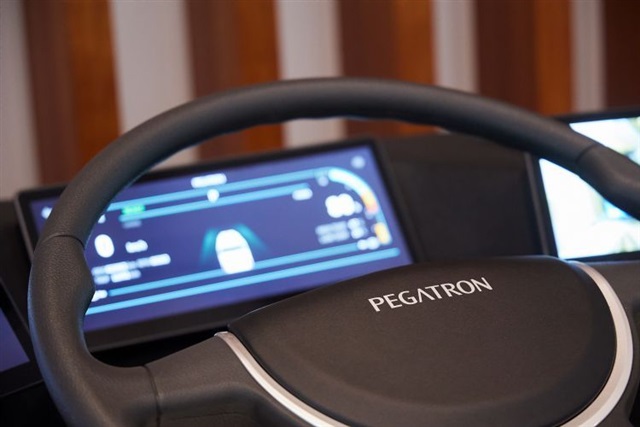
In the automotive sector, Pegatron has successfully onboarded several new clients since 2024, complementing its existing two major EV customers. The company employs a dual growth strategy: expanding the product range with the same customers and diversifying its customer base with varied products. Management anticipates significant progress in the EV business segment by 2026, with ongoing discussions about related production at the Texas facility.

The Texas plant also plays a strategic role in Pegatron's broader North American manufacturing network. Cheng explained that while the Mexico facility, developed over five to six years, handles component assembly and surface-mount technology (SMT) processes, the Texas factory focuses on final assembly. This two-tiered arrangement seeks to centralize SMT parts procurement for improved scheduling and control. To address the high labor costs in the US, Pegatron is considering transferring automated assembly lines from Taiwan to reduce manpower expenses.

Pegatron continues to balance global operations while expanding strategic sites

Beyond North America, Pegatron is maintaining and developing capacity in key markets including Vietnam, Indonesia, India, and Malaysia. In Taiwan, the company has expanded its footprint by acquiring two additional factories in the first half of 2025, converting them primarily for server production to capitalize on growing demand.

Cheng described the company's global production layout as "balanced and stable," crafted to address diverse market demands with agile resource allocation. He indicated that Pegatron's expansion efforts are driven strictly by customer requirements, and while the US is a significant step in this expansion, it will not be the final one. Further global facility adjustments are anticipated to align with evolving client demands and geopolitical considerations.

Article translated by Jingyue Hsiao and edited by Joseph Chen
