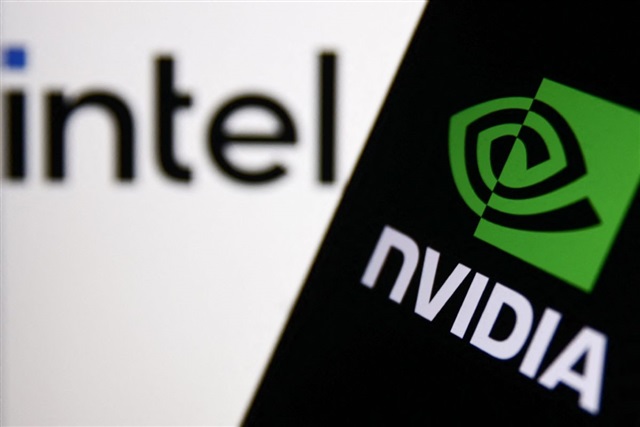
Nvidia and Intel's new partnership is reshaping the global semiconductor landscape and raising questions about how it could influence the future of computing.

AMD is seen as the most vulnerable. With Intel gaining access to Nvidia's high-performance AI and gaming chips, AMD faces renewed pressure in segments where it had been expanding. Analysts warn that AMD's recent advances in PCs and servers could come under strain.
The alliance may also narrow the scope of Nvidia's work with Arm as development resources are redirected. Attention is now turning to the UALink consortium, a rival grouping led by AMD, Broadcom and Cisco, to see how it will respond to the shift in market dynamics.
MediaTek and partners face uncertainty
Nvidia's partnership with Intel could also cloud its work with MediaTek. The two companies have been collaborating in PCs, automotive systems and cloud computing, but Intel's sudden entry may force them to rethink their plans.
Regulators are also expected to pay close attention. With Intel and Nvidia leading the CPU and GPU markets, their alliance risks reigniting antitrust concerns. The timing is sensitive, as US–China tensions remain high and Beijing has reopened its review of Nvidia's 2020 purchase of Mellanox. Analysts say China is likely to see the deal as a new provocation.
TSMC in the spotlight
For TSMC, the short-term impact appears limited. Intel's 18A node is primarily for its own chips, while Nvidia remains committed to TSMC's 4nm process, with projects already underway for 3nm, 2nm, and the upcoming A16 node. Nvidia has also locked in more than half of TSMC's advanced packaging capacity through 2028, making a sudden shift to Intel unlikely.
However, Nvidia CEO Jensen Huang has hinted that Intel's packaging could become an option in the future, a move that could disrupt TSMC's long-term capacity planning. If Intel rebuilds its foundry capabilities under a Trump administration focused on boosting domestic chipmakers, TSMC could face increased pressure in the US market. Samsung Electronics may also see a tougher outlook.
Despite these risks, confidence in TSMC remains high. Customers are unlikely to switch suppliers quickly, and Intel's resurgence might even ease antitrust concerns by reducing Nvidia's market dominance.
Industry executives say Nvidia and Intel have been bitter rivals for decades. Their cooperation would have been unimaginable if not for Intel's repeated struggles to break into the discrete GPU market.
In 2006, when AMD acquired ATI, Intel reportedly considered buying Nvidia but was ultimately squeezed out as AMD and Intel cornered the market from both sides. Nvidia's business plunged before bouncing back to dominate the sector. Few would have predicted it would one day become a crucial partner for Intel.
Taiwanese board-makers with long-standing relationships supplying both companies say the partnership only happened because Nvidia agreed to invest US$5 billion in Intel. They believe this move could only have been arranged under the political influence of Donald Trump.
New leadership, new approach
Intel's CEO, Lip-Bu Tan, a seasoned venture capitalist and tech startup veteran, is seen as pragmatic and unsentimental about Intel's legacy. Observers say he is willing to use job cuts, salary reductions, and structural changes if necessary and views the deal with Nvidia as vital to turning the company around.
Article translated by Sherri Wang and edited by Joseph Tsai