

CONNECT WITH US
Sign out

Samsung to challenge SK Hynix, Micron in Nvidia HBM supply after delays

, Taipei
0

Credit: Samsung

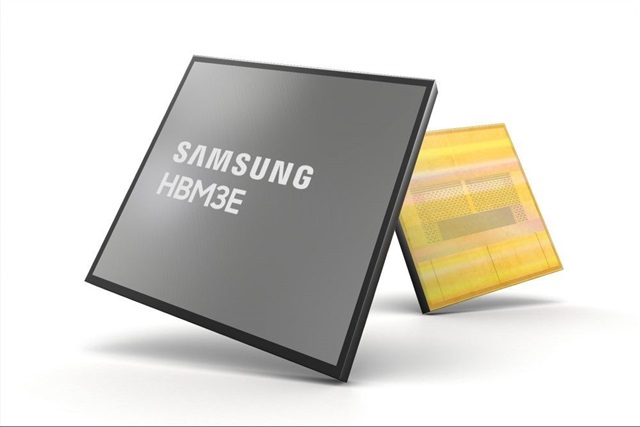
Samsung Electronics is intensifying its bid to break into Nvidia's high-bandwidth memory (HBM) supply chain after lagging behind SK Hynix and Micron, which already dominate shipments to the world's most important AI chipmaker.

According to South Korean outlet Businesspost, even if Samsung manages to supply Nvidia with HBM3E for its Blackwell-based chips in the fourth quarter, volumes will remain below 10%. By contrast, ChosunBiz reports that Samsung will begin supplying HBM3E to Broadcom in the second half of 2025, with shipments expected to account for more than 50% of Broadcom's supply chain—making Samsung the chip designer's largest HBM3E supplier.

Samsung's technical hurdles with Nvidia

Industry observers say Samsung faces three big hurdles in supplying Nvidia. Nvidia's heat tolerance standards are nearly double those of Broadcom. Samsung's HBM chips have also shown weaker signal quality when paired with Nvidia's high-speed NVLink system. And with production yields still lower than its rivals, the company risks falling short on orders and losing leverage in price negotiations.

Broadcom's thermal standard is believed to be less than half of Nvidia's. That's because Broadcom's AI chips are customized for specific clients—such as Google or Meta—tailored to requested performance targets and co-designed with customers. Nvidia's GPUs, in contrast, are general-purpose accelerators meant to perform at peak levels across a wide variety of environments. This broad applicability drives up power consumption, intensifying heat generation. If HBM cooling is inadequate, the chip's overall performance suffers. Analysts suggest Samsung may still fall short of Nvidia's demanding thermal benchmarks.

The NVLink issue is also significant. In pairing with Samsung's HBM, the system reportedly showed greater digital signal degradation than when used with SK Hynix or Micron memory, a problem that may stem from DRAM performance inside Samsung's HBM. Coupled with its relatively lower yield rates, these weaknesses left Samsung trailing its competitors in Nvidia's supply chain.

SK Hynix's share to slide

SK Hynix currently supplies about 90% of Nvidia's HBM, but Morgan Stanley expects its share to plunge to about 50% in 2026. Micron could capture 20–25%, while Samsung is projected to secure as much as 30% of Nvidia's allocation—a major reversal after missing out on much of the AI boom.

Samsung's comeback hinges on HBM4. The company is deploying its advanced sixth-generation "1c" DRAM process, which offers higher efficiency and better yields than the fifth-generation 1b technology still used by SK Hynix and Micron. Samsung has already shipped early samples and plans to deliver final versions for Nvidia certification by the end of August, with mass production slated for early 2026.

According to Morgan Stanley, Samsung's HBM yields are expected to rise from 60% this year to 70% in 2026, narrowing the gap with SK Hynix, whose yields may dip from 80% to 75% over the same period.

Margins at risk as prices fall

Even as Samsung closes in, profitability remains uncertain. Nomura estimates Samsung's HBM4 production costs could be about 30% higher than SK Hynix's, due to its advanced "1c" DRAM process and heavy capital spending. Goldman Sachs forecasts HBM prices will drop about 10% in 2026, with HBM3E prices sliding 30% next year and HBM4 premiums narrowing to less than half those of previous generations.

Some industry observers expect intensifying HBM competition to drive prices lower next year, making it difficult for Samsung to achieve the kind of high profits SK Hynix currently enjoys.

Article translated by Sherri Wang and edited by Jack Wu