

President Donald Trump's latest tariff announcement — a proposed 50% duty on copper imports to take effect in August — is sending shockwaves through the American auto industry, which is already strained by rising material costs. Industry analysts warn the move could trigger a fresh wave of price increases for vehicles, as financial pressures ripple down through the supply chain.
Raw materials drive mounting pressure
Though US tariffs on global autos and parts are technically applied independently of other levies, rising raw material costs — particularly in copper, steel, and aluminum — are increasingly feeding into the pricing of vehicle components.
The mere announcement of the copper tariff sent US copper futures on the COMEX exchange soaring to record highs, outpacing prices in London. Aluminum prices, driven by earlier tariffs, have already tripled over the past six months, exacerbating cost burdens across the manufacturing sector.
Automakers squeezed from all sides
For automakers, the squeeze is intensifying. After a week of price volatility, parts suppliers — unable to absorb the added cost of copper — are demanding compensation from manufacturers. Some automakers that had been absorbing increased costs in order to stabilize retail prices may soon be forced to pass those costs on to consumers.
Automakers and their suppliers are being hit from all sides, said one supply chain executive. After dealing with a 25% tariff on parts, they're now facing escalating material costs from steel, aluminum, and soon copper — all while consumer demand is softening under inflationary pressure.
Domestic capacity reaches breaking point
The US remains heavily reliant on imported copper, steel, and aluminum. Developing alternative domestic sources or substitutes takes years. With many manufacturers pivoting to US suppliers to avoid tariffs, domestic capacity is becoming increasingly strained.
Even before the copper tariff takes effect, the anticipation has already inflated consumer costs. Industry insiders acknowledge that while these tariffs may not formally stack on paper, their impact accumulates throughout the production process, ultimately pushing both costs and prices higher.
Everyone's caught in a tug-of-war, said another executive. Suppliers can't shoulder the costs, automakers are trapped between shrinking margins and price sensitivity, and consumers — already stretched thin — may simply walk away.
That consumer sentiment may eventually circle back to the ballot box, influencing how voters perceive the Trump administration's economic performance.
Electric vehicles face steeper impact
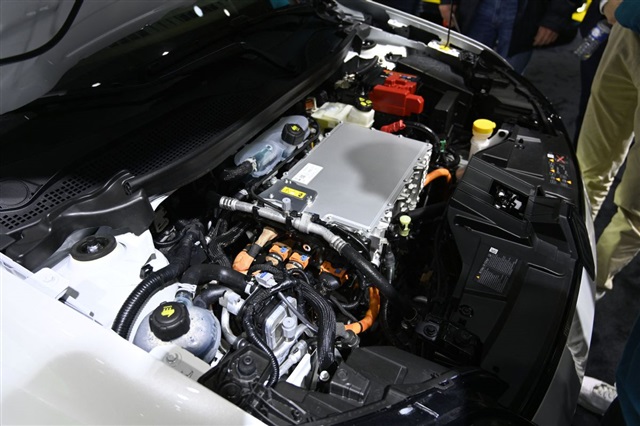
According to consulting firm GRU Group, internal combustion and hybrid vehicles require around 53 pounds of copper each, while fully electric vehicles use as much as 130 pounds, primarily for wiring harnesses and motor components. AlixPartners notes that many supplier contracts are indexed to copper prices and are revised every few months, meaning automakers have little room to maneuver as costs climb.
The looming copper tariff now adds yet another layer of complexity to an already tangled web of automotive trade negotiations, threatening to raise prices, deepen supply shortages, and further test the resilience of an industry still reeling from years of volatility.
Article translated by Elaine Chen and edited by Jerry Chen
