

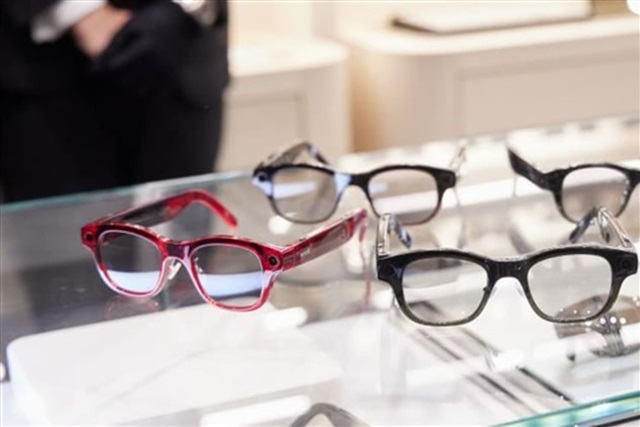
Taiwan's HTC Corporation is rapidly expanding its AI glasses ecosystem following the debut of its first AI eyewear, Vive Eagle, as it scales distribution, deepens AI partnerships, and prepares for an AR-enabled next generation of smart glasses.
Eyeing Greater China growth through retail and tech partnerships
Following the launch of Vive Eagle, HTC has moved quickly to broaden its sales footprint beyond Taiwan, entering markets such as Hong Kong. The company is working closely with telecom operators, including Taiwan Mobile (TWM), and now distributes its AI glasses through more than 300 telecom and eyewear retail outlets.
Alongside channel expansion, HTC plans to form new partnerships with large language model (LLM) providers to strengthen its AI capabilities. The company is also targeting entry into the Chinese market later in 2025, signaling ambitions to scale its AI eyewear business across Greater China.
AI glasses as the next human-machine interface
HTC is simultaneously accelerating efforts to enrich application scenarios for AI glasses. According to Shen Ye, HTC's global head of product, advances in generative AI, voice recognition, and perception technologies are transforming AI glasses from basic wearables into next-generation human-machine interaction interfaces.
Compared with smartphones and other mobile devices, AI glasses offer distinct advantages, including a first-person perspective, real-time scene recognition, and hands-free operation. These capabilities make them particularly well-suited for use cases that require contextual awareness, instant information access, and workflow assistance—areas that represent a significant growth opportunity for AI eyewear developers.
To foster innovation beyond hardware, HTC has partnered with the Institute for Information Industry (III) to launch the VIVE Eagle AI Glasses Developer Program, encouraging third-party developers to build new applications and services around the platform.
Leveraging AR/VR roots for platform-driven growth
Looking ahead, industry observers expect HTC to capitalize on its long-standing expertise in AR and VR to introduce an upgraded AI glasses model with augmented reality capabilities, potentially as early as the second half of 2026. Such a release would mark a critical step in HTC's transition from standalone devices toward a more integrated spatial computing platform.
Once AR-enabled AI glasses are introduced, HTC plans to connect them with its existing Viveport ecosystem, creating synergies across AR, VR, 5G, and enterprise applications. This platform-centric approach is widely expected to become a key growth driver, positioning HTC for meaningful revenue expansion in 2026.
Article translated by Willis Ke and edited by Jerry Chen