


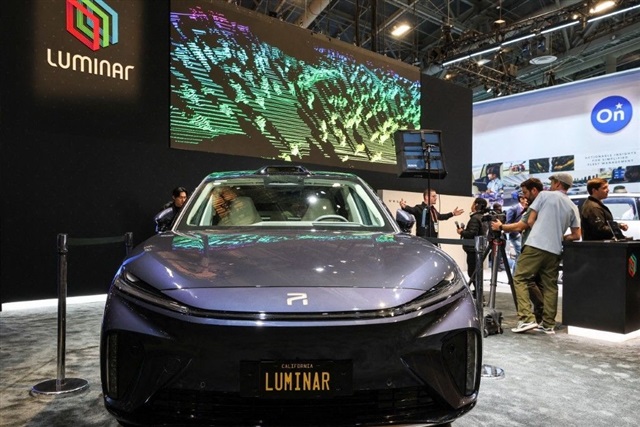
Luminar Technologies filed for Chapter 11 bankruptcy protection in Texas on Monday, seeking to sell its core business after losing a crucial supply contract with Volvo Cars and facing mounting financial pressure, according to court filings and company statements.
The Austin-based sensor maker entered court proceedings with the backing of a majority of its lenders to pursue a court-supervised sale of its LiDAR operations. Court documents show Luminar secured support from about 91% of its first-lien noteholders and 86% of its second-lien noteholders for the restructuring plan. Creditors also agreed to allow the company to access US$25 million in previously pledged cash to fund operations during the sale process.
As part of the restructuring, Luminar Semiconductor, a separate subsidiary, will be sold to Quantum Computing in an all-cash transaction valued at US$110 million, according to company disclosures.
Financial pressures mount
The filing in the US Bankruptcy Court for the Southern District of Texas lists assets of between US$100 million and US$500 million, against liabilities ranging from US$500 million to US$1 billion. Creditors include artificial intelligence firms Scale AI and Applied Intuition, according to the bankruptcy documents.
The insolvency follows a turbulent period marked by loan defaults, an investigation by the US Securities and Exchange Commission, and workforce reductions of about 25% earlier in 2025, according to TechCrunch.
Luminar's financial position deteriorated further after Volvo terminated a major agreement to integrate Luminar's hardware and software into its global vehicle platform. The company has filed claims seeking damages from the Swedish automaker, but warned investors that any recovery remains uncertain, according to earlier company statements reported by the Wall Street Journal.
Leadership transition and founder bid
CEO Paul Ricci said the board concluded that a court-supervised sale represented the best path forward after reviewing strategic alternatives. Luminar said it plans to continue operating during the bankruptcy process to limit disruption for customers and suppliers, but expects to wind down once the sale is completed.
Austin Russell founded Luminar in 2012 as a teenager with backing from investor Peter Thiel. He resigned as chief executive in May 2025 following an internal conduct and ethics inquiry, though he later launched a new venture, Russell AI Labs. A spokesperson for Russell AI Labs said Russell intends to bid for certain Luminar assets during the bankruptcy process.
Sector headwinds
Luminar's collapse underscores broader pressure across the autonomous driving supply chain as automakers scale back spending, delay self-driving programs, and shift more risk to technology suppliers. The restructuring highlights the challenges facing capital-intensive sensor manufacturers amid the slower adoption of advanced driver-assistance and autonomous systems.
Article edited by Jerry Chen