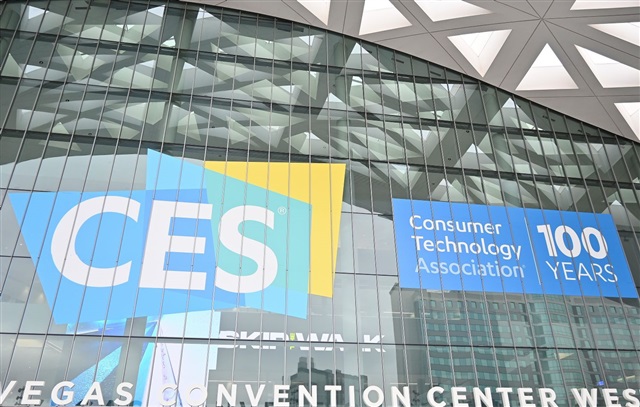
CES 2026 takes place January 6-9, 2026, in Las Vegas
CES showcases companies including manufacturers, developers and suppliers of consumer technology hardware, content, technology delivery systems and more. It also includes a conference program where the world's business leaders and pioneering thinkers address the industry's most relevant issues.
DIGITMES Asia provides basic users with unlimited access to toll-free articles, daily news email, and Asia Supply Chain 100 dataset access.
Sign up for free subscription now to continue your reading!
Karsan, the world's technology-focused mobility brand in new generation public transport, is preparing to participate in CES 2026, one of the leading technology trade shows. The brand's CEO, Okan Bas, who will introduce Karsan AI (Autonomous Intelligence) vision to the world at the fair, said, "Karsan AI is positioned as a mobility intelligence that perceives, makes instant decisions and continuously learns. The future is not only electric, but also intelligent. The secret to Karsan's autonomous success lies in strong partnerships and an end-to-end solution approach. While explaining our Karsan AI philosophy to people at the fair, we aim to use our space at CES as a showcase."With its vision of being 'One Step Ahead in the Future of Mobility,' Karsan, which plays a pioneering role in the transformation of public transport worldwide, is preparing to make an appearance at the Consumer Electronics Show (CES) 2026, where the latest innovations and trends in the world of technology are showcased. At the show, which will be held in Las Vegas, USA, from 6 to 9 January 2026, Karsan will introduce its Karsan AI (Autonomous Intelligence) vision to the world with the field-proven experience of its new generation autonomous models.Karsan is shaping the future of mobility on a global scaleFor Karsan, the exhibition serves as a strategic platform to showcase its autonomous vision, field-proven technological expertise, and global mobility approach to the world. It will host the global launch of Karsan's innovative AI (Autonomous Intelligence) vision. Taking the company's 'Electric Evolution' journey one step further, KARSAN AI represents a holistic approach to the era of smart mobility. Positioning Karsan AI as a mobility intelligence that perceives, makes instant decisions and continuously learns, Karsan CEO Okan Bas said, "The future of the industry is not only electric, but also smart. This approach demonstrates Karsan's vision of not only producing zero-emission vehicles but also designing the future of cities with autonomous and smart transportation solutions. As a company, the secret to our success in autonomy lies in strong partnerships and our end-to-end solution approach."CES is a global showcase for Karsan's innovative technologiesEmphasising that participating in CES is a powerful and strategic technological move towards becoming a global brand, Okan Bas said, "At CES 2026, we will convey our philosophy of mobility with KARSAN AI to visitors from all over the world. For us, the exhibition serves as a global showcase that positions our brand's capabilities at the heart of the technology world. Here, we aim to use our space at CES as a showcase to explain the Karsan AI philosophy to people."
At CES 2026, DEEPX will present a new paradigm for AI infrastructure - one designed for the physical world. As AI expands beyond data centers into robots, mobility, smart cities, factories, and intelligent devices, DEEPX positions itself at the core of this transformation with energy-efficient, real-time AI semiconductors purpose-built for Physical AI.Much like Arm reshaped the CPU industry through low-power innovation, DEEPX aims to establish a new global standard for Physical AI by delivering ultra-efficient AI accelerators. DEEPX enables intelligence to operate reliably and sustainably in real-world environments, addressing the critical constraints of power, heat, and cost.DEEPX's technology leadership has already been validated in the global market. In addition to winning two CES Innovation Awards in the Computing Hardware and Embedded Technologies categories, DEEPX-powered solutions have achieved the industry's highest recognition. Notably U.S.-based partner Sixfab received the CES Best of Innovation Award for its ALPON X5 AI Gateway, powered by DEEPX's first-generation AI chip, DX-M1. This success serves as a testament to DEEPX's solutions being more than just a component supply; they are recognized as a core engine and a game changer that elevates global partners' products to a world-class level.DEEPX will host a dedicated booth at the Las Vegas Convention Center (LVCC), North Hall – AI & Robotics Zone (#8945). The exhibit will showcase real-world deployments of AI semiconductors across robotics, drones, factory automation, retail, and intelligent infrastructure, proving that Physical AI has moved beyond concept and into commercial-scale deployment.At the booth, DEEPX will showcase performance targets for its next-generation DX-M2 AI chip, built on an advanced 2nm process. The DX-M2 is designed as a foundational infrastructure chip for the Physical AI era, solving the fundamental power and scalability limitations of data-center-centric architectures.Furthermore, DEEPX will launch its Open-Source Physical AI Alliance, formed in collaboration with leading AI software ecosystems including Baidu PaddlePaddle and Ultralytics' YOLO community. This initiative reflects DEEPX's strategy to tightly integrate hardware and software, accelerating global adoption of Physical AI through open, developer-friendly platforms."CES 2026 marks a pivotal moment for DEEPX - not just showcasing technology achievements, but demonstrating how Physical AI becomes real infrastructure through global partnerships,"said Lokwon Kim, CEO of DEEPX.
Actxa, a Singapore-based preventive health technology company, recently announced significant enhancements to its proprietary BGEM technology, the world's first clinically backed, non-invasive, AI-driven blood glucose evaluation and monitoring technology. The advancements strengthen BGEM's ability to deliver medical-grade glucose insights through everyday wearables.One key innovation is BGEM Glucose Range, a clinically backed, medical-grade technology that estimates blood glucose levels within a numeric range using a quick, one-minute measurement. Developed using data collected through clinical studies, BGEM Glucose Range offers pain-free and meaningful glucose insights anytime, throughout the day, it provides a cost-effective and convenient approach, making glucose monitoring accessible and sustainable.BGEM Glucose Range: Medical-Grade, Non-Invasive Glucose InsightBGEM Glucose Range represents a major advancement in non-invasive glucose evaluation. Using data from clinical studies, the technology estimates glucose levels within a dynamic range to enable convenient metabolic monitoring throughout the day.Designed for wearable integration, BGEM Glucose Range delivers a cost-effective alternative to traditional glucose monitoring methods. BGEM Glucose Range combines wearable PPG sensors and AI-driven analysis of digital biomarkers to estimate blood glucose results.Everyday Glucose Awareness on the Core Smart RingIn addition, the Core Smart Ring, Actxa's first smart ring under the Core range, is integrated with the AI Glucose Scan feature, powered by BGEM Glucose Status technology, to help users take better control of their metabolic health. The feature enables users to check their glucose status and receive a Normal or Elevated result linked to daily habits.Developed using clinically collected data, AI Glucose Scan interpretsPhotoplethysmography (PPG) signals from the Core Smart Ring to provide simple, everyday glucose awareness. Paired with lifestyle and wellness guidance, the Core Smart Ring's AI Glucose Scan supports healthier decision-making and metabolic awareness.Driving the Future of Non-Invasive Glucose Monitoring"Glucose health is becoming a defining challenge for global preventive health, yet most monitoring solutions remain invasive, costly or difficult to sustain," said Marcus Soo, Chief Executive Officer of Actxa."We want to make health insights simple, personal, and actionable. Actxa is empowering individuals and partners to integrate preventative health and glucose awareness into everyday life.
Mobilint, a South Korean fabless AI chipmaker, announced that it will showcase its efficient and production-ready industrial edge AI processors and their real-time demonstrations at CES 2026, to be held from January 6 through 9 at the Las Vegas Convention Center.MLX-A1, the company’s standalone edge AI box, was recently named a CES 2026 Innovation Award Honoree in the Artificial Intelligence category. The compact 1.3 kg system was recognized for its ability to run advanced AI workloads locally - including language, vision, and multimodal models - within a 70-watt, laptop-class power envelope, without relying on cloud services, servers, or GPUs. By addressing latency, power consumption, cost, and data privacy challenges, MLX-A1 enables practical AI deployment across industrial environments.Designed for flexible integration, MLX-A1 supports both retrofitting existing equipment and deploying new production lines without added infrastructure complexity, while delivering meaningful power and cost savings.MLX-A1 is powered by ARIES, Mobilint's high-efficiency AI accelerator chip, capable of delivering up to 80 TOPS of performance. ARIES entered mass production in 2024 and is now shipping globally in multiple form factors, supporting scalable deployment across industrial and commercial systems.Mobilint will also present REGULUS, its ultra-compact AI system-on-chip that won the CES 2025 Innovation Award, during the exhibition. Measuring 17 mm × 17 mm, REGULUS delivers up to 10 TOPS of AI performance at under 3 watts, enabling always-on, on-device AI in space- and power-constrained environments such as smart sensors, embedded vision systems, and low-power industrial devices.Throughout CES 2026, Mobilint will run live, application-focused demonstrations showcasing real-time video analytics, local AI assistants, and multi-model AI processing executed directly on its hardware. These demonstrations emphasize low-latency inference, stable real-time operation, and energy efficiency.In addition, Mobilint will feature joint demonstrations with global industrial platform partners including Lanner and Autonics, highlighting how its AI processors can be integrated into existing systems with minimal modification, enabling AI upgrades without full system replacement."CES 2026 gives us the opportunity to demonstrate our edge AI technologies that are ready for immediate deployment in real industrial settings," said Dongjoo Shin, CEO and CTO of Mobilint. "By combining high-performance, power-efficient AI processing technology with close collaboration with global partners, we will further accelerate AI adoption across industries and continue to strengthen our technological competitiveness in the global market."Visitors can experience Mobilint's CES Innovation Award–winning MLX-A1, REGULUS, and its latest edge AI hardware at Booth No. 9129 in the North Hall, LVCC, during CES 2026.
The Seoul Business Agency (SBA), a small business support organization under the Seoul Metropolitan Government dedicated to revitalizing the startup ecosystem and discovering promising startups, announced that it will participate in CES 2026, the world's largest IT exhibition, by establishing and operating the Seoul Integrated Pavilion. In addition, following last year's initiative, SBA plans to host and expand the first-ever CES-based inter-country collaborative networking event, the "Global Innovation Forum," which aims to drive convergence across the global startup ecosystem.The forum is designed to provide Seoul-based startups with outstanding technological capabilities and growth potential, and a platform to engage directly with key players in the global startup ecosystem. By doing so, the event seeks to turn CES participation into tangible global business opportunities and help startups shine on the world stage. In particular, the forum is expected to attract strong interest from startups and ecosystem stakeholders seeking international expansion, as it offers a rare opportunity to experience investment, promotion, and networking in a single setting.The Global Innovation Forum was conceived as a networking platform that uses CES, the world's largest exhibition, as a bridge to enable startup ecosystems from different countries to communicate organically beyond national borders. The initiative began in 2025 under the name "Seoul Innovation Forum," when five national pavilions-Japan, the Netherlands, Switzerland, Taiwan, and the Republic of Korea (Seoul)-collaborated for the first time. As the inaugural event built on solidarity among Eureka Park-participating countries at CES, the Seoul Innovation Forum was considered particularly meaningful. It brought together key startup ecosystem players from each country to explore practical collaboration measures, earning positive evaluations as a successful first step toward enhancing competitiveness as global startups.A "national pavilion" refers to an exhibition pavilion established and operated by a national institution participating in CES.Building on this success, the event has been rebranded as the "Global Innovation Forum" starting in 2026 to provide participating startups with more stable and expanded opportunities for global collaboration. The highlight of the forum, the IR Pitching Competition, has been significantly strengthened through an enhanced judging panel. In addition to promoting technology through global media, the competition now includes rigorous business evaluations by leading global venture capital firms. Through this approach, participating companies are expected to gain opportunities for accelerated growth, expand brand awareness, and attract practical investment and market validation in a single venue.The 2026 Global Innovation Forum will be held in collaboration with startup support organizations from seven countries. The event is jointly supported by the host organization, Seoul Business Agency (SBA) of the Republic of Korea, Taiwan Tech Arena (TTA), Switzerland Global Enterprise (S-GE), Israel Economic and Trade Office, Japan External Trade Organization (JETRO), Québec Government Office of Canada, and Business France, raising expectations for a successful outcome.The forum will open with an IR pitching competition featuring startups selected by each participating country. The competition serves as a core program that draws strong attention from investors, media, and industry stakeholders, as promising startups carefully selected by national startup support organizations present their technologies and business models on the global stage. Each participating country-the Republic of Korea, Taiwan, Switzerland, Israel, Japan, Canada, and France-will showcase its leading startups before global investors and media, providing opportunities to expand international partnerships. Through this IR pitching competition, which combines media reach with the expertise of venture capital firms, participating companies are expected to achieve tangible outcomes beyond simple promotion, including market validation and investment connections.As the centerpiece of the forum, the IR pitching competition will serve as a platform for outstanding startups from seven countries, including Korea, Japan, and France, to demonstrate their value on the global stage. This platform, where national innovation capabilities converge, will act as a bridgehead for expanding international partnerships. Through an advanced evaluation process involving both media and venture capital firms, participating companies are expected to achieve meaningful results in brand recognition and capital linkage simultaneously.Award-winning companies that demonstrate innovative technologies and vision during the competition will receive prize money and trophies according to their respective award categories. The awards are divided into the Grand Award (first place), Scale-up Award (second place), and Impact Award (third place), with prize money of USD 3,000, USD 2,000, and USD 1,000, respectively.In addition, the forum will host panel discussions featuring representatives from each participating country, creating a knowledge-sharing platform to discuss the latest trends and support know-how in the global startup ecosystem. This is expected to go beyond individual company scale-up efforts and serve as an opportunity to strengthen policy alignment among countries. The networking session, where participants can interact freely, will be a key element in turning forum participation into tangible business outcomes. The teamwork among media, venture capital firms, startups, and startup support organizations is expected to open new opportunities for market entry for participating startups.Hyunwoo Kim, President and CEO of the Seoul Business Agency, presented his vision for the forum, stating that SBA aims to grow the event into a representative collaboration model that connects the global startup ecosystem into one through CES.
Himax Technologies, Inc. announced that its subsidiary Liqxtal Technology, in collaboration with iCatch Technology, Inc., will jointly showcase its latest Drone AI Imaging Solution at the upcoming CES 2026, the largest consumer electronics show in Las Vegas, U.S.A. from January 6 - 9, 2026. The solution integrates Liqxtal's long-range electro-optical (EO) and thermal IR camera system, with iCatch's high-performance image processing and edge AI SoC serving as the core computing platform. This highly integrated architecture significantly reduces system complexity while ensuring data security and privacy. The Drone AI imaging solution delivers stable, high-efficiency AI visual processing for drone applications, targeting high-growth markets including aerial photography, security surveillance, and industrial inspection. For the showcase at CES, on the optical side of the Drone AI imaging solution, the system integrates Liqxtal's ultra-lightweight camera module, combining EO with up to 20 times optical zoom capability and thermal infrared (IR) imaging. This design delivers stable performance across daytime, nighttime, and low-visibility environments, while significantly enhancing aerial target detection and tracking. Featuring a lightweight design and high level of integration, Liqxtal's dual-spectrum long range EO and thermal IR camera modules are well suited for applications such as real-time image recognition, dynamic target tracking, and all-weather, around-the-clock monitoring. On the AI computing side, the newly introduced solution is powered by iCatch's advanced edge-AI vision SoC, delivering up to 4 TOPS (4 trillion operations per second) of AI computing performance, making real-time, on-device image analysis and object recognition possible, thereby significantly reducing reliance on cloud computing, while improving system responsiveness and minimizing latency and data-transmission overhead. In addition, iCatch's SoC integrates a suite of stable image-processing technologies, including electronic image stabilization (EIS), ensuring clear and stable image quality even in high-dynamic or complex flight environments.The newly launched Drone AI imaging solution also supports a wide range of mainstream communication interfaces and standard protocols, such as USB3.0, Ethernet and more, enabling flexible integration across various drone platforms. This versatility allows the solution to meet customized requirements for diverse applications including aerial photography, security and surveillance, and industrial inspection applications, while helping system integrators and end customers accelerate product deployment and real-world adoption. "Our collaboration with Liqxtal validates the platform value of iCatch's Vision System Solution. As physical AI applications continue to grow rapidly, iCatch integrates high-performance image processing with edge-AI computing to deliver a production-ready, deployable "The eyes of AI," helping customers reduce integration risk, shorten time to deployment, and accelerate commercialization," said Weber Hsu, President of iCatch. "This collaboration fully leverages Liqxtal's expertise in optics and imaging system integration, together with iCatch's strengths in edge-AI computing and intelligent image processing, enable high level of integration between optical imaging and AI vision processing, further expanding application scenarios such as drone/UAV (unmanned aerial vehicle) aerial photography and industrial remote inspection," said by Dr. Hung Shan Chen, President of Liqxtal.Liqxtal and iCatch invite all interested parties to experience the latest dual spectrum Drone AI imaging solution at Venetian Expo, Titian 2201A, Las Vegas. To schedule a meeting or booth visit, please contact Liqxtal at info@liqxtal.com or iCatch at ir@icatchtek.com.
As AI applications rapidly expand across PCs, mobile devices, and content creation workflows, there is a parallel surge in demand for high-resolution video, real-time generative content, and on-device inference. This transition is redefining storage within system architectures: it is no longer just a matter of capacity planning, but a critical determinant of performance, bandwidth, and reliability.To address this, AGI Technology has sharpened its strategy and will debut next-generation storage solutions at CES 2026, targeting the high-speed and usability demands of the AI era. PresidentMiranda Lee pointed out that while high specs are now "table stakes" across the market, the real differentiator going forward will be how well products adapt to real-world scenarios - and whether brands can sustain stable delivery and consistent quality.Miranda emphasized that AI is doing more than just driving capacity growth; it is fundamentally changing how data is utilized.First, edge computing and multi-task content creation are becoming the norm. This increases the frequency of data access and the need for mobility, transforming storage devices from auxiliary components into critical links in modern production workflows. Second, pricing dynamics are reshaping consumer behavior. As the cost of high-end storage and memory rises, the market is witnessing more "buy-down" purchasing and phased expansion: users tend to select mid-range configurations initially, supplementing capacity with external devices later. Third, high speed and capacity are increasingly becoming entry requirements rather than differentiators. With interfaces such as PCIe Gen4/Gen5 and USB4 continuing to advance, adhering to these specifications has become a baseline standard that all brands must meet.Consequently, AGI Technology is moving beyond differentiation through specifications alone. The company is transitioning its brand identity from a component manufacturer defined by performance metrics to a solutions provider centered on usage scenarios. This strategic realignment ensures that while AGI continues to advance speed and capacity benchmarks, it also integrates robust reliability and environmental durability into its core design philosophy. Miranda emphasizes that while performance is a baseline requirement, enhancing stability and durability addresses the practical demands of mobile and outdoor workflows. This comprehensive approach creates tangible added value for users requiring consistent performance under pressure.AGI Technology will center its CES presence around a scenario-driven strategy that prioritizes reliability and practical application. According to Miranda, CES has long served as a vital stage for showcasing AGI's technological prowess. However, the company's recent strategy emphasizes private, high-level briefings over traditional exhibit formats. By moving toward a semi-exclusive engagement model, AGI can more effectively align its product roadmap with customer needs, ultimately strengthening brand loyalty and enhancing the performance of its international channels.At CES 2026, AGI is set to translate its strategic vision into a powerhouse lineup of tangible innovations, headlined by next-generation storage solutions tailored for the AI era. Leading the charge is a 6nm PCIe Gen5 SSD capable of blistering speeds up to 11,000 MB/s. By leveraging an advanced 6nm process, AGI has significantly reduced power consumption and thermal overhead, making flagship-tier performance more accessible for real-world deployment. Complementing this is AGI’s 10,000 MT/s low-latency DDR5 RGB memory, built for the rigorous demands of AI-native platforms. Furthermore, AGI is expanding its portable portfolio with three specialized external SSDs catering to content creators, outdoor adventurers, and power users, reinforcing the brand's focus on versatile, high-speed data management.Miranda emphasized that for AGI Technology, 2026 marks more than just another hardware iteration; it represents a strategic pivot in both brand identity and operational philosophy. The company is steadily evolving from a component supplier into a user-centric storage solutions brand. While continuing to push the boundaries of PCIe and USB performance, AGI is doubling down on real-world utility - tailoring products to excel in mobility, professional content creation, and long-term data archiving.She emphasized that in an era of ubiquitous AI and high-performance computing, true value transcends raw benchmarks; it is defined by unwavering reliability when it matters most. Whether capturing a split-second extreme sports feat, a creator's unrepeatable live recording, or years of cherished family milestones, storage devices house more than just data - they safeguard irreplaceable moments. Through a commitment to durable, high-performance design, AGI Technology aims to earn user trust across every scenario, transforming their brand promise, 'Preserve Your Uniqueness,' from a slogan into a lifelong digital legacy.Project K10 DDR5 - 10,000 MT/s Overclocking Flagship.Credit: AGI TechnologyProject S10 PCIe Gen5 SSD - 11,000 MB/s Performance with TSMDC 6nm Controller.Credit: AGI TechnologyNew Series of Portable SSD – Combination of High-Speed, Durability and Capacity.Credit: AGI Technology
Driven by the worldwide push for net-zero emissions and the rise of the circular economy, sustainability has become a central priority across the technology sector. The introduction of a dedicated sustainability zone at recent CES events further underscores how green materials and environmental innovation technologies have emerged as focal points at global tech exhibitions. Renouvo, a company with more than two decades of experience in biomaterials, is among the key players gaining increased attention in this industry shift.At CES 2026, Renouvo will unveil its new Low-Carbon Materials Platform, which integrates its proprietary negative-carbon technology with AI. The platform is designed to help global brands make measurable progress toward carbon-neutrality commitments, while expanding Renouvo's reach into the US consumer electronics supply chain.Founder and CEO Chris Huang noted that the company is honored to have been selected by TTA to participate in CES. He observed that major US consumer electronics brands are accelerating their ESG initiatives, actively seeking new materials with negative-carbon or low-carbon attributes - whether for device enclosures or protective packaging components. In recent years, several international brands have approached Renouvo for collaboration, aiming to reduce carbon emissions at the material source and achieve verifiable sustainability outcomes.Unique hydrogen-bonding patent and third-party verification strengthen material reliabilityRenouvo has long focused on plant-based materials, with a core mission of converting agricultural residues and biomass waste into market-ready low-carbon materials and plastic-free solutions. Beyond its own line of eco-friendly tableware, the company develops low-carbon and carbon-neutral materials for brand partners in the EU, Australia, and other regions, facilitating real-world adoption of circular-economy practices.According to Huang, although the number of companies offering recycled or "eco-friendly" materials has grown rapidly, truly durable, safe, and internationally deployable low-carbon materials remain scarce. Renouvo distinguishes itself by using agricultural waste - such as bagasse and spent coffee grounds - as primary feedstock, enhanced by its proprietary hydrogen-bonding technology. This innovation addresses the common limitations of plant-based materials, including softening and insufficient durability, while simultaneously delivering carbon-capture and carbon-sequestration benefits that reduce emissions at the source.To strengthen material credibility, Renouvo partners extensively with third-party verification bodies to establish comprehensive carbon footprint (CFP) reports, quantifying emissions across the entire product life cycle - from raw materials to manufacturing and final shipment. These transparent, verifiable datasets enable Renouvo's materials to be adopted in international supply chains and serve as a reliable foundation for brands evaluating ESG performance. Huang emphasized that the ability to provide clear, measurable carbon-reduction data is one of Renouvo’s most significant differentiators in the global materials marketplace.Negative-carbon materials integrated with AI strengthen adoption efficiency, with a focus on the US marketA major highlight of Renouvo's return to CES in 2026 is the debut of a new platform that integrates its carbon-negative material technology with AI. The platform analyzes key parameters - including material composition, process-level carbon emissions, durability, and cost structure - providing brands with comprehensive evaluation data prior to adoption. This significantly shortens material verification cycles and accelerates the transition from testing to mass production.Renouvo has participated in the TTA competition for two consecutive years and continues to seek CES exhibition opportunities, driven by the US market's increasingly stringent sustainability requirements for materials. Major US brands now demand verifiable evidence of carbon-neutral commitments and transparent supply-chain metrics. By leveraging visibility from CES and TTA, Renouvo aims to expand collaboration with leading US technology and consumer electronics companies, accelerate global adoption of negative-carbon materials, and position itself as a key partner in supporting multinational brands' sustainability strategies.Looking ahead, Renouvo plans to continue enhancing its AI-enabled materials platform, expand its carbon-footprint database, and strengthen customized service capabilities. The company's objective is to become a strategic partner for North America's top green-materials supply chains within the next three years. Huang emphasized that sustainability cannot remain at the level of slogans or declarations - it must be verifiable and quantifiable. Only when brands can clearly track and measure carbon-reduction outcomes will sustainable materials become mainstream, which is the core message Renouvo aims to deliver worldwide.Renouvo's diverse product portfolio. Credit: Renouvo
SEOUL, South Korea—December 24, 2025—BOS Semiconductors, a fabless semiconductor company specializing in automotive and physical AI semiconductors, today announced that it will participate in CES 2026, the world's largest technology exhibition, taking place in Las Vegas, USA from January 6–9, 2026. At the event, BOS will unveil an AI Box demo designed for next-generation mobility.At CES 2026, BOS will highlight its strategy aligned with major industry trends, including the advancement of autonomous driving, the shift toward Software Defined Vehicles (SDVs), and the expansion of Physical AI. Through the demonstrations, BOS will present how to anticipate emerging needs in mobility AI environments - such as: Support for a wide range of AI models based on CNN and Transformer architectures, Flexible scalability and integration with existing automotive electronic systems, Real-time perception and decision-making enabled by physical AI.To support these capabilities, BOS will showcase AI model demos powered by its AI Box integrating the high-performance AI accelerator Eagle-N. The AI Box is an external AI computing module that allows automakers (OEMs) to add an "AI brain" to vehicles without replacing existing in-vehicle infotainment (IVI) systems, enabling fast AI expansion with minimal platform change.With the AI Box, OEMs can minimize changes to their existing systems while extending high-performance AI functionality independently. This approach accelerates adoption of advanced AI capabilities not only in new vehicles but also in facelift models - updated versions of existing vehicles with enhanced design and features - reducing development cost and time while improving long-term product competitiveness.The AI Box is based on an on-device AI architecture, delivering several advantages. Sensitive data such as voice and video can be processed directly inside the vehicle rather than being transmitted to the cloud, strengthening privacy protection and data security. It also ensures stable AI operation regardless of network connectivity, improving overall reliability. Over the long term, the AI Box can reduce total cost of ownership (TCO) by lowering cloud traffic, inference, and storage costs. In addition, it offers strong scalability without requiring server expansion as the number of users increases.BOS' AI Box is designed to integrate flexibly with existing vehicle systems through multiple interfaces, enabling an efficient AI vehicle architecture based on clear role separation: AI-intensive functions are handled by the AI Box, while existing systems continue performing their original roles. At the booth (Venetian Expo, Hall A, Booth #50017), BOS will demonstrate on-device AI models that combine Vision-Language Models (VLMs) and Large Language Models (LLMs) based on the AI Box architecture. The demo will also be showcased at the Tenstorrent Demo Room as well."Through our AI Box demo with Eagle-N at CES 2026, we will present a practical approach for effectively scaling AI capabilities even on existing mobility system," said Jason (Jeongseok) Chae, Vice President and Head of Strategic Marketing & Sales at BOS. "We aim to evolve beyond automotive semiconductors and become a core semiconductor company leading the era of Physical AI."
In recent years, digital twin technology has quickly gained traction across industries. With the rapid maturation of AI and big data analytics, enterprises can now build highly accurate, real-time synchronized virtual models, enabling predictive maintenance, process optimization, and other benefits that were once difficult to realize. MetAI, invited by Taiwan Tech Arena (TTA) to join CES 2026, will showcase its proprietary AI - and 3D-driven MetGen digital twin platform, formally signaling its intent to capture opportunities in the US smart warehousing sector.MetAI co-founder and CEO Daniel Yu noted that the US is home to some of the world's largest warehousing market, driven by digitalization efforts from major retailers such as Amazon, Walmart, and Costco. As such, the US has become MetAI's primary target for overseas expansion. "We are honored to receive TTA's invitation to exhibit at CES 2026," Yu said, expressing appreciation for TTA's comprehensive support - from pre-show preparation and customer matchmaking to presentation guidance - which has strengthened the company's confidence in entering the US market.AI fused with 3D technology : Digital twins generated in minutesFounded in 2023, MetAI focuses on developing MetGen, the first AI-native, domain-specific generative platform designed for real-to-sim and sim-to-real integration. By leveraging its proprietary AI and 3D synthesis architecture, MetGen automatically converts traditional CAD and 2D design files into SimReady (simulation-ready) 3D digital twin environments. The platform also incorporates AI, 3D simulation, physics modeling, and automation control logic, enabling users in warehousing, advanced manufacturing, semiconductors, and automation equipment to design, validate, and simulate workflows in a virtual environment before real-world deployment.MetAI further supports the creation of large-scale, high-fidelity synthetic datasets within the digital twin environment, giving AI models access to virtually unlimited training material. This capability accelerates production-line design and product development, while enabling enterprises to derive optimized strategies in simulation before applying them in real operations.By integrating NVIDIA Omniverse with MetAI's proprietary generative models, complex digital twin environments that once required months or even years to build can now be automatically generated in minutes, effectively resolving one of the industry's most persistent adoption barriers: excessively long deployment timelines. The company currently focuses on three key application areas - smart warehousing, semiconductors, and data centers - and completed a US$4 million seed round in 2025, backed by leading investors including Kenmec Mechanical and NVIDIA, making it one of the few Taiwan startups to receive a direct strategic investment from NVIDIA.According to Yu, traditional digital twin development relies heavily on manual data processing, resulting in implementation cycles that may stretch across several months or even longer than a year. Even with newer solutions emerging, model inaccuracies often lead to costly revisions. "MetAI combines AI with 3D generation to directly interpret 2D blueprints such as CAD or BIM files and automatically construct complete 3D twin environments," Yu explained.This approach reduces the typical modeling workload - from hundreds or thousands of hours - to just a few minutes, while delivering high consistency and zero structural error. It enables companies to rapidly plan production lines, build virtual sandboxes for robot training or logistics flow optimization, and significantly boost deployment efficiency.Establishing a US headquarters to capture smart warehousing and advanced manufacturing opportunitiesDespite being a relatively young company, MetAI has quickly secured partnerships with several high-profile enterprises, thanks to the uniqueness and technical depth of its solutions. In addition to working with TSMC, MetAI is collaborating with Kenmec to fully reconstruct the Chief Global Logistics's smart logistics center into a virtual environment, creating a highly realistic digital twin featuring physics-accurate modeling, executable control logic, and AI-driven optimization capabilities.According to Yu, the rise of AI has prompted Taiwanese startups to shift their mindset - no longer focusing solely on the domestic market but aiming directly at the world's largest and most innovation-driven arenas. "The US has exceptionally strong demand for smart warehousing solutions. We are actively preparing to establish our US team and headquarters, which will include a local team, customer support, and a technical service center. This will place us closer to key customers and significantly enhance our ability to execute in the North American market," Yu said.Yu added that MetAI will continue to strengthen its real-to-sim and sim-to-real capabilities, while expanding integration with a broader ecosystem of automation hardware. The company aims to build an end-to-end twin platform that spans design, simulation, and deployment. Ultimately, MetAI seeks to enable enterprises to advance smart warehousing and smart factory transformations at minimal cost and with maximum speed.MetAI partners with Kenmec to build a high-fidelity virtual smart logistics center. Credit: MetAI
2/9 pages
Members only
Sorry, the page you are trying to open is available only for our paid subscribers.