

Taipei, Saturday, May 25, 2013 04:00 (GMT+8)
partly cloudy
Taipei
24°C
ViewSonic adds 17-inch widescreen LCD monitor
Emily Chuang, DigiTimes.com, Taipei [Thursday 18 January 2007]

ViewSonic has quietly added a 17-inch widescreen LCD monitor to its widescreen monitor portfolio. With a manufacturer's suggested retail price (MSRP) of US$205, the model (VA1703wb) has a resolution of 1,440×900, a contrast ratio of 500:1, a brightness of 250cd/m2 and a response time of 8ms, according to the company's website.

During CES 2007, which ran from January 8-11 in Las Vegas, ViewSonic exhibited two new large-size widescreen LCD monitors, including one 24-inch VX2435wm and the 28-inch (27.5 viewable) VX2835wm. Priced at US$699 and US$879 respectively, the 24-inch widescreen monitor will be available in February and the VX2835wm will hit the market in April, according to ViewSonic.

Features of the two large-size widescreen monitors include a response time of 8ms, a native resolution of 1,920×1,200, a brightness of 500nits and a contrast ratio of 1,000:1, said ViewSonic.

With three new models, ViewSonic's full lines of widescreen LCD monitors will expand to cover the 17-, 19-, 20-, 22-, 23, 24- and 28-inch segments.

Key specification of ViewSonic new widescreen LCD monitors

Model number

VA1703wb

VX2435wm

VX2835wm

Screen size (inches)

17

24

28

Resolution

1,440x900

1,920×1,200

1,920×1,200

Contrast ratio

500:1

1,000:1

1,000:1

Brightness (cd/m2)

250

500

500

Response time

8ms

8ms

8ms

Pricing (US$)

205

699

879

Source: Company, compiled by DigiTimes, January 2007
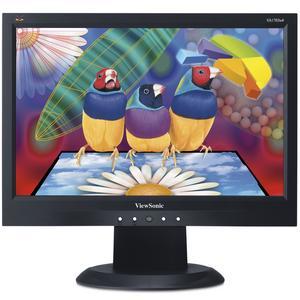
ViewSonic adds 17-inch widescreen monitor

ViewSonic's new 17-inch widescreen monitor
Source: Company

Categories: Display system Displays

Topics: Hot Systems

24-May-2013 markets closed

 LastChange

TAIEX (TSE)8209.78-28.05-0.34% 

TSE electronic310.89-0.43-0.14% 

GTSM (OTC)118.64-0.71-0.59% 

OTC electronic143.77-0.29-0.2% 

LCD TV market trends and outsourcing strategies for 2013
2013 TFT LCD industry and market outlook
  • Ultra HD

    Ultra HD is now the industry name for "4K" resolution

  • Full HD handset panel

    Panel makers are gearing up to produce Full HD applications for high-end smartphones.

  • LCD TV panel prices stable

    LCD TV panel prices have stabilized, with the China TV market reporting strong sales during the October 1 National Day holidays.

  • Touch Taiwan 2012

    Many local and foreign makers, such as AUO, CMI and Corning, are at Touch Taiwan 2012 from August 29-31.

  • LCD TV overview - Jun 2011

    Growth of the global LCD TV market was not as strong as expected in 2010 as the market continued to feel the aftershocks of the economic recession that had hit...

  • A glimpse into the e-book reader market - May 2010

    In 2008, worldwide e-book reader shipments totaled only 700,000 units, according to Digitimes Research. But demand exploded in 2009 as consumer interests grew...

  • Overview of LCD TV market - May 2010

    When the economic recession hit at the end of 2008, the LCD TV market seemed to be heading toward a doomsday scenario in 2009; however, demand turned out to be...

  • Large-size LCD panel overview - Jun 2007

    Global large-size LCD panel market revenues are expected to increase at a compound annual growth rate (CAGR) of 12.5% to US$96.2 billion by 2011, up from US$53.5...

  • Trends and shipment forecast for 2H 2012 tablet market

    Digitimes Research remains conservative about the prospects for the period, with half-year shipments projected to reach 49.18 million units and whole-year shipments being revised downward to 88.69 million units.

  • Trends in the China video market

    In addition to strong potential video content demand in China, the market has developed rapidly due to government intervention and delays in establishing copyright protections.

  • Trends in Asia LED chip manufacturing industry

    Asia is playing an ever more important role in upstream LED chip manufacturing. The region accounted for 80% of MOCVD demand in 2011 and will account for 90% in 2012, largely because Taiwan, Japan, South Korea and China are the major global centers for LED chip production.