US ride-hailing platform Uber has announced a partnership with Amazon Web Services (AWS) to deploy its in-house custom chips, aiming to improve the speed and efficiency of artificial intelligence (AI) model training and inference. The move is expected to strengthen Uber's real-time computing capabilities across ride-hailing and delivery services, while highlighting a broader push by cloud providers to capture AI infrastructure demand through proprietary silicon.
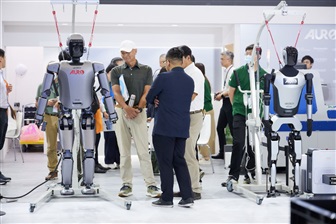
China's AgiBot Innovation (Shanghai) Technology has shipped its 10,000th humanoid robot, the Agibot Expedition A3, signalling early mass production at scale. Output doubled from 5,000 units at the end of 2025 within three months. While Tesla's Optimus timeline remains under scrutiny, China's humanoid robot push is already scaling, led by AgiBot, Unitree Robotics, and Ubtech Robotics in an emerging three-player structure.
Apple's first foldable iPhone is reportedly facing a more complex-than-expected engineering testing phase, raising concerns about potential delays to mass production and initial shipments. According to Nikkei Asia, some component suppliers have been informed that production schedules may be pushed back, though sources stressed the issue stems from technical challenges rather than material or component shortages. The period from April to early May is seen as "critically important" for resolving these issues.
As artificial intelligence (AI) accelerates the buildout of data centers, the race to supply their enormous energy demands is drawing new alliances between China's technology and industrial giants.
The outbreak of war between the US and Iran in late February 2026 has entered its second month, sending shockwaves through global energy and petrochemical markets. Soaring crude oil and liquefied natural gas (LNG) prices are cascading downstream, affecting manufacturers across multiple industries.
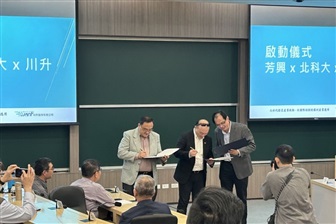
As global demand for satellite communications accelerates, Taiwan's role in the supply chain is beginning to shift. On April 2, BWant announced a new partnership with National Taipei University of Technology and Pyras Technology, alongside Canada-based SpaceBridge, to build a localized testing ecosystem aimed at connecting Taiwanese manufacturers more directly with global satellite operators.