

Taiwan is stepping up outreach to India's engineering sector as global competition for chip and artificial intelligence talent intensifies. The planned cooperation could affect supply chains, university links, and where skilled graduates build careers, with implications for chipmaking hubs in Asia and beyond.
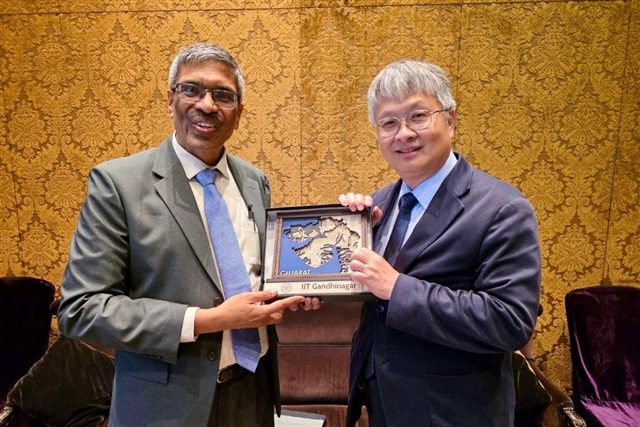
Taiwan's Education Ministry has invited the president of the Indian Institute of Technology (IIT) Gandhinagar to Taiwan to expand cooperation in semiconductors, artificial intelligence, and advanced engineering, while also addressing talent shortages in Taiwan and India's Gujarat state.
Pacts signed as enrollment climbs
The ministry said Prof. Rajat Moona visited Taiwan from September 20 to 25 at its invitation. During the trip, IIT Gandhinagar signed memorandums of understanding with National Central University, National Taiwan University of Science and Technology, and National Taipei University of Technology to strengthen collaboration in semiconductors, AI, and advanced engineering.
Political Deputy Minister Liu Kuo-wei said the number of Indian students coming to Taiwan for university study and advanced research has risen since the pandemic to more than 2,800 in the 2026 academic year. He said 974 Indian students were enrolled in doctoral programs in Taiwan that year, making India the second-largest source of doctoral students after Indonesia, which had 1,081.
Liu said the agreements with the three Taiwanese universities had been in preparation for several months and were important for future semiconductor talent development. Education Ministry officials said IIT graduates need clear career paths and that universities on both sides will discuss cooperation details in the coming months.
Career paths in Taiwan and Gujarat
Officials said graduates could choose to work in Taiwan's semiconductor industry or remain in India to join chip projects such as those being developed by Tata Group. IIT Gandhinagar is located in Gujarat, where India's central government is building a semiconductor cluster and has assigned the school a role in industry-academia research and high-level talent training.
In 2026, with support from the Indian government, the institute is scheduled to establish the Silicon and Advanced Semiconductor Manufacturing Research and Training Hub, known as SAMARTH, and launch programs including Integrated Circuit Design and Technology. The Education Ministry said the Taiwan visit, signing ceremonies, site tours, and meetings are intended to use Taiwan's university system and semiconductor supply chain to attract Indian AI and chip design talent into a mutually beneficial partnership.
More campus and chipmaker visits
During the visit, the delegation is also expected to meet with National Cheng Kung University and National Yang Ming Chiao Tung University, and tour the Taiwan Semiconductor Research Institute and companies including Powerchip Semiconductor Manufacturing Corp., which has technical cooperation with Tata Group.
Article translated by Jingyue Hsiao and edited by Jerry Chen