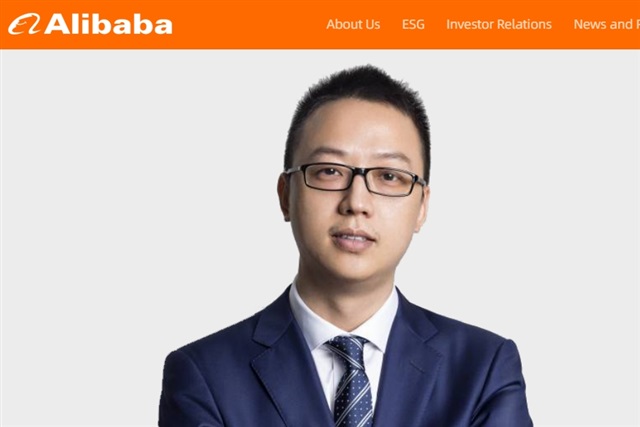
Alibaba Group Holding has created a new artificial intelligence unit called Token Foundry, putting it directly under CEO Eddie Wu as the Chinese technology giant further consolidates its model-development teams and pushes AI applications toward commercialization.
The new division merges Alibaba's Tongyi large-model business unit with Future Life Lab, according to the South China Morning Post, Phoenix New Media, and STAR Market Daily. SCMP said the unit brings together Tongyi Lab and Future Life Lab and will be led directly by Wu, citing people familiar with the matter.
The name points to Alibaba's focus on tokens as the basic unit for model usage, service delivery, and AI monetization, as the company works to turn large-model capabilities, MaaS services, and AI agents into more standardized commercial products.
The move is the latest in a series of Alibaba changes aimed at bringing model development, AI applications, and business units under a more unified structure, as China's large-model race moves toward commercial deployment.
AI teams consolidated
Zhou Jingren, a key figure behind Alibaba's Qwen model series, has been named Alibaba's chief scientist and will lead the Alibaba AI Future Research Institute, which will focus on frontier AI research.
Zheng Bo, who previously oversaw Future Life Lab, will bring projects including Happy Horse and Happy Oyster into Token Foundry. Happy Horse is a video-generation model, while Happy Oyster is an open-world AI model.
Future Life Lab was previously housed within Taobao and Tmall Group. The lab had been overseen by Zheng, chief scientist and vice president of technology at Taobao and Tmall Group, who also serves as chief technology officer of Alimama, Alibaba's digital marketing arm.
Zhang Di, who previously led development of Kuaishou Technology's video-generation model Kling, rejoined Alibaba in November 2025 to run Future Life Lab, reporting to Zheng.
Video overlap comes into focus
The restructuring may help Alibaba reduce overlap between internal AI teams, especially in video generation.
Future Life Lab developed Happy Horse, while the Tongyi large-model unit has also been working on video-generation technology and released Wan2.7 in April. Bringing the teams into one unit could help Alibaba better coordinate talent, computing resources, and product roadmaps, though the company has not publicly framed the move in those terms.
The consolidation follows several AI-related organizational changes this year. On March 16, Alibaba established Alibaba Token Hub, or ATH, with Wu directly in charge. The group includes Tongyi Lab, the MaaS business line, Qwen, Wukong, and AI Innovation, covering foundation model development, model-service platforms, and AI applications for consumer and enterprise users.
On April 8, Alibaba set up a group technology committee led by Wu, with members including Zhou Jingren, Wu Zeming, and Li Feifei. The company also upgraded Tongyi Lab into the Tongyi large-model business unit, with Zhou in charge.
Commercialization pressure
The latest restructuring comes as Alibaba tries to convert AI investment into revenue-generating products and services.
Phoenix New Media said Alibaba's latest Qwen3.7 model has shown strong coding capabilities and gained recognition among developers and enterprise customers. The report also said Alibaba's AI business has moved beyond the early investment stage and entered a period of commercial returns, citing the company's latest quarterly results.
Alibaba's latest financial report showed AI-related products accounted for 30% of Alibaba Cloud's external revenue in the fourth quarter of fiscal 2026, underscoring the growing commercial role of AI in the company's cloud business.
For Alibaba, AI is tied not only to cloud computing, but also to e-commerce, marketing, enterprise services, and new content-generation tools. Placing Token Foundry under Wu signals that AI remains a group-level priority rather than a standalone research effort.
The challenge will be turning model capabilities into commercial products more quickly while managing development costs and internal coordination. Competition is also intensifying among Chinese AI players, including Tencent, ByteDance, Kuaishou, and other large-model developers, raising pressure on Alibaba to move faster from model development to scalable applications.
Article edited by Jack Wu