
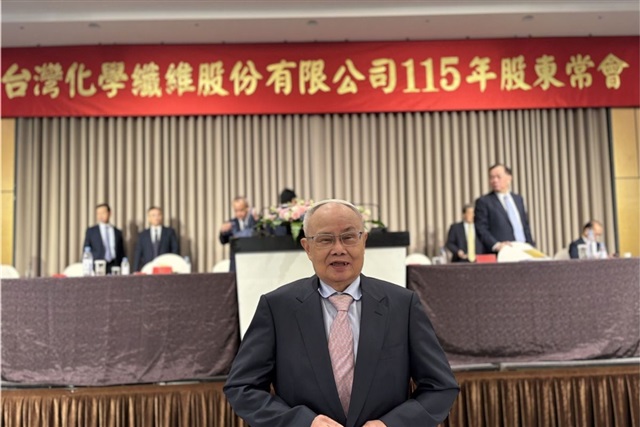
Formosa Chemicals & Fibre Corporation said it is accelerating restructuring and diversification efforts after posting losses in 2025, as the petrochemical major pivots toward higher-value materials, including semiconductor-related products such as polyimide (PI) and silicon carbide (SiC), with early results expected by 2027.
At its shareholders' meeting on May 27, Chairman Fu-Yuan Hung acknowledged that 2025 marked the company's first annual loss since its listing. He attributed the downturn to severe overcapacity in China's petrochemical industry and disruptions from the US tariff policies that strained global supply chains, leading to consecutive losses in the first and second quarters of 2025.
In response, the company began an aggressive "lean-down" and transformation program in the third quarter of 2025, consolidating production lines across aromatics, styrene monomer (SM), plastics, nylon, and textiles. Management said current market conditions suggest further large-scale contraction is unlikely.
Investors at the meeting pressed for clarity on the company's strategic shift toward higher-margin businesses. President Wen-Chin Lu said the transformation would take time, but that it is increasingly focused on integration into high-tech supply chains. These include materials for server battery backup units (BBU), a segment expected to require thousands of tons of demand, as well as potential applications in AI data center infrastructure that could utilize surplus electricity capacity.
Looking further ahead, the company said it expects initial progress in semiconductor-grade materials—particularly PI and SiC—by 2027.
On the macroeconomic outlook for 2026, Lu pointed to geopolitical volatility as a key risk factor. He cited the outbreak of conflict between the US and Iran on February 28, which led to heightened tensions in the Middle East and disruptions in energy logistics. He noted concerns over the Strait of Hormuz, where disruptions reportedly affected the flow of roughly one-fifth of global crude oil exports. The resulting spike in oil prices pushed WTI crude up sharply from about US$60 per barrel earlier in the year to more than US$100 at its peak, lifting feedstock and chemical prices globally.
Despite the volatility, Lu said improved margins in March, combined with low-cost inventory and gains from equity-accounted investments, helped the company deliver first-quarter 2026 earnings per share above NT$1 (approx. US$0.032), marking a significant improvement from 2025.
However, he cautioned that oil markets remain highly unstable and that damage to Gulf petrochemical infrastructure will take time to repair. Supply conditions, he said, are unlikely to return to pre-conflict levels in the near term.
For the second half of 2026, the company expects supply shortages outside China to persist, as disruptions in Gulf production constrain output. At the same time, China's structural overcapacity is expected to help fill part of the gap, potentially supporting margin recovery. Overall, management struck a cautiously optimistic tone.
On strategy, Lu outlined three new growth pillars intended to reshape the company's future.
The first involves collaborating with specialty chemical partners to build a small-batch, high-mix synthesis platform for advanced materials such as PI and perovskite compounds. The goal is to develop talent and accelerate commercialization before scaling up to industrial production.
The second is a low-carbon hydrogen business that leverages existing process advantages to produce high-purity hydrogen for advanced applications, including semiconductors.
The third is high-margin composite materials, developed through material modification and application-driven design, targeting medical, automotive, electronics, AI servers, and functional materials markets. The company said early results are promising, with a single plant already generating several tens of millions of New Taiwan dollars in monthly profit.
Together, the initiatives reflect a broader effort by Formosa Chemicals to reposition itself from a cyclical petrochemical producer into a materials-driven supplier to high-tech industries.
Article translated by Elaine Chen and edited by Jerry Chen