

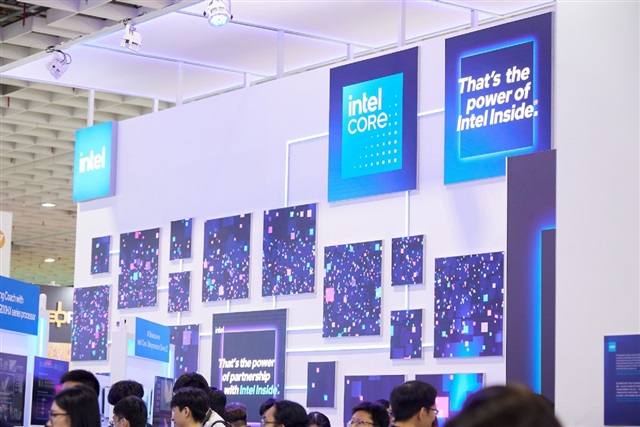
Generative AI has driven a surge in GPU demand and accelerated a structural reshaping of the semiconductor industry. At the same time, CPUs are re-emerging after years of being sidelined, with demand rising sharply and pushing Intel into a rare supply shortage. Intel executives said demand is far exceeding supply, with capacity constraints costing billions of dollars in lost revenue.
Data center CPUs prioritized, rivals gain share
Supply chain sources said Intel is prioritizing limited capacity for higher-margin Xeon server CPUs, opening room in notebooks and desktops for AMD to expand share. MediaTek is also set to benefit, with Chromebook processor shipments projected to grow more than 40% in 2026. The company will provide its outlook on April 30.
Intel recently noted that AI workloads are shifting from training to inference and agentic AI, structurally lifting data center CPU demand. GPU-to-CPU ratios have narrowed from about 8:1 during training to 4:1, and could approach 1:1, underscoring CPUs' expanding role in data orchestration and memory management.
Intel expects its server business to remain the main growth driver, with both market demand and its shipments set for double-digit growth in 2026 and into 2027. Demand already exceeds supply.
With improving yields on 18A, Intel plans to ramp capacity sequentially and has raised 2026 capital expenditure to expand EUV deployment and output.
Competition in server CPUs is intensifying. AMD's share has approached 50%, and it plans to launch 2nm EPYC Venice processors with CoWoS-L and SoIC packaging, followed by EPYC Verano in 2027.
Nvidia in March unveiled its Vera CPU for agentic AI and reinforcement learning, positioning it as a standalone product. Arm has also launched a data center-focused AGI CPU, moving from IP licensing into direct competition.
Shortages hit PCs, prices rise, and lead times extend
Surging demand and component shortages have driven price increases. Intel has raised CPU prices twice since late 2025, first by about 10% in December and again in March, with larger increases for high-end models.
Delivery lead times have also lengthened.
Intel's focus on Xeon and high-end PCs has squeezed supply for mid- and entry-level products, widening market gaps and allowing rivals to gain share in notebooks and desktops.
PC channel assembly and Chromebooks have been among the hardest hit. Intel's share in channel PCs has fallen from nearly 90% to roughly parity with AMD, while Chromebook CPU lead times have stretched to up to one year.
Global Chromebook shipments are estimated at 19.5 million units in 2025, up from 17.5 million in 2024, before potentially falling to 18 million in 2026 due to CPU and memory shortages.
Supply constraints have pushed OEMs to alternative platforms, lifting MediaTek's penetration. Its Chromebook processor shipments are expected to rise more than 40% in 2026, with MK8189 reaching 7 million units, close to Intel's Twin Lake at 7.9 million.
Lenovo is forecast to lead 2026 Chromebook shipments with 5.7 million units, followed by HP and Dell. Asus and Acer are each expected to ship about 3.2 million to 3.3 million units.
Intel's performance has begun to recover as customers compete for the limited supply. First quarter 2026 revenue and profit exceeded market expectations.
Intel forecasts second quarter revenue of US$13.8-14.8 billion, up 11% year-over-year and 5% quarter on quarter, marking its first double-digit growth in six years. Gross margin is expected to recover to 39% from below 30%.
Article translated by Levi Li and edited by Jack Wu