
Taiwan is accelerating its push into quantum computing. As global competition intensifies — with the US, China, and Europe all pouring resources into the technology — the island is moving beyond lab research and into full-scale commercialization.
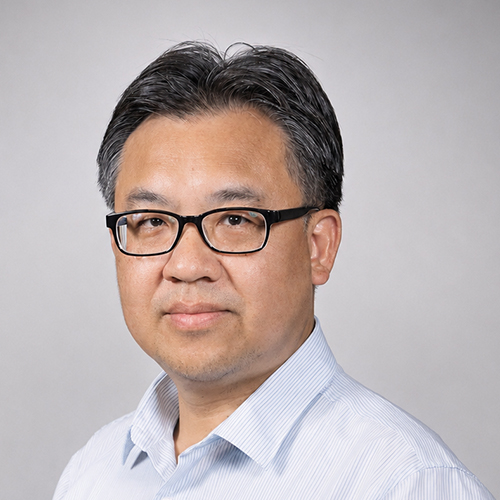
Cheng-Wen Wu, minister of Taiwan's National Science and Technology Council (NSTC), announced the launch of the second phase of the national quantum computing initiative, emphasizing the need for comprehensive industrialization. Wu stressed that Taiwan must collaborate with leading international quantum companies to realize commercial quantum computers.
Besides developing quantum computers and hybrid computing systems, Wu also urged Taiwanese teams to produce ultra-low temperature refrigerators comparable to those from Bluefors. Currently, procuring a cooling system for a superconducting quantum computer requires a wait time of over eight months.
From lab to launchpad
Taiwan President Ching-te Lai praised Academia Sinica President James Liao and his team for unveiling Taiwan's first domestically developed 5-qubit superconducting quantum computer in 2023. The official release of a 20-qubit superconducting quantum chip is scheduled for January 2026, marking a historic milestone and showcasing Taiwan's entry into the global quantum technology race.
President Lai stated that multiple agencies jointly announced the high-speed quantum computing national strategy in March 2026. The move signals Taiwan's shift from foundational research toward applied implementation. The goal: evolve from a "quantum national team" into a "quantum international team."
Three missions, one ambition
Lai outlined three key missions for the second phase. The first is to accumulate quantum semiconductor technology assets — advancing from single qubits in labs to complex system engineering while overcoming superconducting low-temperature signal transmission bottlenecks.
The second is to launch large-scale software-hardware integration projects. These will draw on cross-disciplinary expertise in computer science, mathematics, and AI to develop indigenous quantum algorithms and high-speed computing architectures capable of addressing challenges in healthcare, finance, transportation, and other sectors.
The third is to strengthen "quantum cybersecurity" — building defensive mechanisms alongside computational power enhancements to ensure national digital resilience.
Beyond qubits: the full-stack push
Wu compared the quantum ecosystem to servers: CPUs alone cannot deliver impressive generative AI performance without GPUs, NPUs, and ASICs. Quantum is no different. Focusing solely on qubits without integrating high-performance computing (HPC) limits progress. That is why NSTC is pushing to link CPUs, GPUs, and QPUs into new computing architectures.
Infrastructure takes shape
In Hsinchu, the Taiwan Semiconductor Research Institute (TSRI) has installed an IQM quantum computer and established a "quantum computer subsystem verification platform," allowing academia and industry players to test their components. Meanwhile, the National Center for High-Performance Computing (NCHC) in Tainan is preparing its "HPQC heterogeneous hybrid computing host" to invite international partners for joint software and system development, fostering an industrial supply chain and accelerating high-speed quantum computing system advancement.
Article translated by Charlene Chen and edited by Jerry Chen