Generative AI (GenAI) is driving a surge in computing demand, pushing data center competition beyond server performance toward infrastructure efficiency and deployment density, with power architecture emerging as a central focus of the next upgrade cycle.
As rack-level power density continues to rise, power supply systems are shifting toward centralized, rack-based power management. Power supply vendors are transitioning from standard component suppliers into integrated providers connecting power distribution, backup systems, monitoring, and thermal management. Companies with established positions in AI-related infrastructure are expected to post stronger growth in 2025 than in 2024.
Delta Electronics' growth in 2025 is driven by both higher AI server shipments and structural demand linked to data center power infrastructure upgrades. As advanced GPU and ASIC platforms lift rack power density, next-generation data centers require tighter integration of power cabinets, power conversion systems, and energy management platforms. This shift benefits suppliers with system integration capabilities and high-power technologies, positioning them to deliver comprehensive power solutions.
Liteon is also benefiting from sustained investment in cloud and AI infrastructure, with its 2025 business focus increasingly concentrated on high-end power products and cloud energy management solutions. Rising shipments of server power modules and power management systems are expanding the share of cloud- and AI-related revenue, gradually shifting its product mix toward higher value-added offerings.
Looking to 2026, data center power systems remain at an early stage of a broader upgrade cycle. Rack-level power delivery and high-efficiency power architectures are expected to become standard design models. Continued data center expansion by major cloud service providers is likely to sustain demand. As the AI server supply chain matures, customers may shift from single-source procurement toward diversified supplier strategies, moving competition from technical specifications toward capacity allocation, delivery capability, and global localized service support.
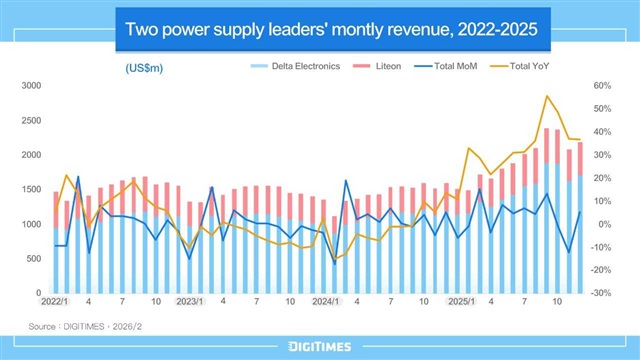
Credit: DIGITIMES
Article translated by Levi Li and edited by Jack Wu