

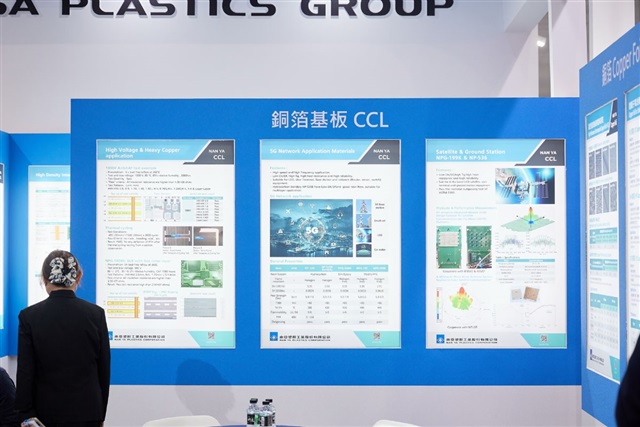
Cloud service providers (CSPs) continue to maintain strong capex, driving steady growth in AI servers and high-speed network switches markets while elevating the grade of copper-clad laminate (CCL) materials. As orders for high-end products gradually increase, Taiwan's top three CCL manufacturers are set to deliver significant revenue growth with double-digit year-over-year gains in 2025.
Looking ahead to 2026, as AI GPUs and ASIC server customers progressively upgrade to M8-grade or higher CCL materials, Taiwanese suppliers are expected to enhance their penetration in the high-end market, positioning themselves as key beneficiaries of the AI infrastructure boom.
Additionally, rising costs for glass fiber cloth and copper foil have prompted price increases on mid- to low-tier product lines, which will further improve profit margins.
Despite market rumors about design changes in Nvidia's new products that could lead to downgraded CCL material specifications—and intense competition from South Korea's Doosan and China's Sytech—Taiwanese firms' benefits may fall short of initial expectations. However, industry analysts note that focusing on the AI ASIC segment still positions Elite Material (EMC) and Taiwan Union Technology (TUC) as major suppliers.
EMC has successfully penetrated the AI server and 800G switch markets, projecting a 46.39% revenue increase in 2025—the highest among the top three—and continues to lead Taiwan's CCL industry with multiple expansion plans underway. Although some CSP customers enter product transition phases in the fourth quarter, impacting year-end shipment momentum, overall performance aligns with company forecasts.
Meanwhile, TUC is benefiting from stronger ASIC server shipments, increasing its share of M7-grade and above high-end CCL sales, resulting in a 31.53% revenue rise in 2025, ranking second among the trio.
Iteq is also aggressively targeting AI and non-AI server markets, expecting 12.66% revenue growth in 2025 over 2024, with M7-grade materials for PCIe Gen6 server platforms anticipated to drive shipment growth in 2026.

Credit: DIGITIMES, January 2026
Article translated by Charlene Chen and edited by Jack Wu