

South Korea's once-dominant battery manufacturers are losing their footing in the global electric vehicle (EV) supply chain, as Chinese rivals surge ahead, driven by low-cost lithium iron phosphate (LFP) technology, strategic pivots, and overwhelming production efficiency. New data shows Korea's three major battery makers—LG Energy Solution, SK On, and Samsung SDI—are ceding market share at an accelerating pace.
According to SNE Research, the combined global market share of the three Korean firms fell to 16.7% in the first seven months of 2025, down 4.5pp from the same period a year earlier. The drop marks the first time in recent years that South Korea's share has slipped below the symbolic 20% threshold.
In stark contrast, China's Contemporary Amperex Technology Ltd. (CATL) now commands 37.5% of the global market, cementing its lead as the world's top battery producer.
A strategic miscalculation on battery chemistry
Industry analysts and insiders are now pointing to a critical miscalculation by Korean firms: an overcommitment to nickel-cobalt-manganese (NCM) battery chemistry, which—while delivering high energy density—is significantly more expensive to produce than LFP batteries.
South Korean battery makers bet on the wrong horse, said one analyst. They prioritized performance at the expense of cost, and the market moved the other way.
China's early and aggressive shift to LFP has turned out to be a masterstroke. Initially seen as inferior, LFP batteries have gained widespread adoption among automakers due to improved performance, lower costs, and better safety. Most critically, they are well-suited for the mass-market EVs that now dominate global sales growth.
While South Korea's NCM batteries remain competitive in high-end and performance vehicle segments, that market is shrinking as consumer demand shifts toward affordable, practical EVs.
Utilization gaps underscore competitive divide
A revealing data point underscores the widening gap: Korean battery plants are running at just 50% capacity, while Chinese factories average over 90%, according to a report by Rest of World, cited by South Korean media outlet Business Post.
The disparity reflects not only weakening demand from Western automakers—particularly in Europe and North America—but also China's vastly superior production scale, cost structure, and vertical integration.
Since 2021, Chinese manufacturers have ramped up production not just in LFP but also in NCM batteries, traditionally Korea's stronghold. That expansion has further tightened the supply and pricing of key raw materials such as lithium, nickel, and cobalt, ironically undermining Korea's own cost base.
Even as raw material prices have recently declined, Korean firms are still reeling from the earlier spike, while China continues to reap the benefits of early investments and stable supply chains.
Losing ground abroad
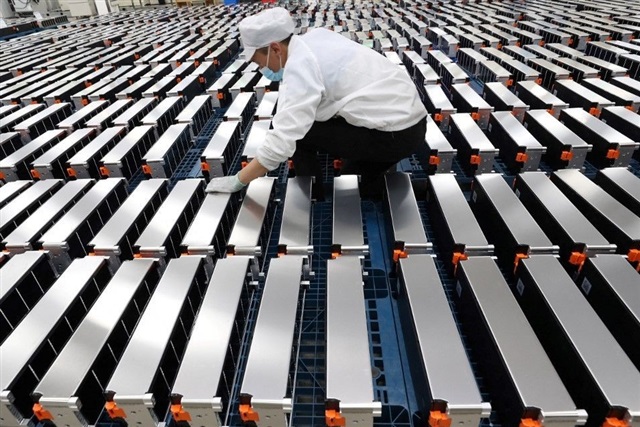
As CATL advances technologically—capable of producing a battery cell in one second and assembling a module in two and a half minutes—Korean firms are increasingly struggling to keep up.
China's ambitions are not confined to its domestic market. CATL is rapidly expanding in Europe, a region long considered a Korean stronghold. Meanwhile, critics say Korean companies overextended themselves in 2024 by continuing to invest heavily in Western markets despite slowing EV sales—a misstep that has left them financially exposed and strategically adrift.
At the same time, Chinese firms are accelerating the development and commercialization of next-generation technologies such as solid-state batteries and sodium-ion batteries, placing them further ahead in the innovation curve.
A strategic crossroads
Korean battery makers now face a dilemma: double down on their shrinking high-performance niche, or pivot toward lower-cost chemistries where China has already built an unassailable lead in scale and supply chain control.
Even as Korean firms begin to invest in LFP production, their output remains far smaller than China's, and their bargaining power with automakers is limited. China's control over the raw material supply chain and vertically integrated operations makes price competition nearly impossible for Korean companies.
"There is no easy way forward," said one industry executive. "Without a breakthrough strategy, Korean battery makers will struggle to remain competitive in a market increasingly shaped by Chinese speed, cost, and state-backed scale."
Article translated by Elaine Chen and edited by Jack Wu