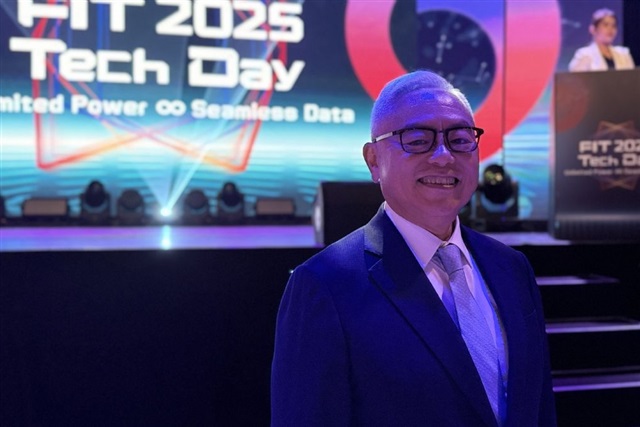
Foxconn Interconnect Technology (FIT), a subsidiary of Hon Hai Precision Industry Co. (Foxconn), hosted its first FIT Tech Day 2025 on September 17, spotlighting its strategic focus on AI mobility and global market development. FIT chairman Lu Sung-ching emphasized that data and power infrastructure are essential for future AI applications, with particular emphasis on expanding presence in the Middle East.
During the keynote address, Lu highlighted the company's role as a critical integrator of connectors, high-speed cables, and power systems—components akin to nerves and bloodstreams—that support AI's demanding computational needs. FIT's strategy aligns with the growing significance of AI, which demands not only data sources but also reliable energy and transmission systems to sustain advanced digital mobility solutions.
Strategic acquisitions fuel mobility ambitions
FIT's new mobility approach follows its acquisition of German companies Autokabel and Voltaria, which specialize in power bus systems and data solutions, respectively. This integration targets collaboration with global partners to develop next-generation mobility ecosystems, fostering innovation and unlocking cross-industry opportunities.
Middle East expansion targets EV infrastructure demand
The company's focus on the Middle East stems from the region's strategic shift away from oil dependency toward electric vehicle (EV) infrastructure. FIT's joint venture Smart Mobility, developed with Saudi Arabian firm Saleh Suleiman Alrajhi & Sons, has entered the market to address this demand. A new factory under Smart Mobility is slated to begin construction by the end of 2025, planning to extend beyond vehicle assembly to component manufacturing.
Data will drive Saudi Arabia's growth in AI and mobility
Smart Mobility CEO HH Prince Fahad bin Nawaf Al Saud echoed FIT's emphasis on data as a critical resource, equating it with oil in terms of economic value. He referenced Saudi Arabia's Vision 2030, initiated by Crown Prince Mohammed bin Salman, as a catalyst for national reforms and infrastructure development. Prince Fahad noted that AI hardware and software serve as foundational elements powering the country's future mobility and broader technological advancement.
Prince Fahad emphasized that AI-enabled mobility transcends vehicle operations by fueling national progress. This vision supports the ongoing investment in infrastructure, such as charging stations, necessary for EV adoption, aligning with the region's strategic diversification goals.
Cautious global expansion amid geopolitical challenges
While FIT confirms continued global expansion ambitions, Lu acknowledged the need for careful evaluation amid geopolitical risks. He cited a 50% tariff challenge experienced during initial investments in India, underscoring the requirement for prudence. FIT currently maintains a diversified production network spanning China, Vietnam, India, Central and South America, and Africa, covering four continents outside of Australia.
Lu summarized this cautious expansion strategy as akin to "crossing the river by feeling the stones," signaling the company's adaptive approach to investment in uncertain market environments.
Article translated by Jingyue Hsiao and edited by Jerry Chen