


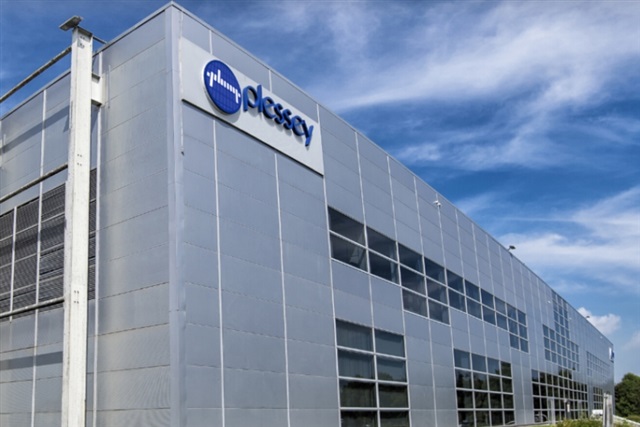
Goertek, a major Apple supply chain partner, is ramping up upstream AR/VR investments with a US$100 million deal to acquire UK-based microLED specialist Plessey Semiconductors. The move follows its HK$10.4 billion (US$1.33 billion) purchase of precision manufacturing assets in July, marking another step to overcome display technology bottlenecks in next-generation smart glasses.
A Shenzhen Stock Exchange filing shows Goertek's wholly owned unit, Goertek (Hong Kong), will provide Haylo Labs with a five-year, interest-bearing loan of up to US$100 million, tied to an equity-linked profit-sharing agreement. Haylo will use the capital to acquire all of Plessey's shares, fund new investments, purchase microLED production equipment, and bolster working capital. Plessey and its subsidiaries will guarantee repayment.
If Haylo or Plessey is acquired, sells core assets, or goes public during the loan term, Goertek will recover the loan's principal and interest plus 25% of the acquisition price or IPO market value, adjusted for dilution. The board unanimously approved the transaction, citing its alignment with long-term strategy and the added safeguards from the equity-linked structure, as Shenzhen Economic Daily and Sina report.
Plessey's strategic value in microLED
Founded in 2000, Plessey is a leading microLED developer with close ties to major AI smart glasses and AR device makers. It has worked extensively with Meta Platforms, including a 2020 deal granting Meta exclusive rights to its AR display technology and output. In early 2024, the two co-developed a red microLED microdisplay with a record six million nits of brightness.
Plessey reported revenue of US$74.79 million and net profit of US$12.41 million in the year ended June 30, 2024, followed by US$72.72 million in revenue and US$2.8 million in profit for the year to June 30, 2025. Analysts expect strong long-term demand for microLED as a core microdisplay technology for AI-enabled smart glasses and AR headsets, citing its high brightness, energy efficiency, and compact form factor.
Goertek's expanding AR/VR and optical capabilities
Goertek has steadily expanded its XR optical portfolio, holding a 5.4% stake in microOLED leader SeeYA Technology. In waveguide optics, it partnered with WaveOptics in 2018 on surface-relief waveguide mass production and acquired diffraction waveguide maker Jiaxing UPhoton Optoelectronics Technology in 2023. The Plessey investment fills its microLED gap, creating what analysts call a "full-spectrum" AR display capability.
Beyond optics, Goertek operates across acoustics, optics, and microelectronics, supplying components and finished devices for smartphones, wearables, and VR/AR systems. Precision structural parts remain a core product, with performance directly influencing device quality, design, and user experience.
The deal follows Goertek's July agreement with Luen Fung (Hong Kong) to acquire Mega Precision Technology and Channel Well Industrial for HK$10.4 billion, strengthening vertical integration through advanced precision metal processing. In 2023, it raised funds via a private placement to support AR/VR optical module R&D, smart wearables, and sensor initiatives.
Market outlook
Soochow Securities forecasts that upcoming AI-enabled smart glasses and AR product launches by major tech firms will boost demand for Goertek's components and optical systems, positioning it as one of the sector's most entrenched suppliers.
The brokerage trimmed its net profit forecasts to CNY3.4 billion (US$473 million) for 2025 and CNY4.4 billion for 2026, down from CNY3.8 billion and CNY4.9 billion, and projects CNY5 billion for 2027.
Key risks include weaker-than-expected market growth and heightened competition. Still, with microLED widely regarded as the next-generation display technology for immersive electronics, analysts view the Plessey deal as a pivotal move to cement Goertek's place in the global AR/VR supply chain.
Article edited by Joseph Tsai
